
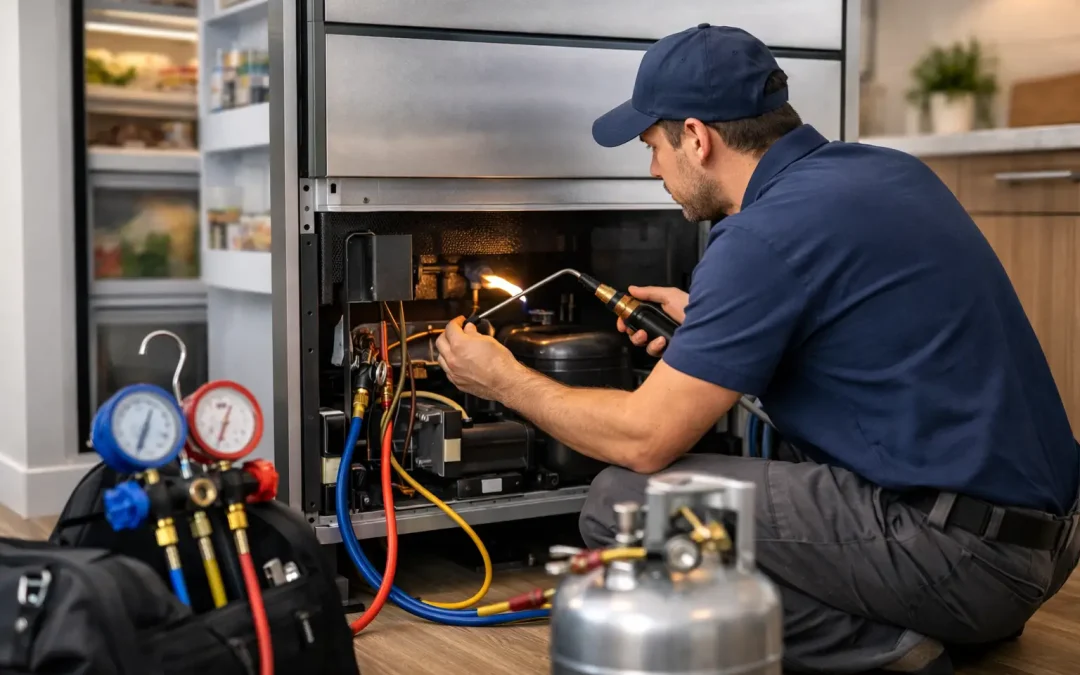
A built-in refrigerator can look perfectly normal while quietly losing the ability to protect food, preserve wine, or hold reliable temperatures. When the compressor runs longer than usual, one compartment warms up, or frost and heat patterns appear where they should not, sealed system repair may be the issue worth investigating. For premium refrigeration, this is not a routine service call or a repair that should be guessed at.
The sealed system is the part of a refrigerator that actually moves heat out of the cabinet. It is central to performance, but it is also highly technical. Correct diagnosis matters because a fan issue, control problem, door seal, or defrost failure can create symptoms that resemble a sealed system problem. A qualified specialist should identify the actual cause before recommending major work.
What Is a Sealed System?
The sealed refrigeration system is a closed loop containing the compressor, condenser, evaporator, refrigerant, filter drier, and connecting tubing. Together, these components circulate refrigerant and transfer heat from inside the appliance to the surrounding air.
The compressor pressurizes refrigerant, which releases heat as it travels through the condenser. The refrigerant then passes through a restriction and enters the evaporator, where it absorbs heat from the refrigerator or freezer compartment. That cycle repeats continuously to maintain the temperatures your appliance was designed to hold.
Because the circuit is sealed, it should not need refrigerant added under normal conditions. Low refrigerant generally points to a leak, while poor cooling can also result from a restriction, a weak compressor, contaminated refrigerant, or an evaporator that is no longer exchanging heat properly. Each possibility calls for a different repair strategy.
Built-in units add another consideration. Their airflow, cabinetry clearances, and installation design are closely tied to performance. A refrigerator that is not ventilated or installed correctly may run excessively, but that does not automatically mean the sealed system has failed. This is why a brand-specific evaluation is valuable.
Signs You May Need Sealed System Repair
A refrigerator that stops cooling altogether is the clearest warning, but sealed system failures do not always happen suddenly. Many begin as a gradual loss of cooling capacity that becomes more noticeable during warm weather, heavy use, or frequent door openings.
Common signs include a refrigerator section that is too warm while the freezer remains cold, a freezer that cannot maintain proper temperature, unusually long compressor run times, or food freezing in one area while another area is warm. You may also notice an uneven frost pattern on the evaporator, excessive heat around the compressor area, or an appliance that sounds as though it is constantly trying to catch up.
Wine storage systems deserve prompt attention when temperatures become inconsistent. A small but persistent rise in cabinet temperature can affect a collection over time, particularly when the system cycles irregularly or cannot recover after the door is opened.
These symptoms are useful observations, not a diagnosis. Modern Sub-Zero and other high-end built-in systems use sensors, fans, electronic controls, and multiple cooling zones. A trained technician should test system pressures, temperatures, electrical operation, airflow, and component performance before concluding that sealed system work is required.
Why “Just Add Refrigerant” Is Not a Repair
Refrigerant does not get used up like fuel. If a sealed system is low, the refrigerant has escaped or the system has been compromised. Adding refrigerant without identifying and correcting the underlying issue may temporarily improve cooling, but it does not protect the appliance or the homeowner’s investment.
A proper repair may involve locating a leak, replacing a failed compressor or evaporator, addressing a restriction, installing a new filter drier, evacuating moisture and air from the system, and recharging it to the manufacturer’s specifications. The work must be precise. The refrigerant charge, tubing connections, evacuation procedure, and pressure testing all affect long-term reliability.
How a Professional Sealed System Diagnosis Works
A responsible diagnosis starts with the appliance’s performance history. When did temperatures change? Is the problem isolated to the refrigerator, freezer, ice maker, or wine compartment? Has the unit been recently installed, moved, remodeled around, or exposed to a power event? These details can narrow the path to the fault.
The technician then verifies actual compartment temperatures rather than relying only on a display panel. They inspect condenser condition and airflow, confirm that fans and controls are operating as expected, and evaluate compressor operation. On applicable systems, evaporator frost patterns and temperature response can provide meaningful clues.
If the evidence points to the sealed system, technical testing becomes more involved. The goal is to determine whether the problem is a refrigerant leak, restriction, compressor inefficiency, or another component failure. This distinction matters because the repair scope, parts required, labor involved, and expected service life can differ significantly.
For a premium built-in refrigerator, diagnosis should also account for the model’s design. Some units have separate refrigeration systems for different compartments, while others use configurations that require specific procedures and parts. Factory-level familiarity helps prevent a repair approach that is technically possible but poorly suited to the appliance.
What Sealed System Repair May Include
The exact work depends on the confirmed failure. A leaking evaporator may require replacement of that component, while a failed compressor requires a different approach. If contamination or a restriction is present, the technician may need to replace the filter drier and take additional steps to protect the new components.
Sealed system work typically requires access to specialized equipment for recovery, evacuation, leak testing, and accurate refrigerant charging. It also demands careful handling of the surrounding kitchen. Built-in appliances are heavy, integrated into cabinetry, and often surrounded by finished panels, stone, flooring, and custom millwork. The repair should be planned with the installation environment in mind, not treated like service on a freestanding refrigerator in a garage.
After the system is repaired, it needs time to stabilize. A technician should confirm that temperatures are moving in the right direction and explain what normal recovery looks like. Depending on the appliance and the amount of work completed, full temperature pull-down can take several hours.
Repair or Replacement: The Right Decision Depends
A sealed system diagnosis can lead to a substantial repair, so homeowners naturally ask whether replacement makes more sense. There is no single answer. Age matters, but it should not be the only factor for a high-end built-in unit.
The condition of the cabinet, doors, controls, interior, and other major components should be considered alongside the sealed system failure. A well-maintained built-in refrigerator with a sound overall platform may be an excellent candidate for repair, particularly when replacement would involve cabinetry modifications, panel matching, delivery challenges, or a long lead time for a comparable model.
On the other hand, if the appliance has repeated major failures, unavailable parts, extensive corrosion, or multiple aging systems that require attention, replacement planning may be more practical. A clear service recommendation should address the likely repair scope and the broader condition of the unit rather than focusing on one component alone.
For homeowners in New Jersey with Sub-Zero and other sophisticated built-in refrigeration, Fridge Fix provides factory-certified, model-aware service designed for these decisions. The objective is not simply to get a unit running for the moment, but to restore dependable performance with appropriate care for the appliance and the home around it.
Protecting the System After Repair
No maintenance program can prevent every sealed system failure, but regular care can reduce unnecessary strain. Keeping condenser areas clean, maintaining proper ventilation, confirming that doors close fully, and addressing temperature changes early all support efficient operation. Built-in equipment should also be serviced with attention to its specific installation requirements.
Avoid treating a rising temperature as a minor inconvenience. Refrigerators and freezers often compensate for a developing issue by running longer, which can place additional demand on the compressor and other components. Early diagnosis may not always make the repair smaller, but it gives you more control over food storage, scheduling, and repair-versus-replacement decisions.
When a premium refrigerator no longer performs as it should, the most useful next step is a careful technical evaluation. The right repair begins with knowing exactly what the system is telling you.