
A Sub-Zero refrigerator can appear to be operating normally while its condenser works far harder than it should. Food may still feel cold, but accumulated dust, pet hair, and kitchen debris can restrict airflow at the very component responsible for releasing heat. That is why homeowners often ask how often clean Sub-Zero condenser coils should be part of their maintenance routine.
For most homes, the practical answer is every six to twelve months. A busy kitchen, shedding pets, frequent cooking, or a home near construction can justify cleaning the condenser every three to six months. This is a small maintenance task with an outsized effect on efficiency, temperature stability, compressor workload, and the long-term value of a premium built-in refrigerator.
How Often to Clean a Sub-Zero Condenser
Sub-Zero generally recommends routine condenser cleaning at least twice a year for many models. The right interval, however, depends on the environment around the appliance rather than the calendar alone. Built-in refrigeration is designed to integrate beautifully into cabinetry, but that installation style also makes proper airflow especially important.
A household with no pets and a relatively low-volume kitchen may be well served by a spring and fall cleaning schedule. For homes with dogs or cats, open-plan kitchens, active cooking, or nearby renovation dust, quarterly inspection is the safer approach. Wine storage units and undercounter refrigeration also deserve attention, particularly when installed near floors where dust and pet hair collect quickly.
Cleaning more often is not harmful when it is done carefully. Waiting too long, on the other hand, can force the sealed refrigeration system to run longer to reject heat. That added strain may show up as higher energy use, warmer compartment temperatures, longer run times, or an appliance that seems louder than usual.
A schedule based on your home
Rather than treating maintenance as a once-a-year chore, use the appliance’s surroundings as your guide. Consider a shorter interval if any of the following conditions apply:
- Pets regularly shed near the kitchen, pantry, or utility area.
- The kitchen sees frequent frying, grilling, or heavy cooking that leaves airborne grease behind.
- The home has recently undergone construction, sanding, flooring work, or cabinet installation.
- The refrigerator is installed in a vacation home and has been unused for long periods.
- You notice lint collecting on the grille, in adjacent toe-kick areas, or around ventilation openings.
A quick visual inspection every few months can prevent guesswork. If the condenser area looks clean, continue with your normal schedule. If you can see a mat of lint or debris, schedule cleaning promptly rather than waiting for the next season.
Why Condenser Cleaning Matters on Built-In Refrigeration
The condenser’s job is to release the heat removed from inside the refrigerator or freezer. When air cannot move freely through that area, heat remains trapped and the system must work longer to maintain the set temperature. On a premium built-in unit designed for precise food preservation, that is not a condition to ignore.
Restricted airflow does not automatically mean a major repair is needed. In many cases, a careful cleaning restores normal operation. But an obstructed condenser can contribute to avoidable wear over time, especially during warm New Jersey summers or in kitchens with limited natural ventilation.
There is also a practical performance issue. A refrigerator running longer than necessary may create more noticeable fan or compressor sound, and it can be less consistent during periods of heavy use. If the condenser has been neglected for years, cleaning is a sensible first maintenance step – but it should not be used to explain away persistent temperature problems, alarms, frost, water leaks, or unusual noises.
Where to Find the Condenser
The location varies by Sub-Zero model and generation. Many built-in units have a condenser area behind the upper grille, while other models may use a different accessible compartment. Integrated models deserve particular care because panels, grille components, and ventilation paths are designed around the cabinetry installation.
Before removing anything, consult the use and care instructions for the specific model. Do not assume that a method used on a standard freestanding refrigerator applies to a built-in Sub-Zero. Factory-designed access points exist for a reason, and forcing a panel or using the wrong tool can damage finishes, louvers, wiring, or adjacent cabinetry.
If the grille is difficult to remove, the condenser is not readily accessible, or you are uncertain about the model configuration, it is better to schedule qualified service than to experiment. The appliance represents a significant investment, and the details of access matter.
How to Clean the Condenser Safely
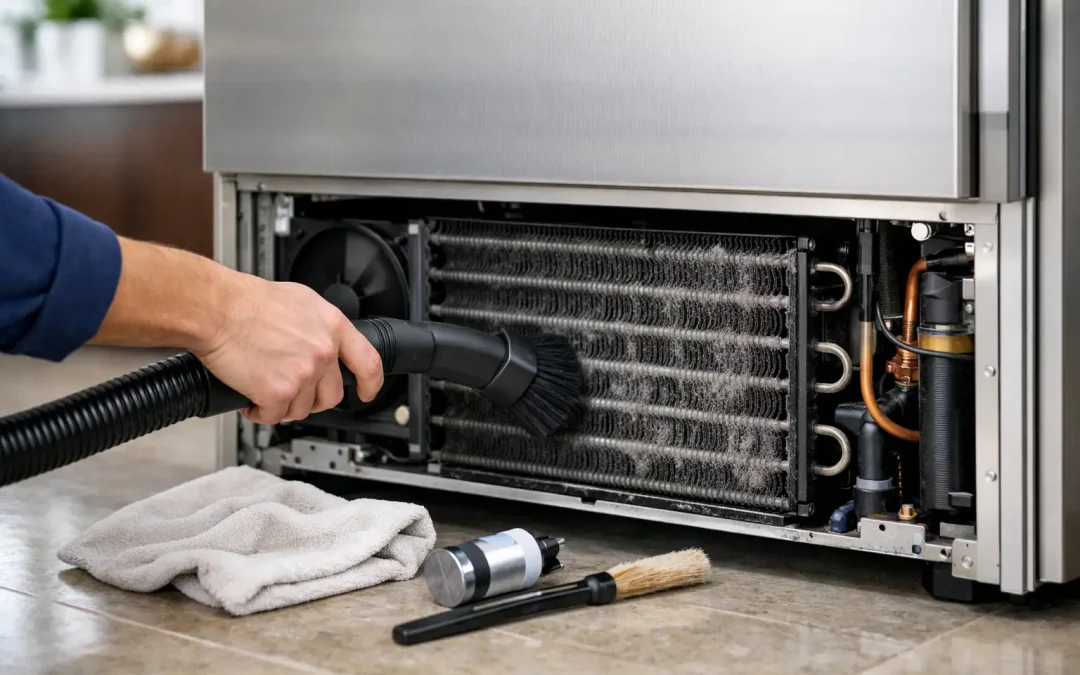
Start by turning the unit off if your model instructions call for it, or disconnecting power when safe to do so. Protect nearby floors and cabinetry, particularly around custom panels or finished woodwork. Once the designated grille or access panel is removed, use a soft brush attachment on a vacuum to lift loose dust and hair away from the condenser area.
Move slowly. The goal is to remove debris without bending delicate fins, disturbing wiring, or pushing dirt deeper into the compartment. A condenser brush made for refrigerator maintenance can help reach between components, but it should be used gently and only where access is clear. Vacuum again after brushing to capture loosened debris.
Avoid water, aerosol cleaners, compressed air, and aggressive household brushes unless the model-specific instructions expressly permit them. Spraying a condenser can introduce moisture where it does not belong. Compressed air may drive debris into fans, electrical components, or inaccessible areas. A strong vacuum nozzle can also bend fins if pressed against them.
After cleaning, reinstall the grille or panel correctly and restore power. Give the appliance time to return to normal cycling. If an indicator light, service message, unusual fan sound, or temperature concern remains after cleaning, do not continue taking the unit apart. That is the point to arrange professional diagnosis.
Signs Your Sub-Zero Condenser Needs Attention Sooner
Calendar maintenance is useful, but the appliance may signal that it needs attention ahead of schedule. A visible layer of dust behind the grille is the clearest sign. Other clues include longer-than-usual run times, warmer cabinet surfaces near the unit’s ventilation area, or performance that changes during hot weather.
Some symptoms require a more careful distinction. A warm exterior can be normal when the refrigeration system is rejecting heat. A fan may also be audible during ordinary operation. What matters is a noticeable change from the appliance’s usual behavior, especially when combined with inconsistent compartment temperature, an alarm, or food that is not being preserved as expected.
Do not assume every cooling issue is caused by a dirty condenser. Door seal problems, blocked interior airflow, ice accumulation, control issues, fans, and sealed-system concerns can produce similar symptoms. Cleaning is preventive maintenance, not a substitute for technical diagnosis.
When Professional Maintenance Is the Better Choice
Homeowners can often handle a basic condenser cleaning when the access area is straightforward and the manufacturer’s instructions are clear. Professional preventive maintenance is the better choice when the refrigerator is older, fully integrated, difficult to access, or showing signs beyond ordinary dust buildup.
A qualified Sub-Zero specialist can inspect airflow, clean the appropriate areas, evaluate operating conditions, and identify developing concerns before they become a disruptive failure. This is particularly valuable for homes with multiple built-in units, wine preservation systems, ice machines, or a kitchen that must perform reliably for entertaining and daily family use.
Fridge Fix has provided specialized refrigerator service since 1966, with factory-certified expertise for Sub-Zero systems and the care complex built-in refrigeration requires. For homeowners, scheduled maintenance offers more than a clean condenser: it provides informed attention to an appliance designed to protect food, wine, and the rhythm of a well-run kitchen.
Set a recurring reminder for spring and fall, then adjust the schedule when pets, cooking activity, or renovation dust demand more frequent attention. A clean condenser is one of the simplest ways to give a premium refrigeration system the airflow it was designed to have.