
A built-in refrigerator can look nearly identical to another Sub-Zero unit from the outside, yet use different electronics, door components, shelving, hinges, or cooling-system parts. That is why the first step before scheduling service, requesting technical guidance, or ordering a replacement part is to find a Sub-Zero model number – and record it exactly as shown.
For a premium refrigeration system, a model number is more than an identifier. It tells a qualified technician how the unit was designed, which configuration it has, and what service information applies. A single letter, suffix, or series designation can matter.
Where to Find a Sub-Zero Model Number
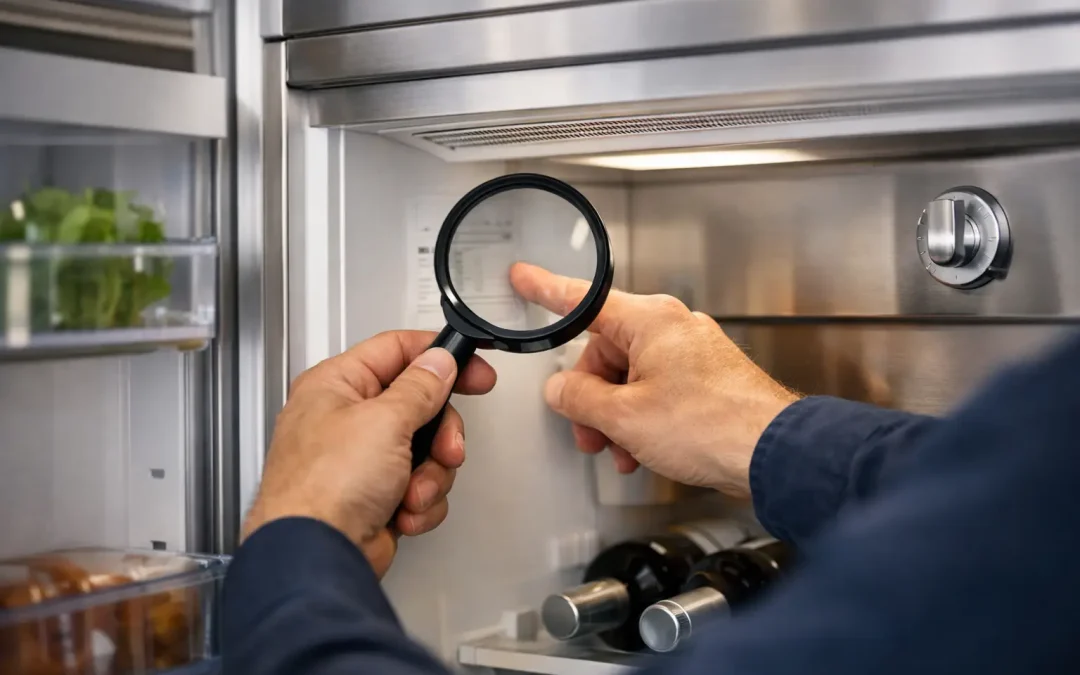
Start with the unit’s data plate, sometimes called the rating plate. This is a manufacturer label that typically includes both the model number and serial number. On many Sub-Zero refrigerators and freezers, it is located inside the cabinet, often near the upper interior area, door frame, or side wall.
Open the door fully and use a flashlight rather than relying on overhead kitchen lighting. Look carefully along the inside frame and upper cabinet area. The label may be small, and its print can be difficult to read on older units or in a tightly integrated installation.
Do not confuse the model number with a number on a control panel, a filter package, a shelf, or an owner’s manual. Those numbers may identify a component, document, or accessory rather than the appliance itself. The data plate is the most reliable source because it ties the appliance’s model and production details together.
Built-In Refrigerators and Freezers
For full-size built-in refrigeration, inspect the interior cabinet after opening the refrigerator or freezer door. The exact placement varies by generation and configuration, but the identification label is generally positioned where it can be read without pulling the appliance from its enclosure.
This is especially useful for paneled units. Custom cabinetry conceals the appliance’s exterior styling, but it should not conceal the manufacturer data plate. Avoid removing grille panels, toe kicks, or trim just to locate the label unless a trained service professional instructs you to do so. Built-in units are heavy, carefully leveled, and connected to electrical and, in many cases, water lines.
Wine Storage and Undercounter Units
Sub-Zero wine storage systems, beverage centers, and undercounter refrigeration may place the data plate inside the cabinet, often along an interior wall or near the upper frame. Emptying a portion of the unit can make the label easier to see, particularly when bottles or drawers block the view.
For wine storage, take care not to scrape the label while moving shelves. If the label is faded, photograph it in bright, indirect light from several angles. A close image is usually more useful than a handwritten guess, particularly when letters and numerals look similar.
Ice Machines and Integrated Refrigeration
Ice machines and integrated refrigeration require a little more patience because access points vary by model. Look first inside the storage area or cabinet opening and around the interior frame. If the identification plate is not visible, consult the unit’s original documentation before attempting to move or disassemble anything.
Integrated systems are designed to sit precisely within cabinetry. Pulling a unit forward without the proper procedure can affect panel alignment, flooring, water connections, or leveling. When the label cannot be safely reached or read, a qualified built-in refrigeration specialist can identify the unit during a service visit.
Record More Than the Model Number
When you locate the data plate, take a clear photo of the entire label. Do not crop out the serial number, electrical information, or any letters that appear before or after the primary model designation. These details can be essential when confirming compatibility.
The model number identifies the product family and configuration. The serial number identifies the individual appliance and can help determine production-era details. On a long-lived Sub-Zero installation, that distinction matters. A part used in an earlier production run may not match the part used in a later version of what appears to be the same model.
Before calling for service, keep the following information together:
- The complete model number, including all letters, slashes, and suffixes
- The complete serial number
- A photo of the data plate
- A brief description of the issue, such as temperature changes, leaking, noise, frost, or an error display
- Any recent changes, including a power interruption, filter replacement, renovation, or water-line work
This preparation helps a service provider review the likely needs of the appointment. It can also reduce delays when a specific replacement part or technical specification must be confirmed.
Why the Exact Model Matters for Service and Parts
Sub-Zero systems are engineered in distinct generations, widths, door styles, refrigeration zones, and installation formats. A side-by-side built-in unit, a column refrigerator, a freezer column, and a wine preservation system may have very different service requirements even when they share familiar design elements.
An exact model number helps determine the proper diagnostic approach. For example, a concern involving an ice maker may relate to a water valve, fill tube, control, sensor, or installation condition. The appropriate testing procedure and replacement part depend on the specific unit.
It also protects the appearance and performance of a premium kitchen. Ordering a part based only on the appliance width, door panel style, or approximate age can lead to the wrong component. That can mean additional downtime, return shipping, or an unnecessary installation attempt. For concealed-hinge, custom-panel, and integrated applications, the risk of mismatching parts is even greater.
There is one practical exception: if the data plate is unreadable, do not delay necessary service while searching indefinitely for a perfect number. Share the clearest photo available, along with photos of the full appliance interior, controls, and any visible product markings. A specialist may be able to narrow down the model family, then verify the exact configuration on site.
Common Problems When Reading the Data Plate
Age, cleaning products, moisture, and normal wear can make a label difficult to read. Grease residue is common around kitchen refrigeration, while wine storage labels can be obscured by bottle racks or low lighting. Clean only around the label with a soft, dry cloth. Do not use abrasive pads, solvents, or sharp tools that could erase the remaining print.
If glare prevents a readable photo, turn off the appliance’s interior light if possible and illuminate the label from the side with a phone flashlight. Side lighting can make embossed or faded characters easier to distinguish. Take several images before trying to transcribe the information.
Be careful with letters and numbers that are easily confused. Depending on the typeface and label condition, 0 and O, 1 and I, 5 and S, or 8 and B may look alike. This is another reason a full photo is preferable to a typed model number alone.
Use the Model Number to Plan the Right Visit
Once you find the Sub-Zero model number, keep it with your appliance records, warranty documents, and renovation information. It will be useful for future maintenance, filter and accessory questions, repair planning, and property records if the home changes hands.
If your unit is cooling poorly, making unusual sounds, showing excess frost, leaking, or producing inconsistent ice, the model and serial number give a factory-qualified technician a more informed starting point. Fridge Fix has specialized in high-end refrigeration service since 1966, with the focused expertise these built-in systems require.
A clear photo of the data plate takes only a minute to capture, but it can save time when your kitchen’s refrigeration needs careful, model-specific attention.