
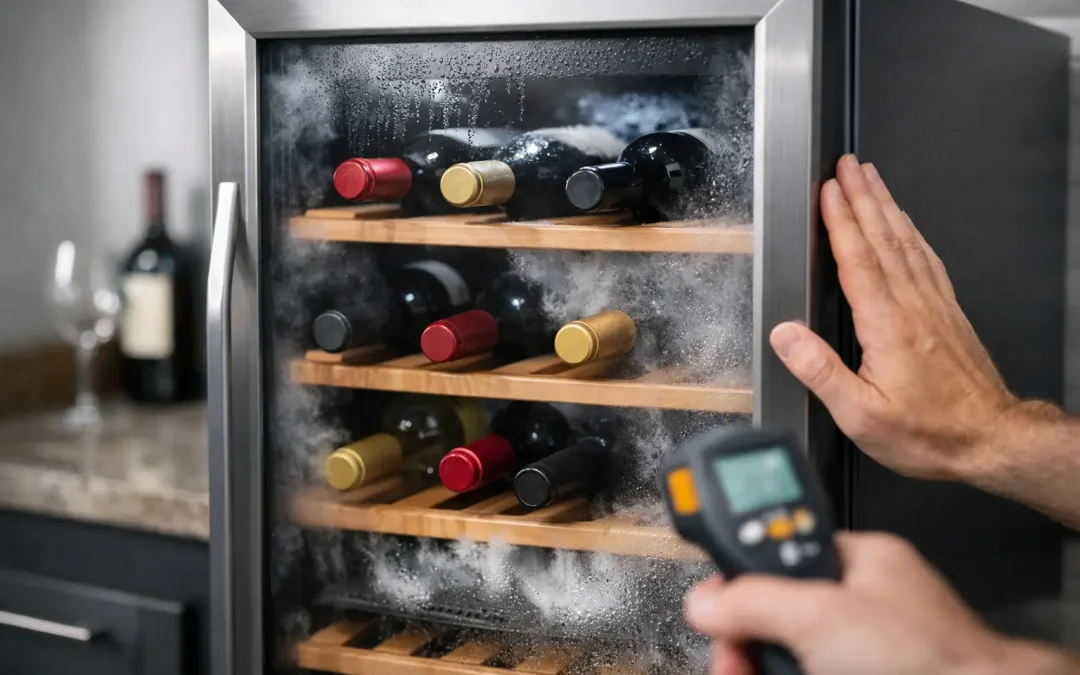
A wine cooler not holding temperature is more than an inconvenience when your cabinet contains bottles selected for aging, entertaining, or investment. A few degrees of fluctuation may not ruin a bottle overnight, but prolonged warmth, repeated cycling, or uneven cabinet temperatures can shorten wine’s useful life and compromise its character. With premium built-in wine storage, the right response begins with separating a normal temperature variation from a performance problem that needs specialized service.
Start by Confirming the Actual Temperature
The number on the control panel is a target, not always the exact temperature at every point in the cabinet. Wine storage units cycle on and off to maintain a range, and the air near a door, top shelf, or interior light can be warmer than the center of the compartment. A reading that moves slightly around the set point can be normal.
Place an accurate thermometer in the middle of the compartment, ideally in a bottle or a glass of water, and allow it to stabilize for several hours. A bottle-temperature reading is more meaningful than a quick air-temperature check because wine changes temperature more slowly than air. Avoid measuring immediately after opening the door, loading several bottles, or adjusting the controls.
For long-term storage, many collectors choose approximately 55 degrees Fahrenheit. Serving temperatures vary by wine style, of course, and dual-zone units may be intentionally set at different temperatures. The concern is not simply that the display and thermometer differ by a degree or two. It is persistent operation outside the selected range, a compartment that keeps warming, or dramatic swings that continue after the unit has had time to recover.
Why a Wine Cooler Is Not Holding Temperature
A temperature problem can originate with airflow, installation conditions, controls, refrigeration components, or the way the cabinet is being used. In a high-end built-in system, those causes deserve a careful diagnosis rather than a quick parts replacement.
Door seals and frequent door openings
A door that does not close fully allows warm, humid room air to enter the cabinet. Check for a bottle, shelf, or loose label preventing the door from seating properly. Inspect the gasket for tears, hardened sections, debris, or areas that have pulled away from the door. Condensation around the door frame can also suggest an air leak.
Door openings matter as well. A wine cooler in an active entertaining area may need longer to recover after repeated access, especially if the cabinet is full of recently added room-temperature bottles. If the temperature returns to normal after the door remains closed, the appliance may be working as designed. If it does not, the door seal and cooling system should be evaluated.
Restricted ventilation or dirty condenser components
Built-in wine coolers rely on engineered airflow. The ventilation path is not decorative, and covering a grille or crowding the designated air space can trap heat around the refrigeration system. This is a common concern after remodeling, cabinetry work, or installation of a replacement unit.
Dust, pet hair, and kitchen debris can also accumulate on accessible condenser areas or intake grilles. The result is reduced heat transfer, longer run times, and difficulty reaching the chosen temperature. Cleaning requirements vary by model. Aggressive brushing, forcing tools into tight spaces, or removing panels without model-specific guidance can damage components or create a different problem, so use the manufacturer’s instructions or arrange professional maintenance.
Ambient heat and installation conditions
Wine storage is sensitive to the environment around it. A cabinet located near a sunny window, range, radiator, or heat-producing equipment must work harder than one installed in a climate-controlled interior space. A garage, enclosed bar area, or seasonal room may exceed the unit’s intended ambient operating conditions during summer.
Built-in appliances have another consideration: the surrounding cabinetry must follow the manufacturer’s clearance and ventilation specifications. A unit that looks perfectly integrated can still suffer if its toe-kick, upper venting, or rear airflow was altered during installation. The solution may involve correcting ventilation rather than replacing the wine cooler itself.
A control, sensor, fan, or defrost issue
If the display is inaccurate, the cooler may be responding to a faulty thermistor or temperature sensor rather than the true cabinet temperature. A failing fan can prevent cold air from circulating evenly, leaving one zone warm while another is overly cold. Frost accumulation can obstruct airflow, and an electronic control problem can cause erratic cycling or a compressor that does not respond correctly to demand.
These issues often produce useful clues. You may notice unusual fan noise, excessive frost, a continuously running compressor, warm upper shelves, a flashing display, or recurring alarms. Record the model number, the selected temperature, the measured temperature, and any messages shown on the control panel before scheduling service. That information helps a qualified technician begin efficiently.
A sealed-system or compressor fault
When a wine cooler runs for long periods but cannot pull down to temperature, the issue may involve the compressor, refrigerant circuit, condenser fan, or another sealed-system component. These are not homeowner repairs. Refrigeration work requires correct diagnostic equipment, proper handling of refrigerant, and experience with the specific appliance design.
Premium wine storage systems may use brand-specific controls, access panels, airflow arrangements, and parts. A general appliance approach can miss the underlying cause or create cosmetic damage in a finished kitchen. For an integrated or built-in unit, choose a service provider experienced with high-end refrigeration and the relevant manufacturer.
Safe Checks Before You Request Service
Before assuming a major repair is needed, verify that the control has not been changed accidentally and that the unit has power. If a recent outage occurred, allow the cabinet adequate time to restart and recover. Some systems include compressor-delay protections that prevent immediate operation after power is restored.
Keep the door closed while the cabinet stabilizes. Confirm that bottles are not blocking interior vents, and do not pack the shelves so tightly that air cannot circulate. A properly loaded wine cooler benefits from some open space around circulation paths, though the exact shelf arrangement depends on the model.
Also inspect the exterior ventilation area for obvious lint or obstruction. If your owner’s manual specifically permits routine cleaning, follow its instructions. Do not chip away ice with a sharp object, remove electrical covers, bypass a door switch, or attempt to recharge a refrigeration system. Those actions can damage an expensive appliance and may affect warranty coverage.
When Temperature Drift Needs Prompt Attention
Call for professional diagnosis when the cabinet remains above its selected temperature after a reasonable recovery period, when temperatures are rising steadily, or when you see repeated alarms or error codes. Prompt service is particularly wise if the unit is built into custom cabinetry, has visible frost, runs nearly nonstop, leaks water, or produces new clicking, grinding, or fan noises.
It is also worth acting early if you store older vintages or maintain a substantial collection. The cost of correcting a dirty condenser, failing fan, worn gasket, or sensor issue is often far less than the risk of allowing a performance fault to continue unchecked. A technician can test temperatures, airflow, controls, electrical components, and refrigeration performance instead of guessing from one symptom.
For homeowners in New Jersey with Sub-Zero and other premium built-in wine storage, Fridge Fix provides specialized refrigeration diagnostics and service designed for appliances that require more than a standard repair visit. Factory-level familiarity matters when protecting integrated panels, cabinetry, refrigeration performance, and the collection inside.
Protecting Stable Wine Storage Going Forward
Preventive attention is the best defense against an unexpected warm cabinet. Keep ventilation clear, use the unit within its specified room-temperature conditions, close the door gently but completely, and arrange maintenance at intervals appropriate for the model and household environment. Homes with pets, active kitchens, or frequent entertaining may need more regular attention to dust and airflow than a seldom-used wine room.
If you notice a gradual change in performance, do not wait for the cabinet to stop cooling entirely. A reliable temperature log, even a simple note of set point and measured bottle temperature, gives a service specialist a clearer picture of what changed and when. That small record can help preserve both the appliance and the bottles you intended to enjoy at their best.