
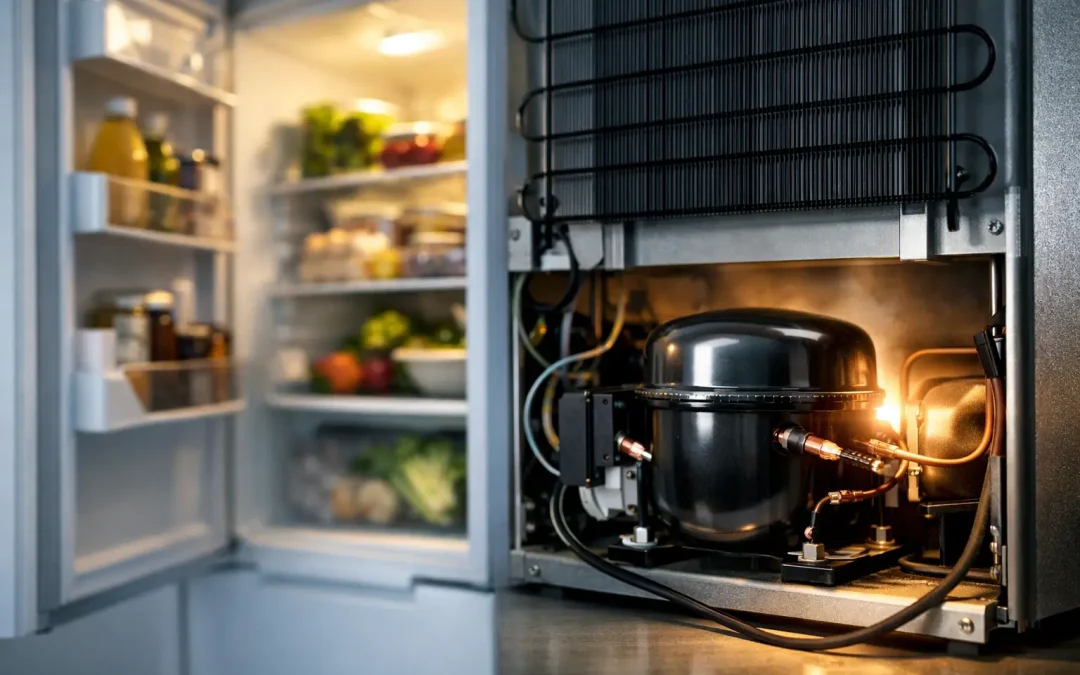
A quiet compressor that runs much of the day can be normal in a modern built-in refrigerator. A compressor that seems never to stop, especially when temperatures rise, ice production drops, or the cabinet feels warmer than usual, deserves closer attention. Understanding why refrigerator compressor runs constantly can help protect the food, wine, and appliance investment in your kitchen.
Premium refrigeration is designed differently from a basic freestanding refrigerator. Sub-Zero and other high-end built-in systems may use variable-speed compressors, separate cooling zones, electronic controls, and tightly integrated cabinetry. Those features deliver precise preservation, but they also mean the cause of extended run time is not always obvious from the outside.
When Constant Compressor Operation Is Normal
A refrigerator compressor does not operate on a fixed schedule. It runs when the control system calls for cooling, and longer cycles are expected after certain changes in the home or kitchen.
After a large grocery delivery, frequent door openings, a power interruption, or a change in temperature settings, the unit may run for many hours while it removes heat from the compartments. A refrigerator installed near a sunny window, a busy cooking area, or a warm utility space also has more heat to overcome. High summer humidity can add to the workload each time the door is opened.
Some premium models are intentionally designed to run at lower speeds for longer periods instead of switching on and off in short, noticeable bursts. This can improve temperature stability and reduce the dramatic swings that affect produce, dairy, meat, and wine. The key question is not simply whether the compressor is running. It is whether the refrigerator is holding the correct temperature without unusual noise, excess frost, or persistent heat around the cabinet.
A newly installed or recently restored built-in unit may also require a full day to stabilize. If the appliance has been off for an extended period, give it appropriate time to pull down to its set temperatures before assuming there is a fault.
Why a Refrigerator Compressor Runs Constantly When Something Is Wrong
When extended operation continues for days under normal household use, the refrigerator may be struggling to release heat, move air, sense temperature accurately, or maintain its sealed refrigeration system. The underlying issue can range from routine maintenance to a repair that requires brand-specific diagnostic equipment and experience.
Warm Air Entering Through a Door or Seal
A door that is not fully closed introduces warm, humid room air. Even a narrow gap around a gasket can keep the compressor working longer than necessary. Check for food containers, drawer liners, or shelving that prevent a door from closing squarely. On integrated refrigeration, also consider whether a custom panel or hinge adjustment is affecting alignment.
Gaskets should sit evenly against the cabinet and feel clean, flexible, and free of tears. A damaged seal is not merely a cosmetic concern. It allows repeated heat gain that can lead to longer run times, frost, and uneven temperatures.
Restricted Airflow Around the Refrigerator
Built-in refrigerators depend on carefully planned ventilation. Unlike freestanding units, they are installed within cabinetry, and their condenser area, grille, or airflow path must remain clear. A blocked grille, accumulated dust, pet hair, or debris on the condenser reduces the system’s ability to release heat. The compressor then must run longer to achieve the same result.
This is one reason preventive maintenance matters for premium built-in refrigeration. Cleaning accessible surfaces is useful, but deeper service should account for the model’s specific airflow design, electrical components, and installation clearances. Forcing access panels or cleaning delicate components improperly can create a separate problem.
Dirty or Failing Condenser Fan Components
The condenser fan helps move heat away from the refrigeration system. If it is dirty, obstructed, noisy, intermittent, or not running at the proper speed, the compressor may operate almost continuously. You may notice excess heat near the grille, a change in fan sound, or cooling that becomes less reliable during warmer weather.
Fan-related symptoms can overlap with other problems, so replacing a part based on sound alone is rarely the best approach. A qualified technician should verify fan operation, airflow, voltage, control signals, and condenser condition before recommending a repair.
Temperature Settings, Controls, or Sensors
Setting a refrigerator compartment colder than necessary can significantly increase compressor run time. For most households, a refrigerator setting near 37°F and a freezer setting near 0°F are appropriate starting points, though the manufacturer’s recommendations and the model’s display settings should guide final adjustment.
If the displayed temperature does not match the actual compartment temperature, a sensor, thermistor, control board, damper, or airflow issue may be involved. Premium units often use separate sensors and controls for different zones. A refrigerator section may appear satisfactory while a freezer, wine storage zone, or ice-making area places unusual demand on the system.
Defrost Problems and Frost Buildup
Frost is insulation, and insulation in the wrong place prevents proper cooling. A malfunction in the automatic defrost system can allow ice to build on an evaporator coil, restricting airflow through the cabinet. The compressor may keep running because cold air is no longer circulating where it is needed.
Visible frost on interior panels, reduced airflow from vents, a warmer refrigerator compartment, or food softening in the freezer are signs that should not be ignored. Repeatedly unplugging the refrigerator to thaw it may temporarily improve performance, but it does not correct the failed component that caused the frost to return.
A Sealed-System or Refrigerant Issue
The most consequential reason for a compressor that runs continuously is a problem in the sealed refrigeration system. A refrigerant leak, restriction, inefficient compressor, or related component failure can prevent the appliance from reaching its target temperature. In some cases, the refrigerator may still feel somewhat cool while operating nearly nonstop.
These repairs require careful diagnosis. Refrigerant pressures, temperatures, compressor performance, and the condition of the evaporator and condenser must be evaluated together. On a high-value built-in refrigerator, an accurate diagnosis matters because the right repair may extend the appliance’s service life, while a rushed assumption can lead to unnecessary parts replacement.
What You Can Check Before Scheduling Service
Start with observations that do not require removing panels or handling electrical components. Confirm the temperature settings, make sure doors and drawers close without obstruction, and look for torn or dirty door gaskets. Clear items away from interior air vents, and check that the exterior grille area is not blocked by dust, decorations, or household items.
Then consider recent changes. Was the refrigerator loaded heavily? Was the power out? Has the kitchen been unusually warm? Did the noise begin after a renovation, panel adjustment, or appliance move? These details help a service specialist distinguish normal recovery operation from a developing fault.
Avoid repeatedly changing temperature settings in an effort to make the unit cycle off. Lowering the setting generally makes the compressor work harder. Also avoid scraping ice with sharp tools, which can damage an evaporator or interior liner.
When to Call a Built-In Refrigeration Specialist
Schedule professional diagnostics when the compressor runs continuously for more than a day or two without an obvious recovery reason, or sooner if temperatures are rising. Prompt service is particularly wise if you notice alarms, frost accumulation, water leaks, clicking or grinding noises, a hot condenser area, or inconsistent temperatures between compartments.
For Sub-Zero and other sophisticated built-in systems, factory-trained experience is valuable because the technician needs to understand the model’s cooling architecture, controls, ventilation requirements, and parts specifications. Fridge Fix has provided specialized refrigerator service since 1966, with a focus on the precision and care premium built-in refrigeration requires.
A constantly running compressor is often the appliance telling you that it is working harder than it should. Addressing the cause early can preserve stable temperatures, reduce strain on critical components, and help keep your kitchen’s refrigeration system performing as it was designed to perform.