
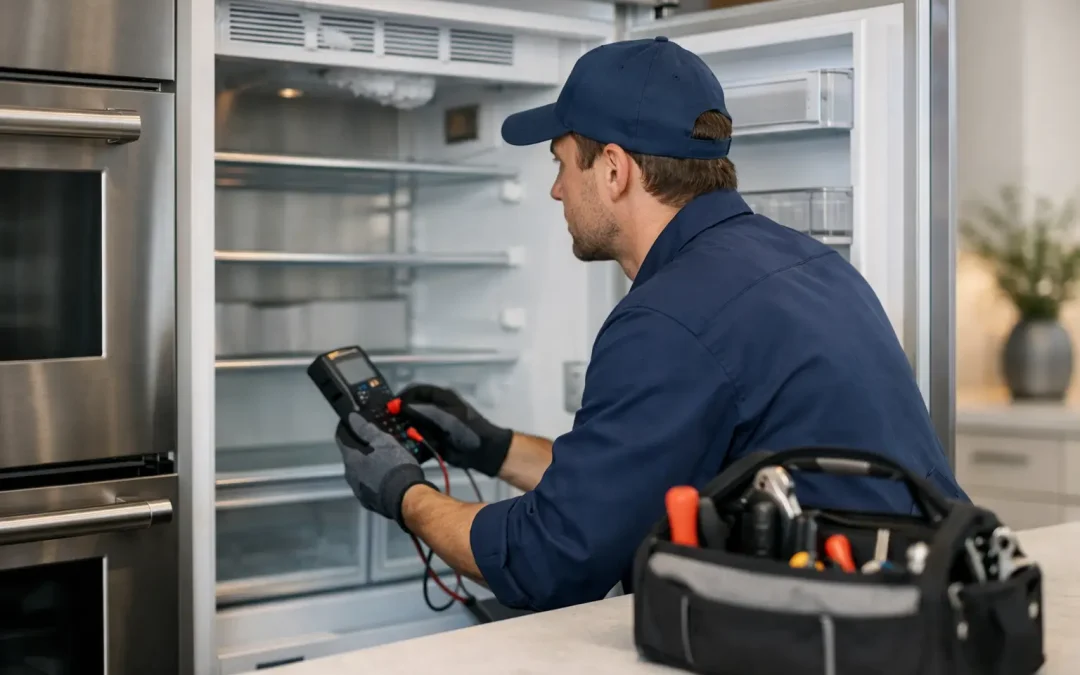
A built-in refrigerator that runs louder than usual, struggles to hold temperature, or develops moisture around a door is not simply an inconvenience. In a premium kitchen, it can put a substantial food investment, a wine collection, cabinetry, and the appliance itself at risk. Sub-Zero technicians are trained to evaluate these systems as the integrated, high-performance equipment they are, rather than treating them like a standard freestanding refrigerator.
That distinction matters. Sub-Zero refrigeration is engineered around precise temperature control, separate preservation zones, specialized airflow, and a fitted installation within custom cabinetry. A quick fix that overlooks any of those factors may address a symptom while leaving the actual cause unresolved.
Why Specialized Sub-Zero Technicians Matter
A Sub-Zero unit is designed for a long service life, but longevity depends on correct care, accurate diagnostics, and proper replacement components. Its sealed refrigeration system, electronic controls, evaporators, condenser arrangement, door alignment, and ventilation requirements work together. When one area is compromised, the problem may appear somewhere else.
For example, excess frost might be caused by a door that is not sealing correctly, but it can also point to an airflow issue, a defrost concern, or a component that is not responding as intended. Temperature fluctuations may result from dirty condenser coils, but they can also involve a fan motor, sensor, control issue, or a restriction in the refrigeration system. Identifying the source before replacing parts is what protects both the appliance and the homeowner’s budget.
Factory-qualified service professionals understand model-specific configurations, diagnostic procedures, technical specifications, and installation standards. That knowledge is particularly valuable for column refrigeration, built-in refrigerator and freezer combinations, undercounter units, wine storage, and ice machines. These products can look similar from the outside while having very different service requirements behind the panel.
Signs It Is Time to Schedule Service
Some refrigerator problems require immediate attention, while others provide an early warning that can be addressed before food safety or major equipment performance is affected. The right timing depends on the symptom, how long it has been occurring, and whether the unit is maintaining safe temperatures.
Food is warmer than expected
If milk, meat, produce, or prepared food is not staying consistently cold, do not rely on the display alone. Use an appliance thermometer to confirm the compartment temperature and avoid repeatedly opening the door while checking. A unit that cannot maintain its set temperature needs prompt professional evaluation, especially if the issue persists after confirming that doors are fully closed and airflow inside the compartment is not blocked.
Frost, condensation, or water is appearing
A small amount of moisture can occasionally result from frequent door openings or high humidity. Persistent condensation, frost buildup, pooling water, or water near the base of the appliance is different. These conditions may relate to a gasket, drain system, ice maker, defrost function, or installation and leveling concern. Water should never be ignored around custom flooring or cabinetry.
The appliance is making a new or unusual sound
Premium refrigeration systems make normal operating sounds, including fans, ice production, and compressor cycling. What deserves attention is a sound that is new, sustained, unusually loud, or paired with a performance change. Rattling may be as simple as an item vibrating inside the cabinet, but clicking, grinding, or a fan-like noise that does not stop should be assessed by a specialist.
Doors, drawers, or panels no longer align properly
Built-in refrigeration depends on precise fit. A door that sags, rubs, does not close smoothly, or no longer sits flush can affect the seal and the unit’s efficiency. On integrated models, panel alignment is also part of the appliance’s function and appearance. Adjustment should be performed carefully to avoid stressing hinges, panels, or surrounding cabinetry.
Ice production has slowed or stopped
An ice maker issue is not always limited to the ice maker. It may involve water supply, filtration, temperature, a sensor, a fill system, or ice accumulation. If ice has an unusual taste, odor, or appearance, discontinue using it until the cause has been identified.
What a Qualified Service Visit Should Accomplish
A professional visit should begin with listening. The appliance’s model number, age, symptom history, recent power events, changes in kitchen construction, and prior service all provide useful context. A technician should then inspect the unit’s operation rather than assume the most visible symptom is the entire problem.
The diagnostic process may include checking temperature performance, airflow, fans, door seals, condenser condition, drainage, electrical connections, controls, and accessible refrigeration components. The exact steps vary by model and symptom. A wine storage unit with unstable temperature requires a different evaluation from a refrigerator with a warm fresh-food compartment or an ice machine that is not producing.
Once the cause is identified, the service recommendation should be clear. Homeowners should understand what has failed, why the repair is recommended, whether additional wear is present, and what to expect after the work is completed. For an older appliance, a specialist can also help distinguish between a practical repair and a situation where restoration, component availability, or replacement planning deserves consideration.
Maintenance Is Part of Protecting the Investment
Not every service call begins with a breakdown. Preventive maintenance gives a qualified technician an opportunity to inspect performance before minor issues become more disruptive. This is especially valuable for appliances that are heavily used, located in vacation homes, or integrated into kitchens where access is limited.
Condenser care is one of the most common needs. Dust, pet hair, and kitchen debris can restrict heat release and make the system work harder than necessary. The proper cleaning method depends on the appliance design, and access can be limited in a built-in installation. Aggressive cleaning with the wrong tool can damage delicate components, so this is not always a casual do-it-yourself task.
Door gaskets also deserve attention. A gasket that is torn, compressed, dirty, or misaligned can allow warm air into the cabinet. That can lead to excess run time, moisture, frost, and uneven temperatures. Keeping shelves organized so doors close without obstruction is a simple habit that helps preserve the seal.
If a home has experienced a power outage, renovation dust, flooring work, or cabinetry adjustments near the refrigerator, it is wise to monitor operation afterward. These events do not guarantee a problem, but they can affect ventilation, electrical supply, water connections, or alignment.
Choosing Service for Built-In Refrigeration
General appliance experience is valuable, but built-in refrigeration calls for a narrower level of expertise. When selecting a service provider, homeowners should look for brand qualifications, familiarity with their specific product category, access to correct technical information, and an approach that respects the home’s finishes.
The lowest initial service price is not always the best value when a refrigerator is built into custom millwork or supports a large food and beverage investment. Incorrect diagnosis can lead to repeat visits and unnecessary parts. Improper handling can create cosmetic damage or interfere with the appliance’s ventilation and fit.
For New Jersey homeowners, Fridge Fix provides factory-certified, brand-focused service for sophisticated built-in refrigeration systems. In New York City, a trusted specialist referral can be equally important when local service coordination is needed.
A Better Response Than Waiting for Failure
A Sub-Zero refrigerator is often quietest when it is working hardest to preserve what is inside it. That makes early changes in temperature, sound, moisture, ice production, or door operation worth taking seriously. Prompt, qualified attention can protect performance before a manageable service need becomes a larger interruption to the kitchen and the home.
The most useful next step is simple: note the symptom, avoid temporary fixes that mask it, and arrange an evaluation with a technician who understands the appliance behind the cabinetry.