
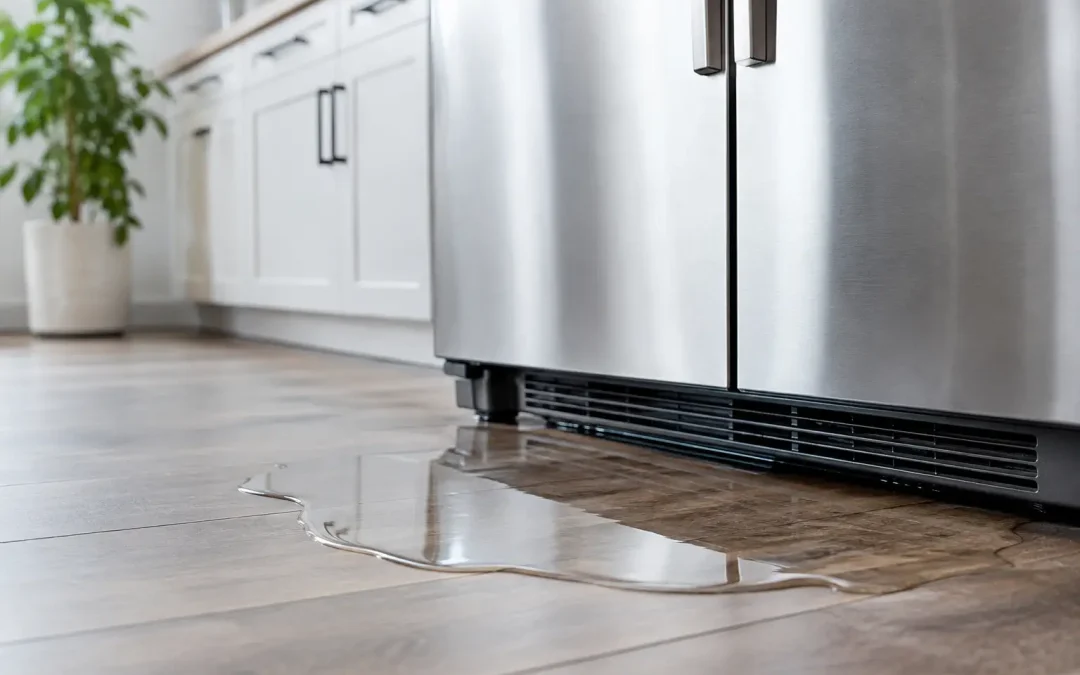
A small puddle at the base of a refrigerator can be deceptively costly. Water may travel beneath finished flooring, into cabinetry, or behind a built-in unit long before the visible evidence becomes obvious. Understanding what causes refrigerator water leaks helps protect the appliance, the kitchen around it, and the food stored inside.
For a freestanding refrigerator, finding the source may be relatively straightforward. Premium built-in systems are different. Their water lines, drain components, ice makers, door systems, and concealed installation details require a more careful approach. The water you see at the front of the unit is not always where the problem began.
What Causes Refrigerator Water Leaks Most Often?
Most refrigerator leaks come from one of four areas: the water supply connection, the ice maker or dispenser system, the defrost drain system, or condensation caused by an airflow or sealing issue. The timing and location of the water offer useful clues, but they are not a substitute for a proper diagnosis.
If water appears only after the ice maker fills, the supply line or ice maker assembly deserves attention. If it collects inside the refrigerator or beneath crisper drawers, a clogged drain is more likely. Water that forms around the door opening, on shelves, or near the exterior may point to warm, humid air entering the cabinet.
With integrated refrigeration, the cabinet panels and tight clearances can hide evidence. That is why a minor leak should be addressed promptly rather than left to “see if it happens again.”
A Loose, Damaged, or Aging Water Supply Line
Refrigerators with ice makers or water dispensers rely on a pressurized water line. A loose connection at the wall valve, a worn fitting, a cracked tube, or a damaged filter connection can allow water to escape slowly. These leaks often occur behind the appliance, where homeowners cannot easily see them.
A supply-line leak may leave water at the front toe-kick because it has traveled along the floor beneath the unit. It may also create damp drywall, swollen cabinetry, or a musty odor before a visible puddle develops. The challenge is especially significant with a built-in refrigerator that should not be pulled forward without considering its electrical connection, water line routing, door panels, and surrounding millwork.
Plastic tubing can become brittle with age, while improperly installed connections may fail sooner. A recent filter change, installation, renovation, or refrigerator move can also disturb a fitting. If water is actively flowing or pooling, shut off the refrigerator’s water supply if it can be done safely, then arrange service.
Filter Housing and Filter Installation Problems
Not every filter-related leak means the filter itself is defective. A filter that is not fully seated, an incompatible replacement, a damaged O-ring, or a cracked filter housing can all create a leak. On some premium systems, water may appear after a filter replacement because pressure has exposed a connection that was already weak.
Do not force a filter into place or continue operating a leaking filter compartment. The correct replacement and installation method matter, particularly on brand-specific systems with proprietary filter designs.
Ice Maker Leaks and Overfilling
Ice makers introduce several possible leak points: the fill tube, inlet valve, ice mold, shutoff mechanism, and water line connection. An ice maker that overfills may send water into the bin, down the freezer liner, or onto the floor. A frozen fill tube can redirect water rather than delivering it cleanly into the ice mold.
A leak from the ice maker can be intermittent. It may occur only during a fill cycle, which makes it easy to miss during a quick inspection. Watch for oversized or fused ice cubes, ice sheets in the bin, dripping near the ice maker, or water that appears shortly after fresh ice is made.
Ice maker issues should not be corrected by adjusting components at random. The fill volume, water pressure, freezer temperature, and condition of the inlet valve can all affect performance. A qualified technician can determine whether the cause is a failing part, an obstruction, or a broader refrigeration issue affecting the ice maker’s operation.
A Clogged or Frozen Defrost Drain
During normal operation, frost melts during the defrost cycle and the resulting water flows through a drain to a pan where it evaporates. When the drain tube or drain opening is blocked by debris, food residue, ice, or a component failure, that water has nowhere to go. It can overflow into the fresh-food compartment, freeze on the freezer floor, or leak beneath the refrigerator.
This is one of the most common answers to the question, “What causes refrigerator water leaks inside the unit?” Water beneath crisper drawers, ice collecting at the bottom of a freezer, or recurring puddles after defrost cycles often point in this direction.
The repair depends on why the drain is blocked. A simple obstruction and a frozen drain caused by a temperature, heater, or airflow problem are not the same repair. Clearing visible water may provide temporary relief, but the source of the blockage still needs to be identified.
Door Gasket, Alignment, and Condensation Issues
A refrigerator is designed to keep warm, humid kitchen air out. When a door gasket is torn, dirty, warped, or not sealing because of door misalignment, moisture enters the compartment. That moisture can condense on interior surfaces and eventually become water droplets, frost, or pooling water.
Built-in refrigerator doors are heavy, particularly when fitted with custom panels. Door alignment affects more than appearance. A door that does not close and seal correctly can increase condensation, reduce cooling efficiency, and place added strain on the system.
Before assuming the gasket has failed, check whether a food container, drawer, or shelf is preventing full closure. If the door closes but does not seal consistently, professional adjustment or gasket evaluation is appropriate. Replacing a gasket without correcting door alignment may not solve the problem.
Drain Pan and Condensate Problems
Many refrigerators collect normal defrost water in a drain pan near the compressor area, where heat helps it evaporate. If the pan is cracked, out of position, or overwhelmed by excess moisture, water can escape. On some systems, a leak near the base may also result from a condensate management problem rather than a pressurized water line.
High indoor humidity can make condensation more noticeable, but it should not create repeated floor puddles around a properly operating refrigerator. If the appliance is running excessively, has poor airflow, or is not maintaining stable temperatures, the apparent “water leak” may be a symptom of another performance concern.
Why Built-In Refrigerator Leaks Need Prompt Attention
Water damage does not respect the visible boundary of a puddle. It can migrate under hardwood, stone-adjacent substrates, cabinets, and finished wall surfaces. With a premium built-in installation, moisture can also affect ventilation areas, electrical components, insulation, and custom panels.
Avoid pulling a built-in refrigerator forward without the right preparation. Incorrect movement can damage flooring, cabinetry, panels, water connections, or the appliance itself. It is also wise not to remove interior covers, bypass drain components, or use sharp tools to chip away ice. Those actions can turn a contained issue into a more extensive repair.
If the leak is active, protect the surrounding floor with absorbent towels, remove vulnerable items from nearby cabinetry, and turn off the water supply when the water source is clearly connected to the refrigerator. Then have the system evaluated before water damage expands.
When to Schedule Specialized Refrigerator Service
Service is warranted when a leak returns after cleanup, water is present behind or beneath the unit, ice production is irregular, temperatures are unstable, or a water dispenser or filter area is dripping. It is also the right call when the refrigerator is integrated into cabinetry and the source cannot be safely reached.
For Sub-Zero and other high-end built-in refrigeration systems, brand-specific diagnostic experience matters. The correct repair may involve the water valve, tubing, drain system, ice maker, door adjustment, or a refrigeration performance issue that is creating excess frost or condensation. Fridge Fix provides factory-certified expertise for sophisticated built-in refrigeration, helping homeowners address the cause rather than repeatedly managing the puddle.
A refrigerator leak is rarely just a housekeeping inconvenience. Treating the first signs promptly protects the appliance investment and gives water far less opportunity to damage the kitchen built around it.