
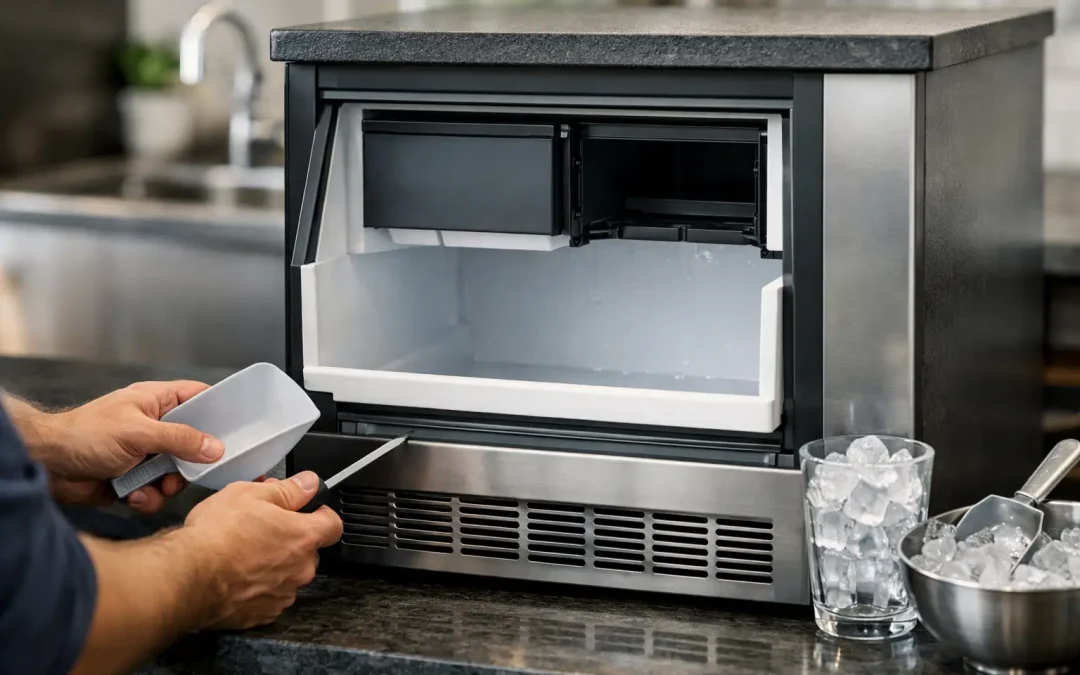
A full ice bin is easy to take for granted until cocktails, iced coffee, and weekend guests expose the problem. An undercounter ice machine not making ice can result from something as simple as a paused cycle or blocked airflow, but premium built-in units also have components that should be evaluated by a qualified technician rather than guessed at.
The right first step is to determine whether the machine has stopped producing ice entirely, is producing unusually little ice, or is making ice that melts, clumps, or looks poor. Those symptoms point to different parts of the ice-making process: water delivery, freezing, harvest, drainage, or refrigeration.
Start With the Simple, Safe Checks
Before moving the unit or removing panels, confirm that it has power and is switched on. Some undercounter ice machines have a control setting that pauses production when the bin is full, when a cleaning cycle is active, or when the unit has been turned off for an extended absence. Check the control display or indicator lights for a service, clean, or water-related alert.
Next, look at the water supply valve serving the appliance. It must be fully open, and the supply line cannot be pinched behind the cabinet. If recent kitchen work, plumbing service, or a filter replacement preceded the issue, this check is especially worthwhile. A machine cannot make ice without a consistent water supply, even if its lights and fans appear to be operating normally.
Give the machine adequate time after restoring power or water. Many units need several minutes before beginning their first fill cycle and may take longer to freeze and harvest the first batch. Repeatedly turning the unit off and on can interrupt that process and make diagnosis less clear.
Also inspect the surrounding cabinet area. Undercounter equipment relies on proper ventilation through its designed intake and exhaust paths. A blocked grille, accumulated dust, or a tight installation that does not meet manufacturer clearance requirements can raise operating temperatures and reduce ice production. Clean accessible exterior grilles gently with a vacuum and soft brush, but do not force tools into the machine or bend condenser fins.
Why an Undercounter Ice Machine Is Not Making Ice
Ice production follows a strict sequence. The machine needs incoming water, a properly functioning recirculation or fill system, refrigeration capacity to freeze that water, a control signal to initiate harvest, and a drain system that can remove meltwater. A failure at any stage can leave the bin empty.
Water supply and filtration problems
A partially closed valve, low household water pressure, restricted filter, or scale in the water circuit can prevent the reservoir from filling correctly. In some cases, the unit may make thin sheets of ice, small cubes, or irregular batches rather than no ice at all. A filter that is overdue for replacement may contribute to reduced flow, although not every premium ice machine uses the same filter arrangement.
Hard-water mineral deposits are another common concern. Scale can narrow water passages, affect sensors, and interfere with the components that distribute water across the freezing surface. Cleaning needs vary by water quality, use level, and machine design. Using an unapproved cleaner or skipping the manufacturer’s rinse procedure can leave residue behind, so this is not a place to substitute household chemicals.
Heat, airflow, and refrigeration concerns
If the machine receives water but never freezes it, the concern may be airflow, a condenser issue, a failed fan, or a refrigeration-system fault. Built-in ice machines operate in a compact cabinet, where heat removal matters as much as cold production. A warm room, a blocked air path, or grease and dust near the condenser can affect performance.
Refrigeration diagnosis requires specialized tools and model-specific knowledge. Sealed-system work, refrigerant handling, and electrical testing should be left to trained service professionals. Attempting a repair without the proper equipment can damage expensive components, compromise a warranty, and create a larger repair than the original problem.
Drainage and harvest failures
Many undercounter ice machines depend on a gravity drain or drain pump. If the drain line is obstructed, improperly routed, frozen, or backed up, the unit may stop as a protective response. Water in the bin area, repeated pump noise, or an error light can indicate a drainage issue.
The machine can also freeze water successfully but fail to release the ice. This may look like an empty bin if ice is stuck on the evaporator plate, or it may leave a thick sheet of ice inside the unit. Harvest problems can involve sensors, a hot-gas system, a water valve, control board, or excessive scale. Do not chip at stuck ice with a knife or screwdriver. That can puncture a critical surface and turn a service call into a major repair.
Bin controls and temperature conditions
A bin thermostat or optical sensor tells the unit when enough ice has accumulated. If that control is obstructed, misaligned, or malfunctioning, the machine may believe the bin is full and stop production. On the other hand, ice that melts rapidly in the bin can point to a door or lid issue, an ambient-temperature problem, or a refrigeration concern.
For units installed in home bars, pool houses, garages, or outdoor-adjacent spaces, seasonal conditions matter. Most premium residential ice machines have specified operating temperature ranges. A machine that works well in a climate-controlled kitchen may struggle in an area that becomes excessively hot, cold, humid, or poorly ventilated.
What Not to Do During Troubleshooting
Protecting the appliance is as important as restoring ice production. Avoid repeatedly resetting breakers, bypassing switches, disconnecting water lines without shutting off the supply, or removing sealed-system panels. Do not use sharp tools to remove ice, and do not pour hot water into areas that contain electrical components or sensitive sensors.
It is also wise to discard ice if there has been standing water, an extended shutdown, an unknown cleaning chemical exposure, or a drainage backup. Once the cause has been corrected, clean and sanitize the unit according to its manufacturer instructions before returning it to regular use.
When Professional Ice Machine Service Makes Sense
Schedule service when basic checks confirm power, water, and airflow but the machine still does not begin a normal cycle. Prompt diagnosis is also appropriate if you see a persistent error code, hear unusual grinding or repeated clicking, find water leaking into cabinetry, smell overheating electrical components, or discover ice frozen solid to an internal surface.
Premium built-in models are not interchangeable with ordinary portable ice makers. Their controls, access panels, drain arrangements, and installation requirements are specific to the manufacturer and model. A technician familiar with high-end refrigeration can test water flow, sensors, pumps, fans, electrical circuits, and refrigeration performance without treating an integrated installation like a standard appliance.
For New Jersey homeowners, Fridge Fix provides factory-certified, model-aware service for sophisticated built-in refrigeration and ice equipment. Bringing in a specialist early can be particularly valuable when cabinetry, flooring, custom panels, or adjacent refrigeration must be protected during access and repair.
Preventing the Next Empty Ice Bin
Regular care is less disruptive than an unexpected failure before a dinner party or holiday gathering. Keep the ventilation area clear, replace water filters on the appropriate schedule, and follow the manufacturer’s cleaning and descaling intervals. Homes with hard water or heavy ice use may need more frequent attention than homes where the machine runs only occasionally.
Pay attention to smaller changes, such as slower production, thinner ice, louder drain-pump operation, or cloudy ice. Those early signs often provide an opportunity to address a water, cleaning, or airflow issue before the machine stops altogether. A properly maintained undercounter ice machine should remain a quiet convenience in a well-appointed kitchen, not a last-minute source of disruption.