
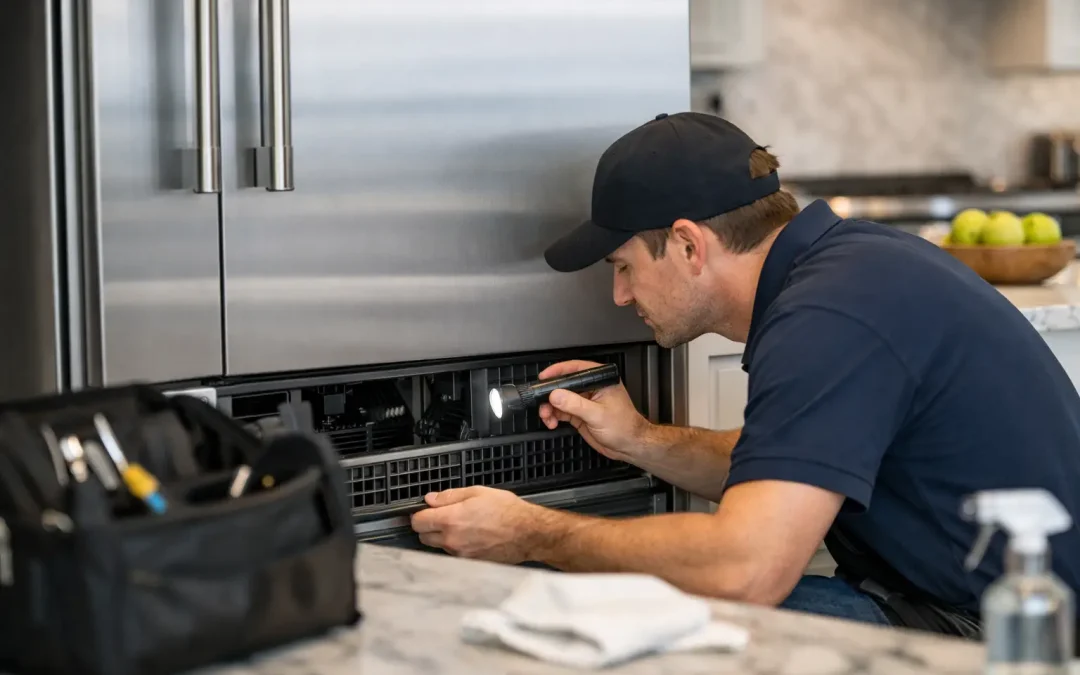
A built-in Sub-Zero refrigerator can look perfectly normal while working harder than it should. Because the unit is designed to preserve food precisely and blend into custom cabinetry, small maintenance issues can stay out of sight until they affect temperatures, ice production, or operating noise. A practical Sub-Zero refrigerator maintenance schedule protects the performance and appearance of an appliance that is central to a high-value kitchen.
The right schedule is not a substitute for professional service. It is a way to catch ordinary wear early, keep airflow and drainage conditions in order, and give a qualified technician a cleaner baseline when service is needed. Exact requirements vary by model, age, installation, household usage, and whether the unit includes an ice maker, water filtration, wine storage, or integrated panels.
A Sub-Zero Refrigerator Maintenance Schedule by Frequency
For most households, maintenance falls into four useful intervals: monthly observation, seasonal cleaning, filter replacement based on the model’s indicator or schedule, and an annual professional inspection. Homes with pets, frequent entertaining, heavy ice use, or a kitchen exposed to renovation dust may need more attention between appointments.
Every month: inspect performance, doors, and interior conditions
Start with the details that reveal whether the refrigerator is operating normally. Confirm that interior lights work, food is cooling as expected, and the display has no active service message. Listen for a meaningful change in sound. Fans, compressors, and ice makers make normal operating noises, but a new persistent rattle, grinding sound, repeated clicking, or unusually long run time deserves attention.
Wipe spills promptly, particularly around drawer tracks, door bins, and the base of the interior. Acidic foods and sticky liquids can damage finishes, create odors, and interfere with smooth drawer operation. Use a soft cloth and a mild cleaner appropriate for the interior surfaces. Avoid abrasive pads, harsh solvents, and excessive water near controls or lighting.
Check door and drawer gaskets at the same time. A gasket should sit evenly against the cabinet without crumbs, residue, cracks, or areas that pull away from the frame. Clean it with mild soap and water, then dry it thoroughly. If a door does not close firmly or food near the opening seems warmer than usual, do not assume the gasket is the only cause. Alignment, hinges, drawer placement, and airflow can also be involved.
Every three to six months: clean the condenser area
The condenser is one of the most important parts of a Sub-Zero refrigerator maintenance schedule. It releases heat removed from the cabinet. When the condenser area accumulates dust, pet hair, or kitchen debris, the refrigerator may run longer and use more energy to maintain proper temperatures.
The appropriate cleaning method depends on the model and how it is installed. Some units provide accessible condenser areas behind a grille, while others require a more specific process. Turn off power as directed in the product documentation before cleaning. Carefully remove loose debris with a vacuum and suitable brush attachment, taking care not to bend delicate components or force debris deeper into the unit.
For a refrigerator in a pet-friendly home or an active kitchen, inspect the condenser area every three months. In a lower-traffic household, twice-yearly cleaning is often reasonable. If the grille is difficult to remove, the space is tightly integrated, or you see heavy buildup, arrange professional maintenance rather than risking damage to the appliance or its finished surroundings.
As indicated: replace water and air filters
Many Sub-Zero models use filtration systems that support water quality, ice quality, or interior air management. Replace filters according to the unit’s indicator and the instructions for that specific model. Calendar reminders can help, but the indicator and product documentation should lead the decision because filter type and replacement interval differ across product generations.
A delayed water filter replacement may reduce water flow, affect ice production, or compromise taste. An overdue air purification component can allow stronger food odors to linger. Before ordering any replacement part, confirm the model and serial information. Premium built-in units often have model-specific components, and an incorrect part can create unnecessary delays.
Every six months: check ice maker and drainage behavior
If your unit has an ice maker, inspect the ice bin and discard old or clumped ice. Wash and dry the bin before reinstalling it. Old ice can absorb freezer odors and may make a fresh batch taste stale even when the ice maker itself is operating correctly.
Pay attention to ice size, production volume, and whether cubes are unusually wet, hollow, cloudy, or fused together. These symptoms can come from water supply conditions, a filter issue, freezer temperature concerns, or a component that needs diagnosis. Do not use sharp objects to remove ice or chip at a frozen mechanism.
Also look for water beneath drawers, along the bottom of the cabinet, or at the floor in front of the unit. Condensation or a small leak should be addressed promptly. Water can affect cabinetry, flooring, and adjacent built-in components long before it becomes a major visible problem.
Once a year: schedule qualified preventive service
Annual service is the point where routine homeowner care meets appliance-specific technical expertise. A qualified Sub-Zero technician can assess cooling performance, airflow, condenser condition, seals, fans, electrical connections, drainage, ice-making components, and control functions in the context of your particular model.
This is especially valuable for older units, refrigerators that have undergone a kitchen renovation, or systems that have experienced a move, panel adjustment, power event, or prior cooling concern. A preventive visit can identify wear before it becomes a food-loss emergency or a more involved repair.
For New Jersey homeowners, Fridge Fix provides factory-certified service focused on sophisticated built-in refrigeration. That specialized experience matters when a refrigerator is integrated into cabinetry and connected to water, custom panels, or companion freezer and wine-storage equipment. A general appliance approach may miss installation-related details that affect performance.
What should trigger service before the annual visit?
A maintenance schedule should never require you to wait through a warning sign. Contact a qualified service specialist if the refrigerator displays an error message, struggles to hold temperature, runs almost continuously, develops unusual noise, produces little or no ice, leaks water, or shows frost where it normally does not.
Food quality can provide an early clue as well. Produce that freezes in the fresh-food compartment, milk that spoils sooner than expected, excessive humidity, or a recurring odor after cleaning can indicate a temperature, airflow, drainage, or sealing issue. Record when the symptom began and whether it affects one compartment or the whole unit. That information helps a technician diagnose the problem efficiently.
Avoid repeatedly resetting the appliance, changing temperature settings dramatically, or blocking vents with tightly packed food in an attempt to solve a cooling concern. Those actions can mask the original issue or create new airflow problems. Keep the affected area clear and preserve any error message for the service visit.
Protect the investment between appointments
Sub-Zero systems are designed for long-term performance, but longevity depends partly on installation conditions and everyday use. Keep exterior ventilation areas unobstructed. Do not overload shelves or drawers beyond their intended capacity, and make sure containers do not prevent a door or drawer from closing completely. During remodeling, protect the appliance from drywall dust and make condenser cleaning part of the post-project checklist.
If you will be away for an extended period, follow the model-specific guidance for vacation settings, ice maker operation, and water supply. The best choice depends on the length of the trip, the contents of the refrigerator, and whether someone will be checking the home. For a vacant property, professional advice is prudent when water-connected appliances are involved.
A well-kept Sub-Zero does not demand constant attention. It rewards consistent observation, careful cleaning, timely filter changes, and an annual visit from a specialist who understands the system behind the cabinetry. That rhythm helps preserve the quiet, reliable food storage your kitchen was built around.