
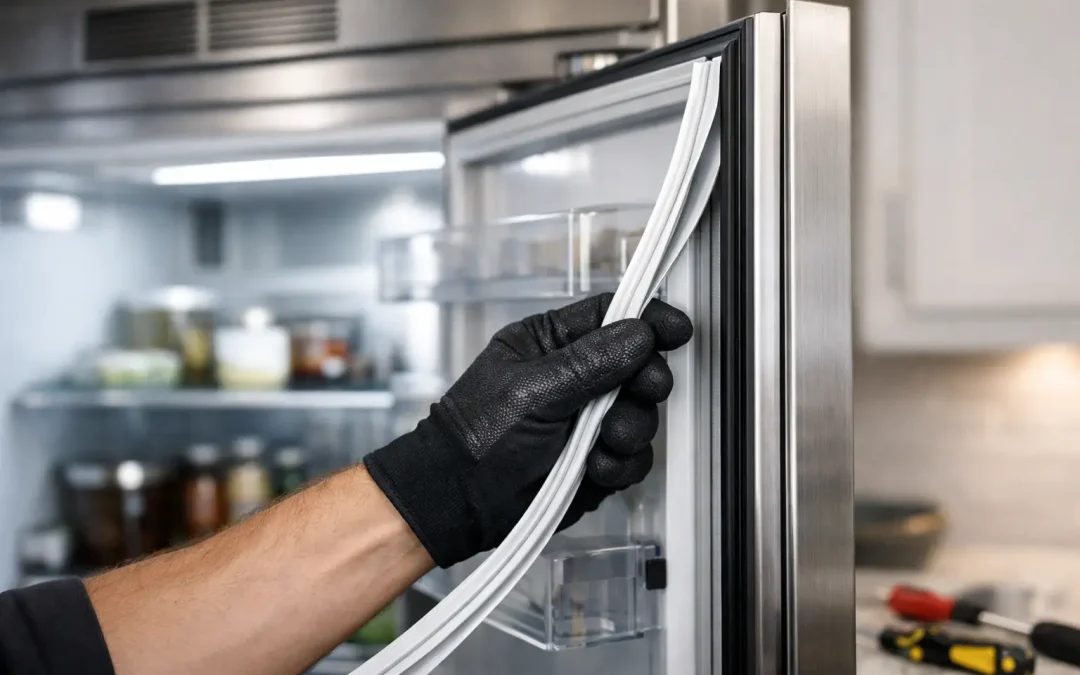
A refrigerator door that does not seal fully can turn a carefully designed Sub-Zero kitchen into an expensive source of wasted energy and inconsistent food temperatures. Sub-Zero refrigerator door gasket replacement is often the right answer when a worn, torn, hardened, or distorted seal allows warm room air into the cabinet. The gasket may look like a modest component, but its fit directly affects refrigeration performance, condensation control, and the workload placed on the unit’s sealed system.
For a premium built-in refrigerator, this is not a repair to treat as cosmetic. The correct gasket must match the model and door configuration, sit properly in its retaining channel, and make even contact all the way around the opening. A factory-qualified technician can distinguish a genuinely failed gasket from a door-alignment, hinge, or installation issue that produces similar symptoms.
Signs Your Door Gasket May Need Attention
A damaged gasket is not always obvious at first glance. Homeowners commonly notice that the door must be pushed closed, that frost or moisture appears near the door opening, or that the cabinet feels less consistently cold than usual. A persistent interior light that remains on because the door is not closing properly can also add heat to the compartment.
Look closely for tears, flattened sections, cracks at the corners, hardened rubber, or areas that have pulled away from the door. Food residue and household cleaners can also leave the gasket tacky or misshapen. If the magnetic seal no longer holds the door evenly against the frame, air can enter through even a narrow gap.
An informal paper test can offer a useful clue. Close the door over a strip of paper at several points around the perimeter. If the paper slides out with almost no resistance in one isolated area, the gasket or door position may need adjustment. This test is not a final diagnosis, though. A paper that pulls free at multiple locations can point to a gasket problem, while a gap on one side may be caused by a sagging door or hinge condition.
Why a Small Seal Problem Has Larger Consequences
Built-in refrigeration is engineered to hold stable conditions with doors that close precisely within surrounding cabinetry. When warm, humid kitchen air enters through a compromised gasket, the unit must remove that heat and moisture. The result can include longer run times, elevated energy use, condensation, frost, and uneven temperatures.
That added workload matters for food preservation and for the life of mechanical components. It can also create misleading service symptoms. A homeowner may assume the refrigerator has a compressor or control problem when the primary issue is simply that the door is not sealing. Conversely, replacing a gasket without evaluating the door can leave the underlying alignment issue unresolved.
On integrated and panel-ready Sub-Zero models, the relationship between the door, overlay panel, hinges, and cabinet opening is especially important. Decorative panels add weight, and a slight change in alignment can affect how the gasket meets the frame. That is why accurate diagnosis should come before ordering parts.
Sub-Zero Refrigerator Door Gasket Replacement Starts With the Exact Model
There is no universal Sub-Zero door gasket. Dimensions, corner profiles, mounting methods, freezer and refrigerator configurations, and door styles vary by series and production generation. The model and serial information identify the correct part and help a specialist determine whether related hardware should be inspected at the same appointment.
A replacement gasket should never be selected by appearance alone. Two seals can look nearly identical yet have different magnetic profiles or attachment details. An incorrect gasket may buckle, leave a gap, interfere with closing, or fail to seal despite being newly installed.
Before a replacement is scheduled, it is also worth considering the gasket’s condition in context. If the seal is dirty but still pliable and intact, careful cleaning with a mild, nonabrasive solution may restore better contact. If it is torn, permanently compressed, brittle, warped, or repeatedly pulls loose, replacement is usually the more dependable route.
What Proper Replacement Involves
A professional gasket replacement is a controlled service process, not just the removal and installation of a rubber perimeter. The technician first confirms the model-specific part and examines the door, hinges, closing action, and cabinet relationship. This inspection helps prevent a new gasket from being installed against a misaligned door.
The old gasket is removed carefully so the door liner, retaining area, and surrounding finish are not damaged. The mounting channel is cleaned thoroughly because grease, crumbs, residue, or old material can keep the new gasket from seating correctly. The replacement seal is then fitted evenly, with close attention to corners and any areas where the gasket must lie flat before the door is closed.
After installation, the door is checked for consistent contact around the full perimeter. A technician may make door or hinge adjustments when appropriate, then verify that the door closes naturally without excessive force. On a high-value built-in refrigerator, those final checks are what separate a correct-looking repair from a correct repair.
When a New Gasket Is Not the Complete Fix
A gasket can be in good condition and still fail to seal. Door hinges may be worn, loose, or out of adjustment. Heavy door bins, an overloaded compartment, or a shifted panel can affect closing. A refrigerator that is not level or was improperly installed may also place the door out of position.
In some cases, an obstruction is the simple cause. A crisper drawer, shelf, bottle, or food package may prevent the door from closing fully. In other cases, the door closes but reopens slightly because the cabinet is not level or the hinge system needs service. Replacing the gasket in either situation may not correct the symptom.
Condensation and frost also deserve a broader evaluation. They can result from frequent door opening, unusually humid conditions, or a door left ajar, not only from gasket damage. A qualified diagnosis protects against replacing parts unnecessarily and focuses the repair budget where it will make a difference.
Care That Helps a New Gasket Last
Once the seal is working correctly, routine care is straightforward. Wipe spills from the gasket and door frame promptly, particularly sticky food residue near the lower corners. Avoid harsh solvents, abrasive pads, and sharp tools that can cut or dry the gasket material.
Make sure door bins and shelves are properly seated, and avoid packing the cabinet so tightly that containers push against the door. If you notice a change in door closing or a new moisture pattern, address it early. A minor adjustment is usually easier than allowing an air leak to persist through an entire season.
Preventive maintenance also provides an opportunity to inspect seals, hinges, door alignment, airflow, and overall operating performance together. For homeowners who rely on built-in refrigeration to protect fresh food, frozen goods, or a carefully planned kitchen, this kind of targeted attention helps preserve the appliance investment.
Choosing Specialized Service for a Built-In Unit
Door gasket work may appear simple, but Sub-Zero equipment is designed as a complete system. Proper service respects the appliance’s fit, finish, performance requirements, and model-specific parts. A specialist should be able to identify the correct gasket, assess related door concerns, and complete the work without treating a premium built-in refrigerator like a standard freestanding unit.
Fridge Fix provides factory-certified, brand-focused service for Sub-Zero refrigeration throughout New Jersey, with NYC customers supported through a recommended service partner. For a torn seal, persistent condensation, or a door that no longer closes with confidence, scheduling an evaluation can prevent a small perimeter gap from becoming a larger performance concern.