
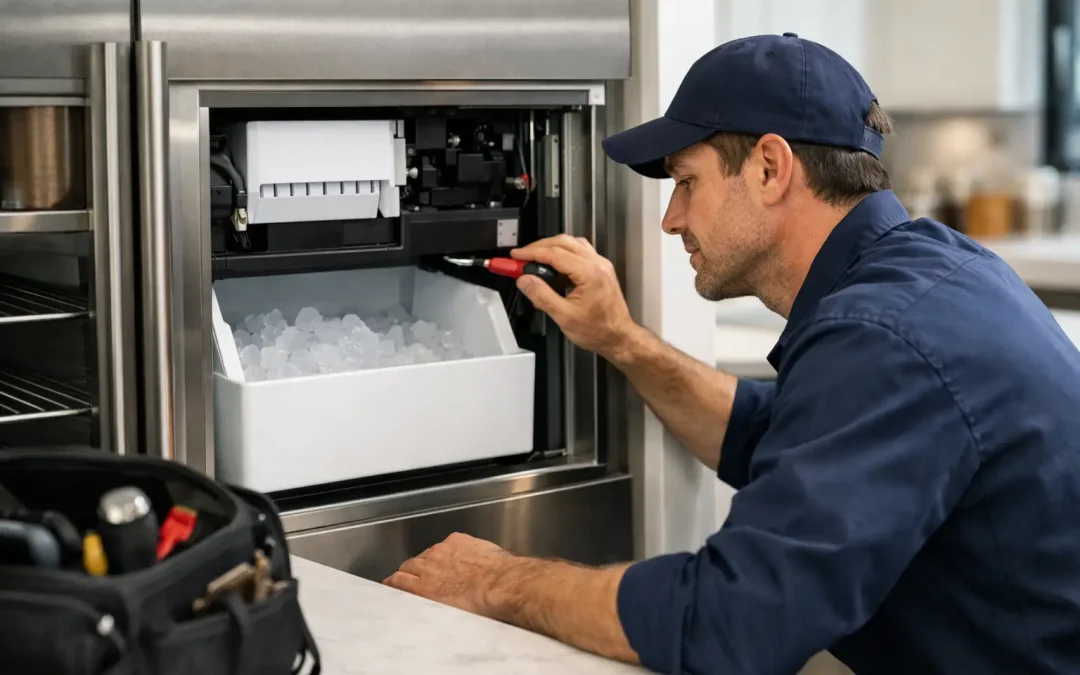
A Sub-Zero ice maker that suddenly slows down, produces hollow cubes, leaks, or stops altogether can disrupt more than a glass of iced water. In a premium built-in kitchen, the issue may involve the refrigerator’s water supply, freezer temperature, filtration, controls, or the ice-making assembly itself. Effective sub zero ice maker repair starts by identifying the actual cause rather than replacing parts based on a symptom.
A few missed batches of ice do not always point to a failed ice maker. Conversely, a unit that continues to cycle with an underlying water or temperature problem can create avoidable stress on components. The right service approach protects the appliance, the surrounding cabinetry, and the long-term performance expected from a Sub-Zero system.
What a Proper Sub Zero Ice Maker Repair Diagnosis Includes
Ice production is the result of several systems working together. The freezer must remain cold enough, the water valve must deliver the correct amount of water, the filter and supply line must allow proper flow, and the ice maker must accurately sense and release each batch. A failure at any point can look like an ice maker problem.
A qualified technician begins with the basics, but does not stop there. They verify freezer temperature, inspect water pressure and filtration, check for a frozen fill tube, evaluate the inlet valve, and examine the ice maker’s mechanical and electrical operation. On electronically controlled models, they also consider sensors, switches, wiring connections, and control-board communication.
This method matters because similar symptoms can have very different repairs. Small or incomplete cubes often suggest restricted water flow. No ice with a full ice bin signal issue may point to a shutoff mechanism or control concern. Ice that forms but will not harvest can indicate a problem within the ice maker assembly, but temperature and electrical supply should be confirmed before that conclusion is reached.
For built-in refrigeration, access is also part of the job. Components may sit behind carefully fitted panels, integrated trim, or cabinetry. A specialist understands how to work methodically around these details without compromising alignment, finishes, or airflow.
Common Signs Your Ice Maker Needs Attention
The clearest sign is no ice production after the ice maker has had enough time to cycle. Most units need several hours after being turned on, after a filter change, or after the door has been open for an extended period. If the freezer has recently been loaded with warm groceries or lost power, normal production may take longer to resume.
Other warning signs deserve attention sooner. These include unusually small cubes, cloudy or hollow ice, a frozen clump in the bin, water overflowing into the ice bucket, a drip or puddle near the freezer, or a clicking sound without a completed harvest cycle. An ice maker that makes ice intermittently is not necessarily a minor inconvenience. Intermittent operation can be a clue that water flow, temperatures, or controls are becoming unreliable.
A new water filter is often assumed to be the answer, and sometimes it is. But filters are not interchangeable solutions for every ice issue. A filter that is overdue, incorrectly installed, or not fully seated can restrict water. At the same time, replacing a filter will not correct a defective valve, a frozen fill path, or a malfunctioning ice maker module.
Safe Checks Before Scheduling Service
Homeowners can make a few observations that help narrow the issue without disassembling the appliance. Confirm that the ice maker is turned on, that the household water supply is active, and that the freezer door closes completely. Look for an obvious bin obstruction or a large mass of fused ice that may be preventing normal movement.
If your model uses a replaceable water filter, check whether the filter is due for replacement and whether it is installed correctly. Review the filter’s service history rather than relying on appearance alone. A filter can look clean while still restricting flow.
It is also useful to note whether the water dispenser, if equipped, has normal flow. Weak dispenser flow and poor ice production together can point toward a supply or filtration issue. Normal dispenser flow does not rule out an ice maker problem, but it gives a technician useful context.
Do not force the ice maker’s shutoff arm, chip at ice with sharp tools, or attempt to thaw concealed lines with heat. These measures can damage plastic components, insulation, wiring, or interior surfaces. Likewise, turning the appliance off for an extended period may temporarily thaw a frozen fill tube, but it can mask the reason it froze in the first place.
Why Temperature Problems Affect Ice Production
An ice maker depends on a stable freezer environment. If the compartment runs too warm, water may not freeze within the expected cycle. If it runs excessively cold or airflow is disrupted, ice can bridge, freeze in place, or interfere with the harvest process.
Temperature concerns are not always obvious from food condition alone. A freezer can seem adequately cold while experiencing inconsistent airflow, a sensor issue, frost accumulation, a door-seal concern, or an operating condition that affects the ice maker first. In a Sub-Zero refrigerator or freezer, correct diagnosis requires attention to the complete refrigeration system, not just the ice compartment.
This is one reason an ice maker replacement should not be the automatic first step. Installing a new assembly in a freezer with an unresolved temperature, fill, or control issue can lead to the same complaint returning. The part may be new, but the root cause remains.
Repair or Replacement: What Makes Sense?
The appropriate solution depends on the model, the age and condition of the appliance, the failed component, and whether related issues are present. In some cases, a water valve, fill tube, sensor, switch, or damaged connection can be repaired without replacing the complete ice maker. In others, a worn or failed ice maker assembly is the sensible and reliable choice.
Quality parts guidance is especially valuable for premium refrigeration. Sub-Zero models can have model-specific configurations, and the correct component must match the appliance rather than merely resemble the existing part. Using an incorrect or poorly matched part can affect fit, water delivery, electrical operation, or long-term reliability.
A professional should also assess whether a leak has affected adjacent areas. Water escaping from an ice maker can travel behind bins, under shelves, or into areas where it is not immediately visible. Early attention can prevent damage to interior components and help protect the cabinetry surrounding a built-in installation.
The Value of Specialized Service for Built-In Refrigeration
Premium refrigeration is designed as a long-term kitchen investment. Its service needs are different from those of a standard freestanding refrigerator, particularly when appliances are integrated into custom millwork and relied upon for daily food preservation and entertaining.
Factory-certified experience brings model familiarity, correct diagnostic practices, and an understanding of how refrigeration, water delivery, and controls interact. It also helps ensure that service decisions are based on the unit’s specific condition, not on a one-size-fits-all repair approach.
For New Jersey homeowners, Fridge Fix provides specialized service for Sub-Zero and other high-end built-in refrigeration systems. A focused diagnosis can reduce repeat visits, avoid unnecessary part replacement, and restore dependable ice production with appropriate care for the appliance and home.
If the ice maker is leaking, repeatedly freezing over, or failing to produce ice after basic checks, scheduling qualified service is the prudent next step. A timely diagnosis is often the simplest way to protect the performance and longevity of the refrigeration system you chose for your kitchen.