
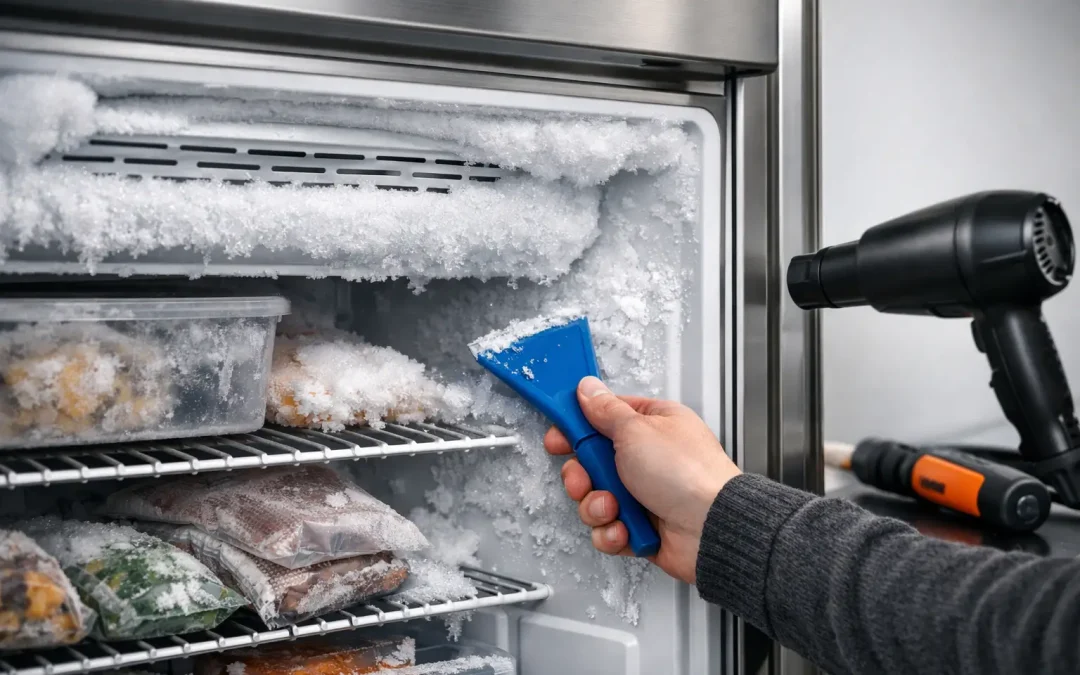
A light coating of frost on food packages after frequent door openings is one thing. Persistent sub zero freezer frost buildup on shelves, door bins, interior walls, or around the door opening is another. In a premium built-in freezer designed to manage temperature and moisture precisely, recurring frost deserves attention before it affects food quality, storage space, or the appliance’s long-term performance.
The source is often a small amount of humid household air entering the freezer. It can also point to a door-seal problem, an alignment issue, a defrost-system concern, or a condition that requires brand-specific diagnosis. Knowing the difference helps protect a significant kitchen investment without replacing parts or attempting repairs that are not appropriate for the unit.
Why Sub Zero Freezer Frost Buildup Happens
Frost forms when moisture in warm air reaches the freezer’s cold interior surfaces and freezes. Every freezer sees some moisture exposure during normal use, especially in humid weather or during heavy holiday cooking. A properly operating unit, however, should not continually accumulate thick, visible frost in the fresh-food storage area.
The most common reason is that the door is not sealing completely. A container, package, or freezer drawer may be preventing the door from closing fully. On an integrated or built-in installation, the decorative panel, hinges, or drawer alignment can also affect closure. Even a narrow opening allows humid air to enter repeatedly, and the resulting frost may appear first near the door, on the top shelf, or around the interior frame.
A gasket that is dirty, torn, hardened, or pulled out of its channel can create the same condition. The gasket does not need to look severely damaged to leak. A slight gap at a corner or a section that has lost contact with the cabinet can be enough to introduce moisture throughout the day.
Usage matters as well. Placing warm leftovers directly into the freezer adds a large moisture load. Leaving the door open while organizing food, storing unwrapped items, or opening the freezer often in a humid kitchen can temporarily increase frost. These causes are usually manageable when the frost is light and does not return quickly after normal use resumes.
There is a more technical possibility: frost may be developing where it should not because the automatic defrost process is not operating as intended. The evaporator, which is behind an interior panel and not normally visible, naturally collects frost during cooling. The unit’s defrost system is designed to clear that frost at controlled intervals. If a component, sensor, control, heater circuit, drainage path, or airflow condition is compromised, frost can begin to interfere with cooling and air circulation.
What the Location of Frost Can Tell You
The pattern of frost often provides useful clues, although it does not replace a proper service diagnosis. Frost concentrated around the door perimeter, on the gasket side of a drawer, or near one upper corner commonly suggests an air leak or a closure issue. Check whether a food package is extending beyond the shelf or drawer line and whether the door closes smoothly without needing to be pushed.
Frost across the back wall or heavy ice behind interior vents is more concerning. That pattern can restrict airflow, causing uneven temperatures, longer run times, or food that seems softer than it should be. Because the critical components are behind panels, simply removing visible frost may improve appearance briefly without addressing the source.
Frost that returns shortly after a complete manual defrost also warrants closer attention. If the door is closing properly and food is being stored normally, rapid recurrence may indicate a defrost, drainage, or air-management issue. These systems are sophisticated, and correct diagnosis depends on the model configuration, controls, and component layout.
Checks You Can Safely Make First
Start with the simple, noninvasive items. Confirm that shelves, bins, and food packages allow the freezer door or drawer to close without resistance. Look carefully along the entire gasket for crumbs, sticky residue, tears, distortion, or a section that has come loose. Clean the gasket gently with a soft cloth, mild soap, and water, then dry it thoroughly.
Next, look for signs of a closure problem. Does the door sit evenly? Does it spring open slightly after you release it? Does a fully loaded drawer need to be lifted or pushed into place? Do not force a door, bend hinges, or alter panel hardware. Built-in Sub-Zero units are precisely installed, and adjustments can affect alignment, panel reveal, and sealing performance.
Also consider recent changes in household use. A freezer stocked with warm food after an event, repeated door openings while entertaining, or unusually humid weather can create a short-lived frost condition. Give the unit a reasonable period of normal operation after correcting these habits, but continue to monitor it. Frost that thickens, spreads, or returns quickly is not a condition to ignore.
Avoid chipping ice with a knife, screwdriver, or other sharp tool. Freezer liners, concealed refrigerant lines, and internal components can be damaged easily. Likewise, avoid applying intense heat to the interior with a heat gun or similar device. A controlled defrost process and professional evaluation are safer choices for a premium built-in appliance.
When Frost Becomes a Service Issue
Schedule specialized service when frost is heavy, recurring, or accompanied by performance changes. Warning signs include a freezer that runs almost constantly, unusual fan noise, reduced storage space from ice, soft ice cream, inconsistent food temperatures, water appearing in an unexpected area, or a door that will not stay closed.
A technician should also evaluate any freezer that has a visibly compromised gasket, a misaligned door or drawer, frost behind panels or vents, or repeated frost after normal cleaning and use adjustments. The right repair may be as straightforward as correcting a seal or alignment. In other cases, the technician may need to test the defrost circuit, inspect drainage, assess airflow, or verify control operation.
This is where appliance-specific experience matters. Built-in refrigeration is not serviced like a standard freestanding freezer. Access procedures, panel handling, airflow design, electronic controls, and replacement-part specifications vary by model. Factory-certified service helps ensure the diagnosis accounts for the appliance as a complete system rather than treating frost as an isolated cosmetic problem.
For New Jersey homeowners, Fridge Fix provides qualified service for Sub-Zero refrigeration systems and can help determine whether frost buildup stems from normal use, a sealing concern, or a component issue requiring repair. For customers in New York City, a trusted specialist referral can provide the same focused direction.
Preventing Frost After the Repair
Once the cause has been corrected, a few habits help keep the freezer operating as designed. Let hot food cool before freezing it, use moisture-resistant packaging, and keep items from extending into the door or drawer path. Clean the gasket periodically, especially after spills, and make sure children, guests, and household staff know not to force an overfilled freezer closed.
Preventive maintenance is particularly valuable for built-in systems that operate continuously and support a busy household, a large family, or frequent entertaining. A service visit can identify early gasket wear, airflow restrictions, drainage concerns, and installation-related alignment issues before they turn into a larger cooling problem.
A frost-free freezer should give you dependable storage, not a recurring cleanup project. When frost becomes persistent, protecting the appliance with an informed inspection is usually the most efficient next step.