
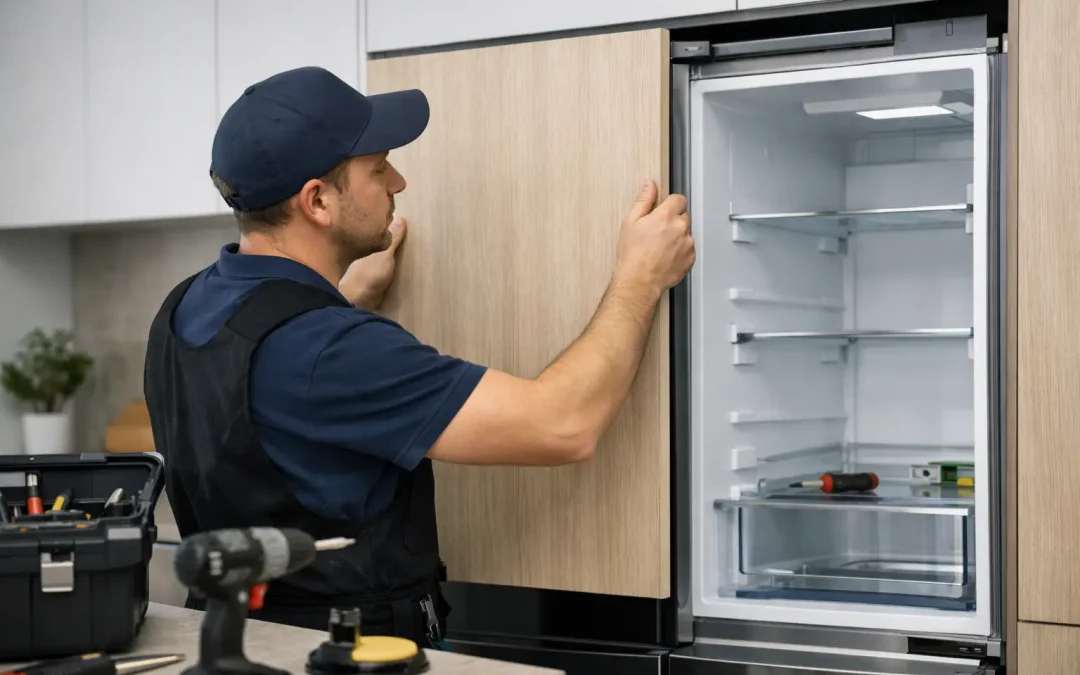
A finished panel can make an integrated refrigerator disappear into custom cabinetry. It can also make an expensive installation look wrong if the reveals are uneven, the door binds, or the panel weight changes how the unit operates. Integrated refrigerator panel installation is not a finish carpentry detail added at the end of a project. It is a coordinated appliance, cabinet, and ventilation task that should be planned before the refrigerator is set in place.
For premium built-in systems, especially Sub-Zero models, the correct panel configuration protects both the kitchen’s appearance and the appliance’s intended performance. The goal is a door that opens cleanly, aligns with adjacent cabinetry, carries its own weight properly, and preserves the airflow and access required for long-term service.
Start With the Appliance, Not the Cabinet Drawings
Every integrated refrigerator model has specific requirements for panel thickness, panel weight, handle placement, door swing, and attachment points. Those details are not interchangeable between brands or even between models in the same product family. A panel sized for one full-height refrigerator may be unsuitable for a refrigerator and freezer column pair, a drawer unit, or an integrated wine storage unit.
The appliance’s installation specifications should guide the cabinetmaker and designer before panels are fabricated. This is particularly important when choosing thick decorative doors, solid hardwood, specialty veneers, metal accents, or oversized handles. These materials can add substantial weight. If a panel exceeds the manufacturer’s limit, door alignment can drift over time and hinges may be placed under unnecessary strain.
The panel style matters as well. A slab panel is generally straightforward, while a rail-and-stile or heavily detailed panel may need a carefully engineered backer so the mounting surface remains flat and secure. Decorative elements should never interfere with the mounting hardware, door gasket, or appliance clearance.
Measure the Finished Opening Carefully
Integrated refrigeration is designed around precise dimensions, but a kitchen opening is rarely perfect without verification. Measurements should be taken after flooring, wall finishes, and surrounding cabinetry are complete or at least confirmed. A change as small as a proud floor tile, an out-of-plumb side panel, or a countertop overhang can affect final alignment.
Check the opening width at the top, middle, and bottom. Confirm height at more than one point, and verify that the back wall and side panels are square. The floor must also be level enough for the unit’s leveling system to establish a stable, plumb position. A refrigerator that is not properly leveled may show an uneven reveal even when the panel itself was cut correctly.
The reveal is the intentional gap between the appliance panel and nearby cabinet doors, drawers, or trim. It is one of the most visible details in a luxury kitchen. Designers often aim to match surrounding cabinet reveals, but the appliance manufacturer’s required clearances take priority. A narrow reveal that looks excellent on paper can create rubbing at the hinge side or prevent the door from opening fully.
Account for Door Swing and Handles
Before drilling or mounting anything, open the appliance door through its full travel. The panel must clear neighboring doors, drawer pulls, islands, walls, and countertops. This is where handle selection can complicate an otherwise correct plan. A substantial pull may project farther than adjacent hardware or contact a cabinet face during opening.
Handle placement also affects leverage. A heavy handle installed far from the panel’s structural support can contribute to door sag over time. Follow the appliance requirements for handle locations and fasteners rather than relying on standard cabinet hardware practices.
Prepare the Panel for Secure Mounting
A premium panel deserves more than a few fasteners placed by eye. The rear of the panel should be flat, structurally sound, and laid out according to the appliance template. Pre-drilling is often essential, particularly with hardwood, lacquered finishes, veneer cores, or panels that may split under stress.
Use the manufacturer-specified fasteners and mounting locations. Substituting screws because they appear similar can lead to stripped threads, insufficient holding strength, or fasteners that extend too far into the panel face. Mounting points are engineered to distribute load across the appliance door. Skipping them can compromise the installation even when the panel initially appears secure.
For custom cabinetry, the cabinetmaker should confirm that the panel construction can accept the required screws at the specified depth. Thin panels may need a concealed reinforcement layer. Conversely, very thick panels may require adjustments that preserve the correct finished depth relative to adjacent doors.
It is also wise to protect the finished face throughout the process. Place panels on padded supports, use clean gloves where appropriate, and keep adhesives, metal tools, and hardware away from visible surfaces. Repairing a scratch in a custom finish after installation is rarely simple.
Integrated Refrigerator Panel Installation Requires Proper Sequencing
The refrigerator should be positioned, leveled, and secured before final panel alignment. Pushing an appliance into place after panels are mounted can scuff cabinetry, disturb reveals, or make it difficult to access adjustment points. Electrical and water connections, where applicable, should be completed according to the manufacturer’s instructions before the final fit is confirmed.
With the unit secured, installers typically use the supplied template or bracket system to position the panel. The first pass is about attachment, not perfection. Once the panel is mounted, adjust it gradually while checking the top, side, and bottom reveals from several feet away as well as up close.
Do not judge alignment by one edge alone. A panel can look level against the top rail but appear crooked beside the neighboring cabinet door. Check the relationship to the entire cabinet run. On paired columns, assess the center gap with both doors closed, then confirm that each door opens without contact.
Avoid the Temptation to Force an Adjustment
If a panel will not align, the cause may not be the panel. The appliance could be out of level, the opening may be out of square, the panel may be warped, or an adjacent cabinet may have shifted. Forcing the door, overtightening hardware, or shimming at random can mask the issue while creating a more difficult service problem later.
This is one reason specialized installation experience matters. Built-in refrigeration has adjustment systems, airflow requirements, and service access considerations that differ from freestanding appliances. A technician familiar with the specific platform can identify whether the correction belongs at the panel, hinge, appliance leveling leg, cabinet face, or installation opening.
Preserve Ventilation and Future Service Access
An integrated refrigerator is intentionally concealed, but it cannot be sealed into the cabinetry. Ventilation openings, toe-kick paths, and top clearances must remain as specified. Blocking airflow may reduce cooling efficiency, increase compressor workload, and contribute to avoidable performance concerns.
Service access should be considered before the project is called complete. Future maintenance may require access to components, filters, water connections, or electrical shutoffs. A decorative panel or custom trim detail should not prevent a qualified technician from removing the unit when service is needed.
This is especially relevant in renovations where cabinetry is built tightly around an existing appliance. A beautiful finished elevation is valuable, but so is the ability to maintain the refrigeration system that protects a household’s food, beverages, and wine collection.
When Professional Installation Is the Better Choice
A capable cabinet installer may be well suited to straightforward panel mounting when the appliance, opening, and panels all conform precisely to the manufacturer’s specifications. The risk changes when the system is a high-value integrated refrigerator, a column configuration, a custom oversized panel, or a project with irregular cabinetry and tight tolerances.
Factory-trained refrigeration specialists bring appliance-specific knowledge to the work, while cabinet professionals bring finish and millwork expertise. On more complex projects, the best result often comes from coordination between both trades. Fridge Fix provides specialized support for premium built-in refrigeration and can help ensure that appliance setup, panel alignment, and long-term service needs are handled with the appropriate care.
A correctly installed panel should feel almost unremarkable: the lines are even, the doors move freely, and the refrigeration system performs as designed. That quiet precision is worth protecting from the first measurement through the final adjustment.