
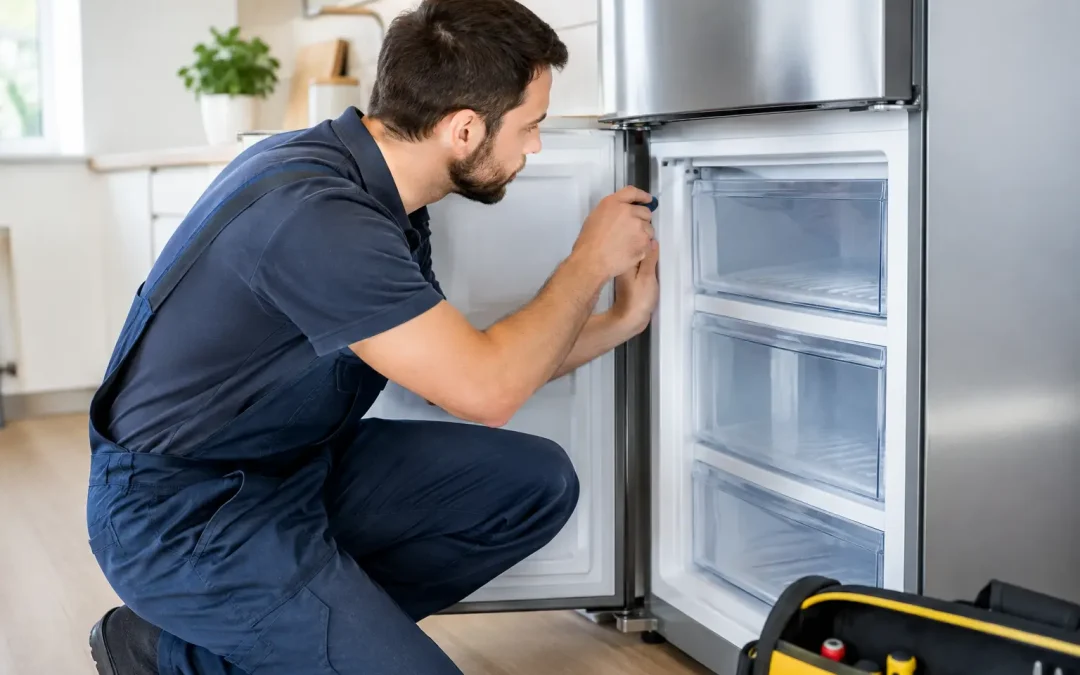
A soft container of ice cream, packages that no longer feel fully frozen, or an unexpected layer of frost can be more than a minor kitchen inconvenience. With built-in equipment, integrated freezer troubleshooting calls for a measured response: protect the food first, observe what the appliance is doing, and avoid turning a correctable issue into a cabinetry, cooling-system, or electronic-control repair.
An integrated freezer is designed to disappear behind custom panels, but its components work under demanding conditions. Airflow, door alignment, condenser performance, defrost operation, and temperature sensing all need to work together. The visible symptom may be simple. The source often is not.
Start With Food Safety and Useful Evidence
If the freezer is above 0°F for more than a brief door-opening period, move vulnerable foods to a working freezer or cooler with ice packs. Do not rely on a display alone if food feels soft or ice is melting. A separate freezer thermometer provides a more reliable picture of the compartment temperature and helps distinguish a temporary recovery cycle from a continuing cooling problem.
Before adjusting settings or resetting power, note the temperature reading, any service message, unusual sounds, and when the issue began. Check whether the refrigerator section is also affected if you own a combined refrigerator-freezer column or unit. This information gives a qualified technician a much better starting point than a report that the appliance is simply “not cold.”
Avoid repeatedly opening the door to test the temperature. Each opening brings humid room air into the compartment and can make frost, temperature swings, and recovery time worse. Keep the door closed while you assess the situation.
Integrated Freezer Troubleshooting by Symptom
The freezer is too warm
A warm integrated freezer may result from a door that is not sealing, restricted airflow, a dirty condenser, a failed fan, a defrost-related ice blockage, or a problem within the sealed refrigeration system. On models with separate cooling systems, the freezer may be affected while the refrigerator remains normal. On other configurations, both compartments may show temperature changes.
First, make sure food packages are not preventing the door or drawer from closing. Tall boxes, a shifted bin, or overfilled shelves can interfere with the gasket. Inspect the gasket for tears, hardened sections, food residue, or spots that have pulled away from the door. A gasket that does not make even contact lets in warm, moist air and forces the freezer to run longer.
Also consider recent events. A large grocery load, several warm items placed inside at once, frequent entertaining, or a door left slightly open can temporarily raise the temperature. A properly operating unit should recover after the door stays closed, although recovery time depends on the model, room conditions, and the amount of warm food introduced.
If the temperature continues to rise, do not assume a colder setting will solve it. Lowering the setpoint can make the system run longer without correcting an airflow or mechanical fault.
Frost is collecting inside the compartment
A light amount of frost after an extended door opening can be normal. Heavy snow-like frost on packages, frost around the door opening, or a growing ice sheet on an interior panel is not. In an integrated freezer, this commonly points to air intrusion through a door seal or to a defrost and evaporator-airflow issue.
Look for a package caught near the door, a drawer that does not slide fully in, or a custom panel that appears misaligned. Integrated doors are heavier than standard appliance doors, and hinge adjustment matters. Do not force a door, remove hinge hardware, or tighten mounting screws without model-specific guidance. An incorrect adjustment can affect panel alignment, gasket contact, and the door’s ability to close safely.
Frost on the rear interior panel may indicate that the evaporator area is icing over. When that occurs, air cannot move properly through the freezer. The unit may run for long periods, develop uneven temperatures, or sound different as its fan works against ice. A power reset may temporarily change the symptoms, but it will not repair a failed heater, sensor, control, or drainage condition.
The freezer runs constantly or seems unusually noisy
Premium built-in refrigeration often operates more quietly than conventional equipment, so a new sound deserves attention. A steady fan sound may be normal, particularly after loading food or opening the door. Repeated clicking, loud buzzing, rattling, scraping, or a fan striking ice is different.
Constant operation can be caused by a hot kitchen, blocked airflow around a condenser, dirty condenser surfaces, a poor door seal, or a cooling-system problem. Built-in units have installation-specific ventilation requirements. Decorative panels and surrounding cabinetry should never be modified or blocked in an attempt to reduce sound. Proper clearance is part of the appliance’s performance design.
A brief hum or fan cycle is not necessarily a failure. The concern is a noticeable change from the appliance’s established behavior, especially when paired with warming food, frost, or an alert on the control panel.
Ice maker performance has changed
If the freezer includes an ice maker, slow production or small, hollow cubes can be an early indication of temperature or water-supply trouble. Check that the ice maker is turned on and that its bin is installed correctly. If the freezer itself is too warm, address the cooling issue first. An ice maker cannot produce consistent ice when the compartment is outside its intended temperature range.
Do not use a sharp tool to break ice from the maker or fill tube. Plastic parts, coatings, and concealed water components are easily damaged. A technician can determine whether the issue involves freezer temperature, water pressure, a fill valve, a frozen fill path, or the ice maker assembly.
Safe Checks You Can Make Before Service
Homeowners can perform a few noninvasive checks without removing panels or accessing electrical components. Confirm that the control is set to the manufacturer’s recommended freezer temperature, commonly 0°F. Verify that the door closes without resistance and that no packaging blocks interior vents. Wipe the door gasket with a soft cloth and mild soap, then dry it fully.
If your model provides a user-accessible condenser-cleaning procedure, follow the owner’s documentation precisely. Some premium built-in systems use condenser locations and access methods that differ substantially by model. Vacuuming the wrong area, bending fins, or removing protective covers can create a larger service issue.
A reset should be used cautiously. If the appliance displays an error code, document it before cycling power. If the freezer has been warm, a reset can erase useful diagnostic information while food safety remains unresolved.
When to Schedule Professional Integrated Freezer Service
Prompt service is the right choice when the freezer cannot hold temperature, frost returns after basic checks, the compressor area repeatedly clicks or buzzes, a fan appears to strike ice, or the control displays a persistent service message. Water beneath or inside the unit, a burning odor, or a tripped breaker should be treated as urgent conditions. Turn off power only when it is safe to do so and arrange professional assessment.
Built-in refrigeration is not a general appliance repair category. Diagnosis may require model-specific technical data, access to sealed-system components, electronic testing, correct replacement parts, and experience working around custom cabinetry. The lowest-cost response at the start can become expensive if an unqualified repair damages a panel, hinge system, refrigeration line, or control board.
For New Jersey homeowners with Sub-Zero and other premium built-in systems, Fridge Fix provides factory-certified, brand-focused service informed by decades of refrigeration experience. A qualified specialist can identify whether the problem is related to installation, airflow, defrost operation, controls, water delivery, or the cooling system itself, then recommend repair based on the appliance’s condition and expected service life.
Your freezer protects more than groceries. It supports a carefully planned kitchen and the food, entertaining, and routines that happen around it. Respond early to small changes, preserve the evidence a technician needs, and let specialized service protect the investment behind the cabinet panel.