
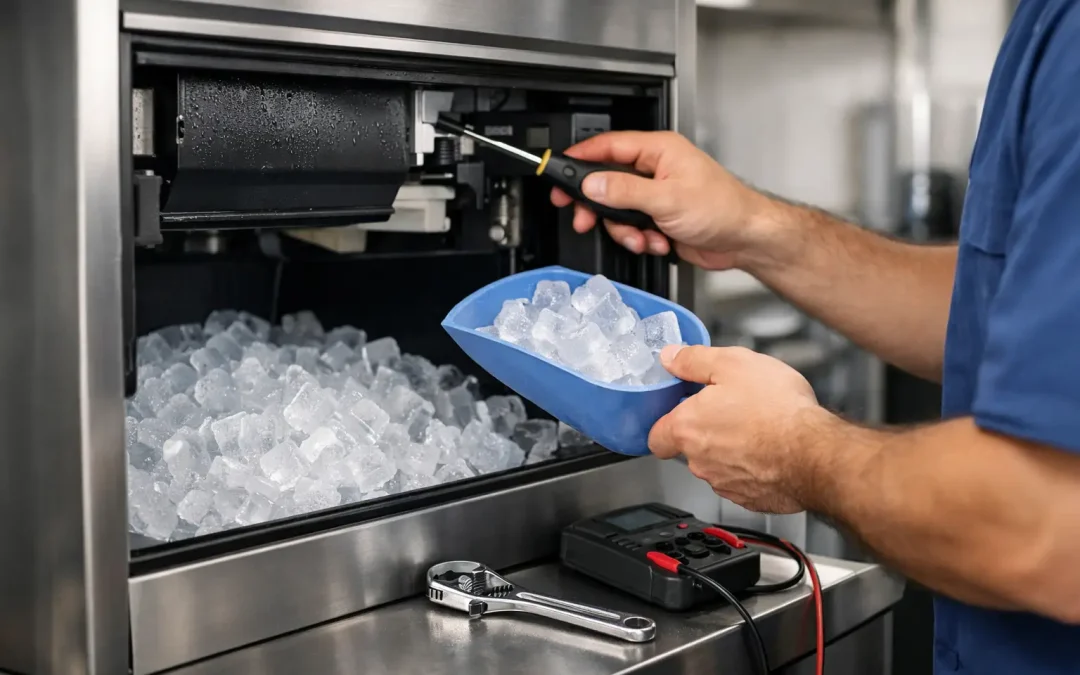
A luxury kitchen ice machine is easy to overlook until the cubes turn cloudy, production slows before a party, or water appears beneath the cabinet. Consistent ice machine maintenance helps prevent those disruptions while protecting an appliance that depends on clean water, controlled temperatures, precise drainage, and proper airflow to do its job well.
For built-in and premium ice systems, maintenance is not simply a matter of making the ice bin look tidy. Mineral scale can form inside water circuits that are not visible from the outside. A clogged filter can reduce water flow. A partially restricted drain can lead to odors, poor ice quality, or leaks that threaten surrounding cabinetry and flooring. The right maintenance plan addresses both sanitation and mechanical performance.
What Ice Machine Maintenance Actually Protects
An ice machine freezes water, releases the formed ice, and drains away unused water during repeated cycles. That process concentrates minerals left behind by the water supply. Even homes with good municipal water can develop scale, especially in areas with hard water. Over time, scale may affect water distribution, sensors, inlet components, and the surfaces where ice forms.
Cleaning also matters because the ice bin and internal water-contact components operate in a moist environment. A machine can make ice that appears normal while developing residue, odor, or buildup that affects taste and sanitation. Cleaning at appropriate intervals protects the quality of the ice served in kitchen beverages, bar drinks, and entertaining spaces.
Mechanical checks are equally valuable. Built-in appliances have limited space around them, and their ventilation, water line, drain arrangement, and installation details need to remain correct. A unit that is level, properly ventilated, and draining freely is less likely to experience avoidable performance problems.
A Practical Maintenance Schedule for Home Ice Machines
The correct schedule depends on the manufacturer, local water conditions, how often the ice machine is used, and the type of ice it produces. A lightly used residential unit may need a different approach than an ice machine that supplies a busy family kitchen, home bar, or frequent entertaining area. The owner’s use and care instructions should always control, particularly for approved cleaning solutions and filter requirements.
Monthly: Check the ice, bin, and surrounding area
Once a month, look closely at the ice and the area around the machine. Ice should be reasonably clear for its type, odor-free, and consistent in size and shape. Discard ice that has absorbed odors or has been stored for an extended period, then wipe the bin with a clean, soft cloth as directed by the manufacturer.
Check for moisture around the toe kick, cabinet edges, water connection, and drain area. A small recurring puddle is not something to dismiss as condensation. It can indicate a drain issue, a loose connection, an ice bin seal concern, or a problem with the appliance’s harvest cycle.
Also listen for changes. A brief fill sound, fan operation, and ice release are normal. Persistent buzzing, loud vibration, clicking, or unusual grinding deserves professional attention before it becomes a larger repair.
Every three to six months: Replace the water filter when applicable
Many premium refrigeration and ice systems use a water filter to reduce sediment and improve water quality. Follow the appliance’s recommended replacement interval, which may be based on time, gallons used, or a filter indicator. Do not wait until ice production has already declined.
A filter that remains in service too long can restrict water flow. That may result in thin cubes, incomplete ice formation, slow production, or an ice maker that pauses because it cannot fill properly. On the other hand, installing a filter that is not approved for the model can create fit, flow, or performance concerns. Use the specified part or confirm compatibility with a qualified service specialist.
Every six months: Clean and descale as specified
For many residential ice machines, a six-month cleaning interval is a sensible baseline. Homes with hard water, high ice usage, or visible mineral deposits may need service more often. If the manufacturer provides a cleaning cycle, use it only with the approved cleaner and follow the instructions exactly.
This is one area where household shortcuts can cause expensive trouble. Vinegar, bleach, abrasive pads, and generic cleaners may damage finishes, leave an unwanted odor, react with components, or fail to remove the particular scale present in the water system. Never combine cleaning chemicals, and do not use a cleaner unless the manufacturer identifies it as appropriate for the unit.
A thorough service cleaning generally includes emptying and discarding the ice, cleaning the bin and accessible food-contact surfaces, running the approved cleaning process, rinsing as required, and allowing the machine to make and discard initial batches of ice. The goal is not merely a clean-looking bin. It is removal of scale and residue from the areas that influence ice formation and water movement.
Annually: Have the system inspected
Annual professional inspection is a prudent choice for a premium built-in ice machine, particularly when the appliance is integrated into custom cabinetry or tied into a sophisticated refrigeration suite. A qualified technician can inspect water and drain connections, leveling, airflow, seals, pumps, valves, electrical operation, and performance conditions that are difficult to evaluate from the exterior.
Fridge Fix provides specialized service for high-end built-in refrigeration systems, where an accurate diagnosis and proper handling matter as much as the repair itself. Factory-level familiarity is especially valuable when service involves concealed installation details, model-specific components, or a recurring issue that has not been resolved by routine cleaning.
Warning Signs That Maintenance Should Not Wait
Do not wait for a complete failure if the machine shows a noticeable change in behavior. Slow ice production, hollow or misshapen cubes, cloudy ice, an unusual taste or smell, repeated ice clumping, and water in or beneath the cabinet all warrant attention.
A machine that runs but produces no ice may have a simple cause, such as a closed water supply or overdue filter. It may also have a more technical issue involving water flow, temperature control, a circulation system, or an electrical component. Resetting the appliance repeatedly without identifying the cause can delay the right repair.
Frost buildup or excessive condensation also deserves inspection. In a built-in setting, airflow restrictions and installation conditions can affect performance. Removing the grille or moving the appliance without understanding its installation requirements can damage cabinetry, connections, or the unit itself. When in doubt, schedule qualified service rather than forcing access.
Habits That Help Preserve Ice Quality
Daily use practices make a real difference between scheduled cleanings. Keep the scoop clean and store it in its intended location rather than leaving it buried in the ice. Avoid using hands or drink glasses to retrieve ice. Do not place food, bottles, or other items in the ice bin, even temporarily, because they can introduce odors and contaminants.
If the home will be vacant for an extended period, consult the product instructions for shutdown and cleaning procedures. Depending on the model and length of absence, it may be better to turn off the ice maker, empty the bin, and arrange appropriate preparation. This is particularly worthwhile before seasonal travel or extended renovations, when a minor water or drain issue could go unnoticed.
Protect the area around the machine as well. Keep lower ventilation areas free of pet hair, dust, and stored items. Do not block access panels with decorative objects or rugs. Built-in appliances are designed to integrate with the room, but they still need the air paths and clearances specified for their model.
When Professional Service Is the Better Choice
Homeowners can usually manage basic bin care and timely filter replacement. Professional service is the better choice for internal descaling when access is limited, for persistent odors or scale, for leaks, and for any concern involving drainage, water lines, electrical components, or refrigeration performance.
It is also wise to call a specialist before replacing parts based on an assumption. An ice-making problem can resemble a failed valve or pump when the underlying issue is water pressure, a filter, a drain condition, or control-related. Correct diagnosis avoids unnecessary parts and helps preserve the appliance’s intended performance.
A well-maintained ice machine should feel invisible: clean ice ready when guests arrive, steady production through a busy weekend, and no surprises beneath carefully designed cabinetry. Treat small changes as useful signals, and give the appliance professional attention before they become an interruption.