
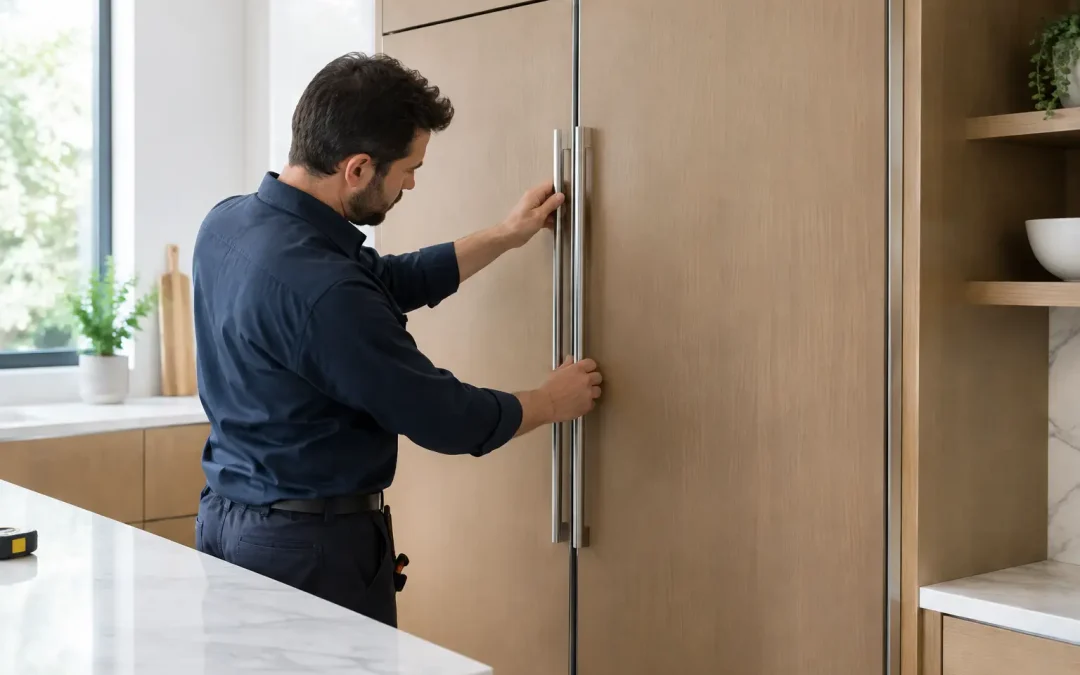
A refrigerator door that sits a fraction of an inch too high, low, or proud of the surrounding cabinetry can distract from an otherwise beautiful kitchen. Knowing how to level integrated refrigerator doors is not simply a cosmetic task. On premium built-in units, door position affects panel reveals, hinge operation, gasket contact, and how the appliance functions over time.
Integrated refrigeration is designed to disappear into the kitchen. That makes every gap and line more noticeable. Before making an adjustment, it helps to understand whether the issue comes from the refrigerator cabinet, the furniture panel, the hinges, or the surrounding cabinetry. The correct fix depends on the source.
Start by Identifying What Is Actually Out of Level
A door can look misaligned even when the refrigerator itself is perfectly level. Begin with the closed doors. Look at the horizontal gap between paired doors, the vertical reveal along each side, and the relationship between the refrigerator panels and adjacent cabinet doors or drawer fronts.
If both doors appear to lean in the same direction, the appliance cabinet may need leveling. If one door is higher than the other but the cabinet appears square, the issue is more likely a hinge or door adjustment. If the refrigerator doors are aligned but the decorative panels are not, the panel mounting hardware may be the real point of adjustment.
Use a quality level on the top front edge of the appliance cabinet, not on the decorative panel alone. Also check front to back. Many built-in refrigerator installations are intended to sit level side to side with a slight rearward pitch, depending on the manufacturer and model. Always follow the installation instructions for the specific unit rather than assuming every premium refrigerator is adjusted the same way.
How to Level Integrated Refrigerator Doors Safely
The first rule is to avoid adjusting hardware by trial and error. Integrated units use substantial doors, often with custom wood, metal, or composite panels attached. Their weight can place considerable load on hinges and mounting brackets. An uncontrolled adjustment can shift the panel, damage a hinge, pinch a gasket, or create a door that no longer closes properly.
Clear fragile items from the door shelves before beginning. Open the door only as far as necessary, and support it if an adjustment requires loosening hinge-related fasteners. Do not remove hinge screws or panel-mounting screws unless the model-specific procedure calls for it. Some fasteners control height, while others secure the door or panel assembly and should not be disturbed during a routine alignment adjustment.
For many integrated refrigerator designs, the process follows this order: level the appliance cabinet first, adjust door height and side-to-side position second, and fine-tune the decorative panel last. Making panel adjustments before the cabinet is level often creates extra work and can leave the doors looking correct only when viewed from one angle.
Level the Refrigerator Cabinet First
Built-in refrigerators typically use adjustable front leveling legs and, on some models, rear leveling mechanisms. Access points may be behind a grille, toe kick, or lower access panel. Turn the designated adjustment points in small increments, then recheck the cabinet level and door operation.
Avoid raising the appliance more than necessary. The unit must remain correctly supported, properly secured for its installation type, and positioned as designed for ventilation and cabinetry clearances. A refrigerator that has shifted forward, settled into flooring, or was installed without adequate support may need more than a minor leveling adjustment.
Once the cabinet is level, close the doors and reassess the gaps. A small correction at the leveling leg can produce a noticeable improvement in door alignment.
Adjust Door Position in Small Increments
Where the manufacturer provides a door-height or hinge adjustment, make small changes only. A quarter-turn or similarly minor adjustment can be enough to correct an uneven reveal. Close the door gently after each change and inspect it from several feet away, where uneven lines are easier to see.
Check more than the top edge. The gap between doors should be consistent from top to bottom, and the panel should not rub against adjacent cabinetry when opened. A door that appears level at the top but binds near the bottom may be shifted laterally or may indicate that the cabinet opening is not square.
Do not force a door into position by tightening fasteners while it is under pressure. If the door needs to be held up to align it, use proper support and follow the appliance manufacturer’s adjustment procedure. Heavy integrated doors can drop slightly when hardware is loosened, particularly on older installations.
Inspect the Decorative Panel and Reveals
Integrated refrigerator panels are separate from the refrigeration door on many systems. That distinction matters. If the door operates properly but the panel is crooked, adjusting the refrigerator hinges may not solve the problem.
Inspect the panel reveal against surrounding cabinetry. A panel that is too high or low may need adjustment at its mounting brackets, not at the hinge. Look for signs that the panel has shifted over time, such as uneven screw tension, rubbing near a cabinet stile, or a gap that changes from top to bottom.
Custom panel work should be handled carefully. Veneered wood, lacquered finishes, and specialty hardware can be damaged by overtightening or by dragging a panel against neighboring cabinetry. If the panel needs to be removed or its mounting system is unclear, professional service is the safer choice.
Check Door Seals and Closing Action
Perfect-looking gaps do not matter if the door gasket is not sealing. After leveling, examine the gasket around the full perimeter of each door. It should make even contact with the cabinet frame without folding, tearing, or pulling away from its retaining channel.
Close the door and confirm that it does not spring open, require extra force to latch, or sit visibly proud of the cabinet. On some premium built-in refrigerators, a door that is too low or too far inward can affect the closing cam, hinge geometry, or gasket compression. These issues can contribute to temperature fluctuations, excess frost in freezer compartments, or increased compressor run time.
A simple paper test can help: place a sheet of paper across the gasket, close the door, and pull gently. Resistance should feel reasonably consistent around the seal. This is not a substitute for a full diagnosis, but it can reveal an obvious weak area after an adjustment.
When Leveling Is Not the Real Repair
Not every misaligned door is an installation issue. Sagging hinges, worn bushings, damaged closing cams, loose panel brackets, cabinet movement, and floor settlement can all create alignment problems. On older built-in units, repeated door loading and heavy custom panels may gradually affect hinge performance.
If the door has dropped suddenly, rubs when opening, will not stay closed, or requires repeated adjustment, stop treating it as a simple leveling concern. Continued use can damage hinges, compromise the door seal, and place stress on the panel system. This is especially relevant for Sub-Zero and other premium built-in refrigeration, where precise fit is part of both performance and design.
Factory-trained service is valuable when the adjustment involves concealed hardware, a heavy panel, or uncertainty about the model-specific procedure. Fridge Fix provides specialized support for sophisticated built-in refrigeration systems, where correct alignment protects a significant kitchen investment rather than merely improving appearance.
Preserve the Fit After Adjustment
Once the doors are level, avoid using them as leverage when loading groceries or cleaning around the appliance. Keep hinge areas free of spilled liquids and periodically check that the refrigerator remains stable on its leveling points. After flooring, cabinetry, or countertop work, inspect the reveals again because even minor changes around a built-in unit can affect how the doors appear and operate.
A properly aligned integrated refrigerator should close quietly, seal evenly, and sit in visual balance with the kitchen around it. When that balance changes, a careful inspection and measured adjustment can prevent a small alignment issue from becoming a more expensive repair.