
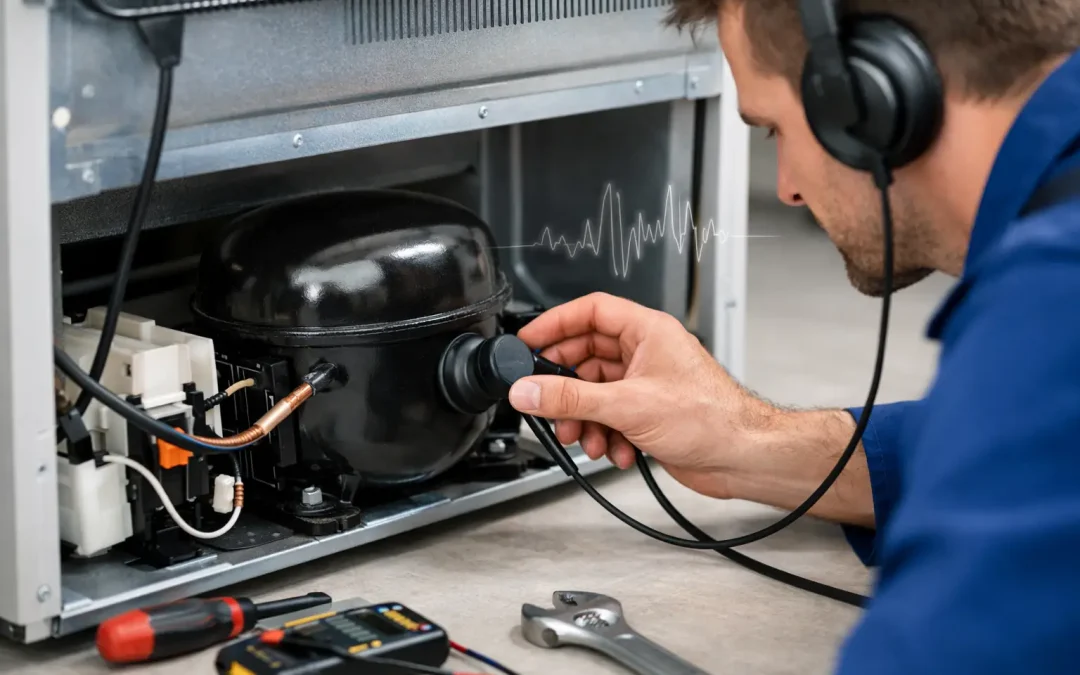
A premium built-in refrigerator is not supposed to be silent. Compressors start and stop, fans move air through separate compartments, and defrost systems operate on their own schedules. But a new rattle, repeated click, or harsh buzzing deserves attention. Knowing how to diagnose refrigerator compressor noise begins with identifying the sound accurately, where it originates, and whether cooling performance has changed.
On a Sub-Zero, Viking, GE Monogram, or similar built-in system, the compressor compartment is only one possible source. Cabinet panels, condenser fans, evaporator fans, water lines, ice makers, and even objects stored inside can transmit sound. A careful diagnosis protects an expensive appliance from unnecessary parts replacement while helping identify problems before food preservation, ice production, or wine storage is affected.
Start by Identifying the Sound and Its Location
Listen before moving the appliance or removing any panels. Note whether the sound comes from the bottom rear, behind the toe kick, inside the fresh-food section, inside the freezer, or from an adjacent cabinet. A compressor noise usually comes from the machine compartment, but sound can travel through cabinetry, particularly in tightly integrated installations.
Also pay attention to the timing. Does the noise begin as the refrigerator starts a cooling cycle? Does it occur continuously, only when a door is closed, or during an ice-making cycle? A noise that appears for a few seconds once or twice per day may be related to defrosting or a damper. A sound that coincides with poor cooling or a warm freezer requires a more urgent service assessment.
If possible, record a brief video with the sound and the appliance model information. For a service technician, a recording can be useful when an intermittent sound disappears before the appointment.
Sounds that are often normal
A low, steady hum from the compressor is generally normal. Modern variable-speed compressors may change pitch as cooling demand changes, particularly after frequent door openings, a large grocery load, or a power interruption. You may also hear brief refrigerant movement that resembles a faint gurgle or whoosh.
Soft clicks can occur when controls, relays, or defrost components operate. A short fan sound after the door closes may also be normal, since many systems alter fan operation with door position. Built-in refrigeration is designed for quiet performance, but quiet does not mean sound-free.
Sounds that warrant closer attention
A loud metallic rattle, repeated clicking without sustained operation, grinding, sharp buzzing, or a new vibration is not something to ignore. The same is true when the noise accompanies longer-than-usual run times, temperature alarms, frost buildup, water leaks, or reduced ice production.
A useful rule is this: a normal sound is usually brief, consistent, and not paired with a performance problem. An abnormal sound is often new, persistent, worsening, or connected to a change in temperature control.
How to Diagnose Refrigerator Compressor Noise Safely
Begin with the simple causes that do not require contact with electrical or sealed-system components. Make sure the refrigerator is firmly supported and that no cookware, serving trays, bottles, or loose items are vibrating against it. In a built-in kitchen, check nearby drawer fronts, decorative panels, and cabinet trim as well. A minor vibration at the appliance can be amplified by surrounding millwork.
Next, inspect the accessible toe-kick or grille area for dust accumulation, without forcing panels or using sharp tools. Restricted airflow can make the compressor work harder and run longer. On many premium units, proper condenser cleaning is a scheduled maintenance item, but access methods differ by model. Never assume a grille or panel should be removed simply because it looks removable.
If the sound seems to come from the rear or lower machine compartment, do not reach around wiring, attempt to tighten compressor hardware, or open the sealed refrigerant system. The compressor, start components, inverter, condenser fan, and refrigerant lines require model-specific knowledge. A misplaced vibration pad or incorrectly positioned line can create noise, but so can a failing electrical component or mechanical compressor issue.
Before scheduling service, check the display for alerts and confirm actual temperatures with an appliance thermometer if you suspect a cooling issue. Record the fresh-food, freezer, or wine-storage temperature, the frequency of the sound, and whether the unit is running continuously. These details help distinguish a sound-related concern from a broader refrigeration problem.
What Common Compressor-Area Noises Can Mean
A vibration or rattle near the base may be caused by a loose access panel, a line touching the cabinet, an improperly seated toe kick, or a condenser fan issue. It may also result from a compressor mounting component that has deteriorated. The difference matters: one may be a straightforward adjustment, while the other needs a technician to inspect operating conditions and component wear.
A pronounced buzzing can occur when a compressor is working under load, but loud or unfamiliar buzzing should be evaluated in context. If temperatures remain stable and the sound is momentary, it may not indicate a failed compressor. If buzzing is sustained and the appliance is struggling to cool, the issue could involve airflow, electrical starting components, an inverter, a fan, or the sealed system.
Repeated clicking is especially important to document. A single click can be part of normal control operation. Repeated clicks followed by silence, particularly when the cabinet is warming, can indicate that the compressor is not starting correctly. Do not repeatedly power-cycle the refrigerator to test it. That can place additional stress on electrical components and may complicate the symptom.
Grinding or scraping is often blamed on the compressor, but it is frequently a fan motor or fan blade. A condenser fan in the machine compartment can create a grinding or ticking sound when debris, ice, wear, or an obstruction affects blade movement. An evaporator fan can make a similar sound inside the freezer, often with frost or ice present. The sound location is the best first clue.
Built-In Refrigeration Adds Diagnostic Variables
Integrated refrigerators have cabinetry, ventilation paths, and installation clearances that directly affect operating sound. A unit that is not level, a panel that is under tension, or ventilation that has been restricted during remodeling can produce symptoms that resemble compressor trouble.
Sub-Zero systems may use separate refrigeration circuits or compressors depending on the model and configuration. That means a noise may affect only the refrigerator section, freezer section, or wine-storage zone. A technician should evaluate the specific model rather than treating every built-in refrigerator as a standard single-compressor appliance.
Installation history matters, too. If the noise began after flooring, cabinetry, countertop, or panel work, mention that when requesting service. A change around the appliance can alter vibration paths or airflow even when the refrigerator itself has not changed.
When to Stop Troubleshooting and Schedule Service
Schedule qualified service promptly when the noise is paired with a temperature alarm, warm food compartment, soft ice cream, excessive frost, water leakage, a burning odor, or a breaker that trips. Turn the unit off and seek immediate professional guidance if you notice smoke, a strong electrical smell, or excessive heat around the machine compartment.
For a noise without an emergency symptom, service is still appropriate if it is new, recurring, or getting louder. Premium refrigeration is a long-term kitchen investment, and early diagnosis can prevent secondary damage to food, cabinetry, or sensitive electronic components. Fridge Fix provides factory-certified, brand-specific service for sophisticated built-in refrigeration systems throughout New Jersey, where correct diagnosis matters as much as the repair itself.
Avoid relying on generic advice that recommends replacing a relay, adding insulation, or tightening unidentified components. Parts and procedures vary widely by model, and an incorrect repair can affect performance, safety, warranty coverage, or access for future service.
A refrigerator that hums quietly and holds temperature is doing its job. A refrigerator that changes its voice is asking for a closer listen – and, when the evidence points beyond a simple vibration, the right specialist can preserve both its performance and the kitchen built around it.