
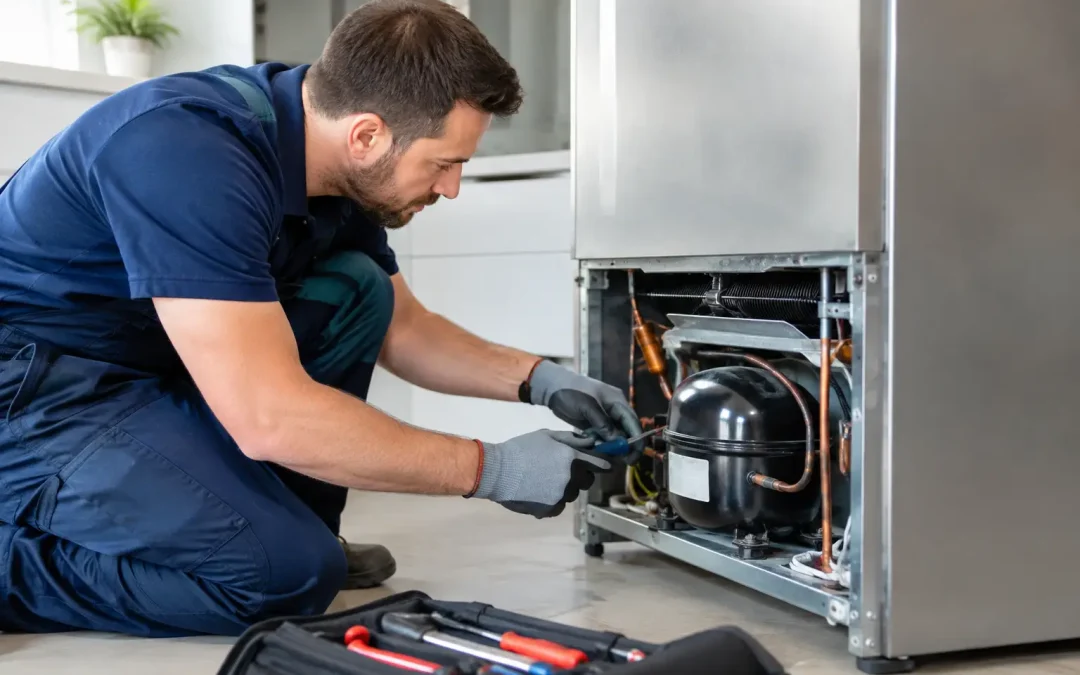
A built-in refrigerator that is warm, unusually noisy, or running nearly nonstop can make compressor repair sound inevitable. In a premium refrigeration system, however, the compressor is only one part of a tightly engineered cooling system. A failed fan, dirty condenser, control issue, airflow restriction, defrost problem, or sealed-system leak can create similar symptoms. Accurate diagnosis comes before major repair decisions.
For owners of Sub-Zero and other high-end built-in refrigeration, that distinction matters. These appliances are significant investments, often integrated into cabinetry and relied on for fresh food, frozen goods, wine storage, or ice production. The right service approach protects both the appliance and the kitchen around it.
When Compressor Repair Is Actually the Answer
The compressor is the heart of the refrigeration system. It circulates refrigerant through the sealed system, moving heat out of the cabinet so the refrigerator or freezer can maintain its set temperature. When it cannot start, cannot run efficiently, or has suffered an internal mechanical failure, cooling performance will decline.
A true compressor concern may present as a repeated clicking sound followed by silence, a compressor that is excessively hot, a unit that runs continuously without reaching temperature, or a cabinet that remains warm despite the fans operating. In some cases, the appliance may cool intermittently before failing altogether.
Those signs are not a diagnosis by themselves. For example, a clicking sound may relate to a start device or electrical supply issue rather than a failed compressor. Constant operation may be caused by condenser airflow, a door seal problem, incorrect sensor readings, or a refrigerant issue. Replacing a compressor before confirming the cause can add cost without resolving the underlying problem.
A qualified technician evaluates the complete system: operating temperatures, compressor amperage, fan operation, condenser condition, controls, pressure readings where appropriate, and evidence of a sealed-system leak. This method is especially important with built-in units, where the system must perform within precise design parameters and limited ventilation space.
Why Built-In Compressor Repair Requires Specialized Service
Standard freestanding refrigerator repairs and built-in refrigeration service are not interchangeable. Built-in systems are designed to provide a finished, furniture-like appearance while delivering dependable temperature control over a long service life. Their installation, ventilation, panels, electronics, and refrigeration components require careful handling.
Access alone can be a factor. A compressor compartment may be behind a grille, within a specialized machinery area, or positioned in a way that requires safe movement of surrounding components. The technician must protect finished floors, cabinetry, panels, and adjacent appliances while gaining proper access.
The repair itself is also technical. Compressor replacement is not simply a matter of removing one part and installing another. It may involve recovering refrigerant, replacing associated components such as a filter drier, brazing sealed-system connections, pressure testing, evacuating moisture and air from the system, charging it to manufacturer specifications, and verifying operation over time. The correct refrigerant, charge amount, component compatibility, and service procedure are essential.
Factory-level familiarity helps a technician distinguish between a compressor failure, a control-driven issue, and a broader sealed-system concern. On sophisticated equipment, a repair should restore intended performance rather than merely produce short-term cooling.
The Importance of Finding the Cause of Failure
When a compressor has failed, the next question is why. Age and normal wear are possible explanations, but they are not the only ones. An electrical problem, overheated condenser area, restricted airflow, refrigerant leak, contamination in the sealed system, or an incorrect prior repair can place stress on the compressor.
If the cause is not addressed, a replacement compressor may face the same conditions. A thorough repair plan considers the health of the entire sealed system and the appliance’s installation environment. This is one reason premium appliance owners should be cautious about a quick diagnosis based only on a warm cabinet or a noisy lower compartment.
Repair or Replacement: Making a Practical Decision
Compressor repair usually means compressor replacement, since most hermetically sealed compressors are not rebuilt in the home. Whether that work makes sense depends on the appliance’s age, condition, repair history, parts availability, and the nature of the failure.
For a well-maintained built-in refrigerator with a sound cabinet, functioning controls, and years of expected service remaining, compressor replacement can be a sensible way to preserve an appliance that was designed for longevity. This is particularly true when replacing the unit would involve cabinet modifications, panel work, delivery coordination, and disruption to a carefully designed kitchen.
There are situations where replacement deserves consideration. If the refrigerator has multiple major failures, extensive corrosion, obsolete electronic components, repeated sealed-system problems, or significant cabinet damage, investing in another major repair may not be the best long-term value. A service professional should explain the condition of the appliance clearly, including what the repair addresses and what it cannot predict about unrelated aging components.
Warranty coverage may also affect the decision. Premium refrigeration manufacturers can offer different coverage terms for sealed-system components than for general parts and labor. The applicable warranty depends on the model, installation date, ownership status, and service history. A knowledgeable service provider can help identify the relevant model information and document the issue correctly.
What to Expect During a Compressor Service Visit
A professional visit should begin with a conversation about the appliance’s behavior. Note when the problem began, whether the cabinet is warm or fluctuating in temperature, any sounds you have heard, and whether the issue affects one compartment or the entire unit. If food safety is a concern, move perishable items to another properly operating refrigerator or cooler while service is arranged.
The technician should inspect the appliance rather than assume a compressor failure. Diagnostic work may include checking the electrical supply, examining condenser and evaporator fan operation, reviewing error indicators, measuring temperatures, and testing relevant refrigeration components. Depending on the findings, the initial visit may establish the diagnosis and parts requirements before the repair is scheduled.
If a compressor or sealed-system repair is needed, timing can depend on the model-specific parts required. The work should be performed with attention to cleanliness, proper recovery procedures, accurate charging, and verification that the appliance is pulling down to temperature. Because refrigeration systems stabilize over time, final confirmation may include monitoring performance after the repair rather than relying on the first few minutes of operation.
For New Jersey homeowners, Fridge Fix provides factory-certified, brand-aware service for sophisticated built-in refrigeration systems. That focused experience is valuable when the appliance requires more than a general refrigerator repair approach.
Protecting Compressor Performance After the Repair
No maintenance plan can prevent every component failure, but the compressor benefits from a clean, well-ventilated operating environment. Built-in refrigeration depends on its specified airflow path. Blocked vents, accumulated dust at the condenser, or changes to surrounding cabinetry can make the system work harder than intended.
Routine maintenance is also an opportunity to catch smaller concerns before they become major service events. Door gaskets should seal properly, fans should run as designed, and temperatures should remain stable. A refrigerator that suddenly becomes louder, cycles differently, develops excessive frost, or needs frequent temperature adjustments deserves attention before food loss or compressor stress follows.
Avoid treating the compressor area as a storage space, and do not attempt sealed-system work without appropriate training and equipment. Refrigerant handling, electrical testing, and brazing are specialized tasks. A well-intentioned shortcut can damage components, compromise performance, or create a safety issue.
A quiet, stable refrigerator is easy to take for granted. When it changes behavior, early expert diagnosis gives you the best chance to protect the appliance, its contents, and the investment built into your kitchen.