
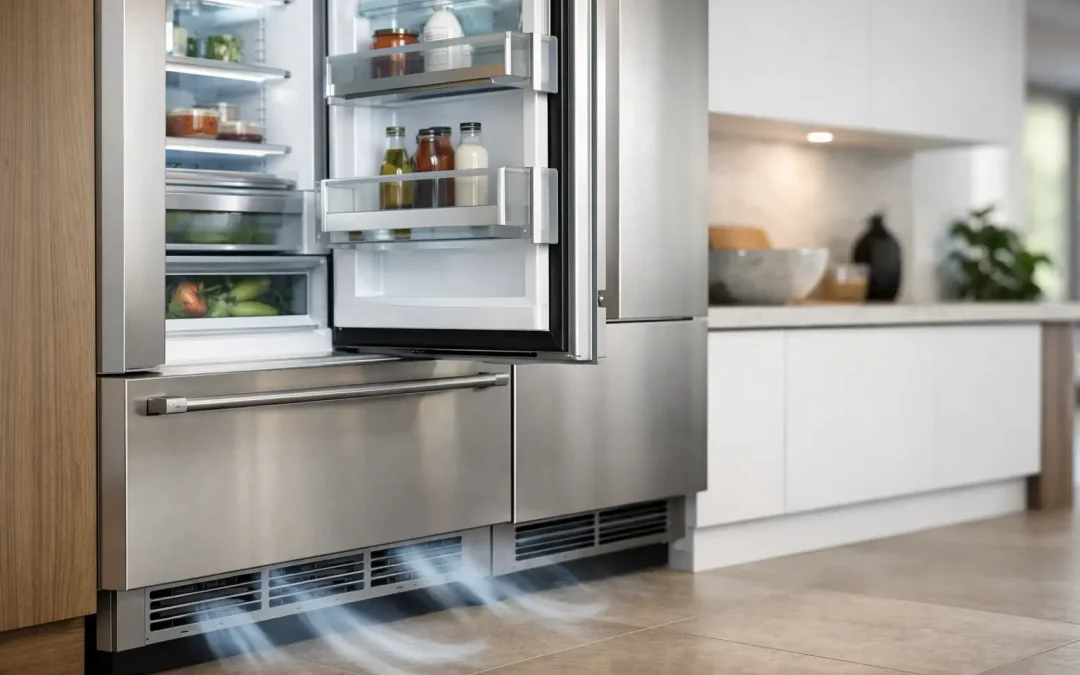
A built-in refrigerator can look perfectly integrated and still be installed incorrectly. When built in refrigerator ventilation requirements are overlooked, the appliance may run longer than it should, struggle to hold temperature, create excess heat around cabinetry, and place unnecessary stress on expensive sealed-system components.
For premium refrigeration, ventilation is not an optional finishing detail. It is part of the appliance’s operating design. Whether you are planning a new Sub-Zero installation, replacing an older built-in unit, or renovating surrounding cabinetry, the airflow path must be considered before the refrigerator is enclosed.
Why Built-In Refrigerators Need Dedicated Airflow
A refrigerator removes heat from the food compartment and releases that heat through its refrigeration system. Freestanding refrigerators often have open space around the cabinet to dissipate heat. Built-in models are designed to sit within finished cabinetry, so their ventilation strategy is more deliberate.
Many premium built-in refrigerators draw air through a designated grille or vent area, move it across the condenser and compressor compartment, then discharge warmed air through a separate path. If either path is blocked, restricted, undersized, or altered by cabinet work, heat can build up where the unit needs to breathe.
The result is not always an immediate failure. More often, a poorly ventilated refrigerator begins to show gradual symptoms: extended run times, warmer-than-normal compartment temperatures, unusually warm grille areas, increased energy use, or compressor-related service concerns. For a high-value built-in system, preventing those conditions is far less costly than correcting damage after the fact.
Built-In Refrigerator Ventilation Requirements Depend on the Model
There is no single clearance measurement that applies to every built-in refrigerator. Ventilation requirements vary by manufacturer, model series, unit configuration, and whether the appliance is installed as a refrigerator, freezer, wine storage unit, undercounter unit, or integrated column.
Some units are engineered for front ventilation through a top grille, toe-kick, or another factory-designed opening. Others require specific clearances above, behind, or around the cabinet. Integrated models can be especially demanding because custom panels, decorative trim, and surrounding millwork may conceal the very areas intended for airflow.
This is why the installation specifications for the exact model must take priority over a cabinetmaker’s general appliance opening dimensions. A refrigerator can fit physically into an opening and still lack the ventilation needed for reliable operation.
Intake and Exhaust Must Both Remain Open
Adequate ventilation is a complete airflow path, not simply a visible grille. Cool air must be able to enter the designated intake area, pass through the machine compartment, and exit without recirculating trapped hot air.
A common issue occurs when a decorative panel, crown molding detail, soffit, or custom trim reduces the effective size of a top grille opening. Another occurs when insulation, wiring, packing material, or cabinet modifications obstruct the space behind a toe-kick or lower vent. Even a partial obstruction can affect performance when a refrigerator operates through a busy summer weekend or during frequent entertaining.
Do not assume that a grille is functional because it is visible. It must have the manufacturer-required free-air opening behind it, and the area around it must remain clear after installation is complete.
Cabinet Depth and Rear Clearances Matter
Built-in refrigerators are designed for precise installation depths. Pushing a unit too far back may compress electrical connections, water tubing, drain lines, or ventilation space. Pulling it too far forward can interfere with door operation, panel alignment, and the intended appearance of the kitchen.
The rear of a built-in cabinet enclosure should also be evaluated for obstructions. Wall framing, plumbing, ductwork, low-voltage wiring, and uneven surfaces can reduce clearance or make it impossible to position the unit correctly. A proper site review identifies those conflicts before a heavy refrigerator arrives at the home.
Do Not Treat Decorative Cabinetry as Ventilation
Luxury kitchen design often involves furniture-style panels, flush reveals, custom overlays, and detailed trim. Those features can coexist with correct refrigeration ventilation, but they need coordinated planning.
A solid panel placed over a factory grille is not an acceptable substitute for a ventilated grille. Likewise, a narrow decorative slot may look appropriate but provide too little open area for the appliance. If a custom grille is being fabricated, it should be designed around the manufacturer’s airflow requirement, not solely around the cabinet elevation.
The same caution applies to adjacent appliances. A wall oven, range, steam oven, or warming drawer can add heat near the refrigerator enclosure. Premium refrigeration can often be installed successfully in sophisticated kitchen layouts, but the design should account for both heat exposure and service access.
A Practical Pre-Installation Checklist
Before the refrigerator is delivered or reinstalled, confirm the exact product specifications and compare them to the finished opening. The following items deserve attention:
- The cabinet opening width, height, and depth match the model-specific installation requirements.
- The required top, bottom, front, rear, or side ventilation zones are present and unobstructed.
- Decorative panels, toe-kicks, grilles, and trim preserve the required free-air opening.
- Electrical, water, drain, and shutoff connections are positioned where they will not interfere with the unit or restrict airflow.
- Doors, panels, and handles have adequate clearance to open fully without striking adjacent cabinetry or islands.
- The refrigerator can be pulled forward for future diagnostics, condenser cleaning, or component access without damaging flooring or millwork.
This planning is particularly valuable in renovations, where cabinet dimensions may have been finalized months before the appliance is selected. When appliance specifications change, the enclosure should be reevaluated rather than adjusted casually at the final installation stage.
Ventilation Problems Can Look Like Refrigerator Problems
Homeowners often call for service because a built-in refrigerator feels warm on the exterior or appears to run continuously. Those symptoms can point to a mechanical issue, but ventilation should be evaluated as part of the diagnosis.
Restricted airflow can make a functioning refrigeration system work harder. It can also magnify smaller maintenance issues, such as a dirty condenser, aging fan motor, or improperly seated grille. Conversely, replacing a part without correcting an airflow restriction may only provide temporary improvement.
A qualified built-in refrigeration specialist should inspect the unit in context: the appliance, the cabinetry, the grille arrangement, the condenser area, and the installation conditions. That broader approach matters because premium built-in refrigerators are systems installed within systems.
Maintenance Keeps the Designed Air Path Working
Even a correctly installed refrigerator needs periodic attention. Dust, pet hair, cooking residue, and household debris can collect on accessible grilles and condenser areas. Over time, that buildup limits the system’s ability to reject heat.
The appropriate cleaning method and service interval depend on the model. Some condensers are easy to access; others require careful removal of grilles, panels, or components. Aggressive brushing, incorrect vacuum attachments, or forcing access panels can damage fins, wiring, or trim. For factory-built premium equipment, professional preventive maintenance is often the safer choice, particularly after construction work or a major kitchen renovation.
Keep exterior grille openings free of stored items, seasonal decorations, rugs, and altered toe-kick panels. If a kitchen has recently been remodeled, inspect the ventilation areas before assuming a new performance concern is an appliance defect.
When to Request Professional Evaluation
Schedule an evaluation when a refrigerator has been enclosed by new cabinetry, relocated, fitted with new panels, or reinstalled after flooring work. It is also wise to have the installation reviewed if the unit runs excessively, has recurring temperature concerns, produces unusual fan or compressor sounds, or feels hotter than expected near its ventilation area.
For Sub-Zero and other high-end built-in systems, model-specific experience is especially useful. Factory-certified service professionals can assess whether the appliance is installed according to its intended airflow design while also checking the refrigeration system itself. Fridge Fix has provided specialized built-in refrigeration service since 1966, with the technical focus these installations require.
The best time to solve a ventilation issue is before the refrigerator is boxed into finished cabinetry. A correctly sized opening, clear airflow path, and serviceable installation protect more than day-to-day cooling – they help preserve the performance and lifespan expected from a premium built-in refrigerator.