
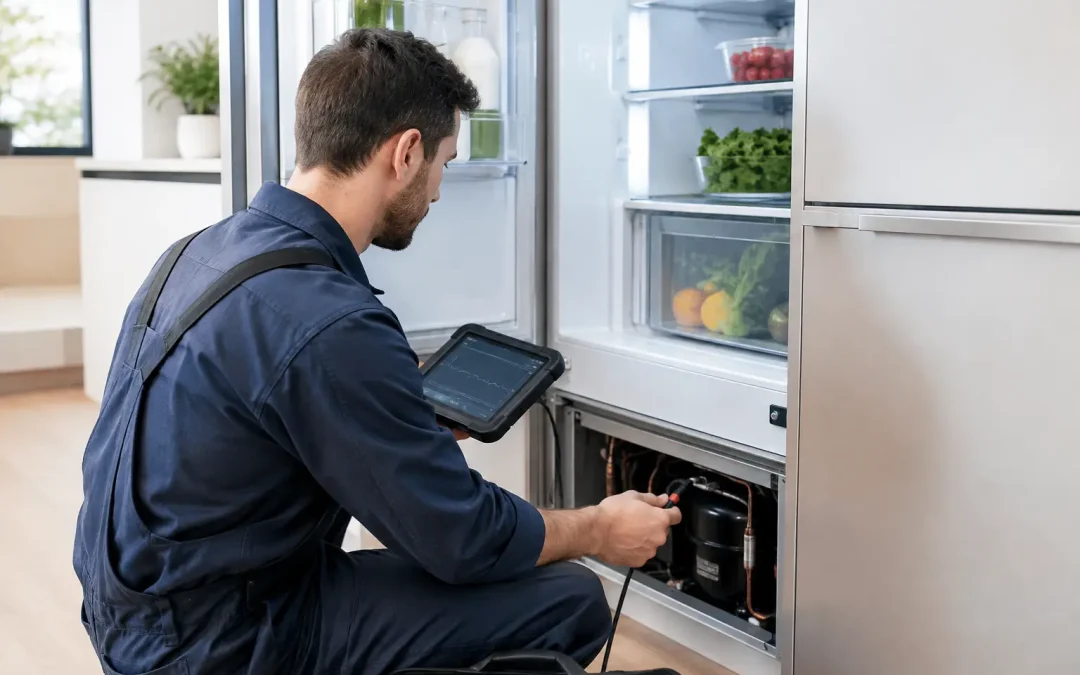
A built-in refrigerator can look perfectly composed while a serious performance issue develops behind the panels. Food may seem a little warmer than usual, ice production may slow, or a wine storage unit may drift a few degrees from its set point. Appliance diagnostics are what separate a quick assumption from a repair decision based on the actual condition of the system.
For premium refrigeration, that distinction matters. A Sub-Zero, Viking, GE Monogram, Traulsen, or integrated refrigeration system is not simply a refrigerator placed inside cabinetry. It is a carefully engineered combination of sealed-system components, airflow controls, electronics, sensors, drainage, insulation, and installation details. The visible symptom is often only the first clue.
Why Appliance Diagnostics Matter Before Repair
A warm refrigerator does not automatically need a compressor. Frost does not automatically mean a failed defrost system. Water beneath a unit can come from a drain issue, a water connection, condensation, or a component that is not operating as intended. Replacing a part before establishing the cause can increase cost, extend downtime, and leave the original issue unresolved.
Professional appliance diagnostics begin with evidence. A qualified technician considers the appliance model, its age, service history, reported symptoms, operating temperatures, error codes, and installation environment. That process helps distinguish a one-time interruption from a developing mechanical, electrical, or control-related failure.
Built-in refrigeration also presents access considerations that standard freestanding units may not. Cabinet panels, tight clearances, ventilation pathways, electrical connections, and water lines all affect both performance and service procedure. Careful diagnostics protect the appliance, the surrounding kitchen, and the investment represented by an integrated installation.
What a Built-In Refrigeration Diagnostic Visit Should Assess
The purpose of a diagnostic appointment is not to rush toward the most familiar repair. It is to identify why the appliance is not performing as designed and determine the appropriate next step. The scope varies by unit and symptom, but a thorough evaluation generally reviews the appliance as a system rather than treating one part in isolation.
Temperature, Airflow, and Compressor Performance
Temperature complaints deserve precise attention. A display may show the selected setting, but the actual compartment temperature, airflow pattern, and recovery time after a door opening tell a more complete story. Technicians may assess evaporator performance, condenser condition, fan operation, door sealing, and the unit’s ability to remove heat.
On dual-compressor or multiple-zone systems, the refrigerator and freezer may behave differently. A freezer that holds temperature while the fresh-food compartment warms can point the diagnostic process in a different direction than a whole-unit cooling failure. The same is true for wine storage, where stable conditions matter as much as reaching a particular temperature.
Controls, Sensors, and Error Information
Sophisticated refrigeration systems rely on electronic controls to coordinate cooling cycles, fans, defrost functions, lighting, alarms, and temperature management. A fault code can be useful, but it is not always a final diagnosis. Codes often identify the circuit or operating condition that needs investigation rather than naming the failed component outright.
A factory-trained specialist can interpret those signals in the context of the specific model. This is particularly valuable with premium built-in equipment, where control boards, thermistors, switches, and communication systems must be evaluated methodically. A replacement board or sensor may be appropriate, but only after power supply, wiring, connections, and related components have been considered.
Ice, Water, and Drainage Systems
Slow ice production, hollow cubes, leaking dispensers, unusual water flow, and water collecting under a unit each require a focused assessment. The issue may involve supply pressure, filtration, inlet valves, water lines, an ice-maker mechanism, drainage, or temperature conditions that affect ice formation.
Not every water-related concern calls for the same solution. For example, a clogged drain may create water or ice buildup that resembles a more complicated refrigeration problem. Conversely, repeated frost and moisture issues may indicate an air-sealing or defrost concern that should not be dismissed as routine condensation.
Installation and Surrounding Conditions
Built-in appliances depend on correct installation to manage heat and maintain airflow. Restricted ventilation, shifted door panels, cabinet interference, damaged gaskets, or a unit that is not properly positioned can contribute to reduced performance over time. The kitchen environment matters as well. Recent remodeling, power interruptions, unusually high room temperatures, or changes to water supply can all provide relevant diagnostic context.
This is why the service conversation matters. Sharing when the problem began, whether it is constant or intermittent, and what changed before it appeared can help the technician reach an accurate answer more efficiently.
Symptoms That Merit Prompt Service
Some refrigeration concerns are easy to postpone until they become expensive. Others deserve attention as soon as they are noticed, especially when food preservation or a valuable wine collection is involved. Contact a qualified refrigeration specialist when you see recurring temperature alarms, food warming unexpectedly, excessive frost, water leaks, loud or unfamiliar operating sounds, frequent cycling, a non-producing ice maker, or visible condensation around doors and panels.
An appliance that has stopped cooling should be addressed promptly. Move perishable food to a safe location when possible, avoid repeatedly opening the doors, and do not attempt to force panels or access sealed-system components. Turning a unit off and on may temporarily change the behavior without correcting the reason it failed.
For a wine cooler, even a subtle temperature deviation can be worth investigating if it persists. Wine storage units are designed for controlled conditions, and a recurring alarm, unusual fan noise, or inconsistent zone temperature should not be treated as cosmetic inconvenience.
Why Premium Refrigeration Requires Specialized Knowledge
General appliance experience has value, but built-in refrigeration service requires familiarity with specific product designs, technical documentation, component access, and manufacturer procedures. The difference becomes especially clear when a repair involves integrated panels, sealed-system work, electronic controls, or model-specific parts.
Factory-certified service helps preserve the standards expected from a premium appliance. It supports accurate troubleshooting, appropriate handling of specialized components, and repair decisions that account for the unit’s long-term performance. It can also be important for warranty-related requirements, depending on the appliance, its coverage, and the nature of the issue.
At Fridge Fix, the focus is on sophisticated built-in refrigeration rather than broad, general household appliance repair. That specialization matters when a technician must evaluate a Sub-Zero system, identify the correct parts path, and work carefully within a finished luxury kitchen.
Diagnostics, Maintenance, and Restoration Are Different Decisions
A diagnostic visit answers a current performance question. Preventive maintenance is intended to reduce the likelihood of avoidable issues. Restoration is a broader decision for an older but valuable appliance that may benefit from component renewal, cosmetic attention, or a planned performance update.
These services can overlap, but they should not be confused. A refrigerator with a dirty condenser may benefit from maintenance. A unit with a recurring temperature alarm needs diagnostics. An established built-in system with aging components may warrant a discussion about repair, restoration, or eventual replacement.
The right choice depends on the model, condition, repair history, availability of parts, and the homeowner’s goals. In many luxury kitchens, preserving a well-integrated appliance is preferable to replacing it. In other situations, recurring failures or major system needs can make a larger decision more practical. Clear diagnostic findings give homeowners a better basis for that decision.
How to Prepare for a Service Appointment
You do not need to troubleshoot the appliance yourself before scheduling service. A few details can make the appointment more productive: the model and serial number, any displayed error messages, when the issue began, and whether the symptom is continuous or intermittent. If practical, note the compartment temperatures and take a photo of an error display before it clears.
Keep access to the appliance reasonably clear and let the service provider know about active leaks, food-loss concerns, or unusual sounds. For an integrated unit, avoid removing decorative panels unless instructed by a qualified technician. These panels and their alignment are part of the appliance’s finished installation.
The best time to schedule diagnostics is when a pattern first becomes apparent, not after the appliance has endured weeks of strained operation. An accurate assessment can protect food, preserve wine-storage conditions, reduce the chance of secondary damage, and help a premium refrigeration system continue serving the kitchen it was designed to complement.