
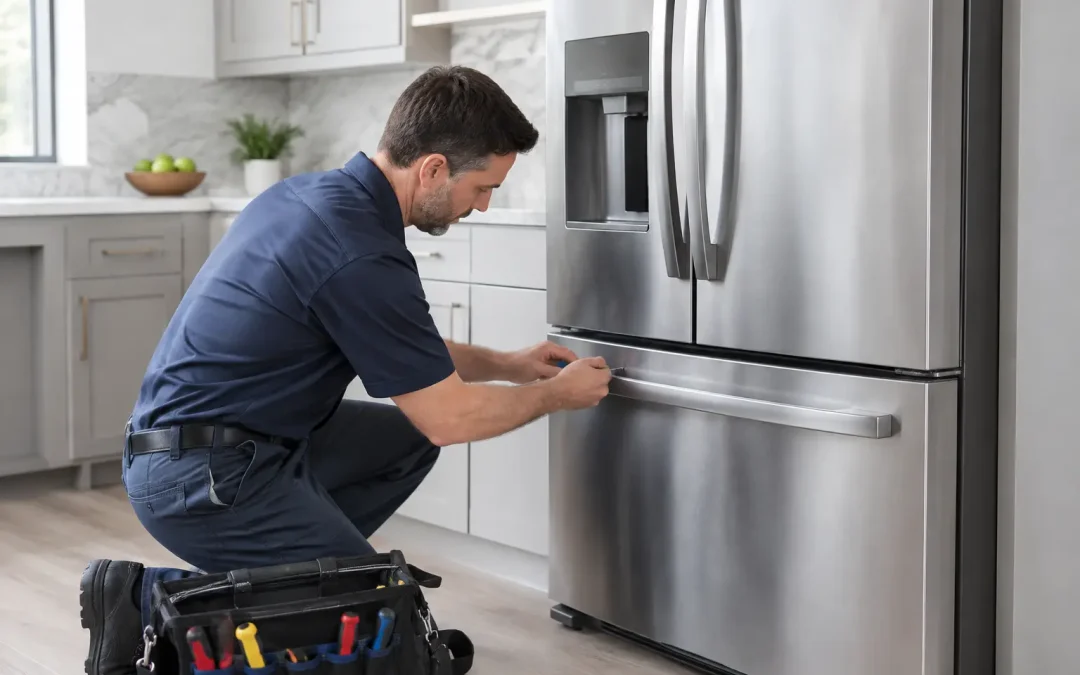
A built-in GE Monogram refrigerator is designed to disappear into a carefully planned kitchen, not become the center of attention. When temperatures rise, an ice maker stops producing, or a panel-ready door no longer aligns correctly, the issue can affect more than groceries. It can interrupt a kitchen that represents a major investment. Professional GE Monogram refrigerator service helps identify the real cause, protect surrounding cabinetry, and make decisions based on the appliance’s design rather than a generic repair checklist.
Why GE Monogram Refrigerator Service Requires Experience
GE Monogram refrigeration is often installed as part of a built-in kitchen system. The refrigerator may sit flush with custom panels, share ventilation space with cabinetry, or coordinate with separate freezer, wine storage, or beverage units. Accessing components, moving the unit, and restoring proper operation require care well beyond that needed for a freestanding refrigerator.
Cooling complaints can be especially deceptive. A refrigerator that feels warm may have a failed component, restricted airflow, a defrost-related issue, a door seal problem, or a control concern. A unit that runs constantly may be reacting to warm air entering the compartment, dirty condenser conditions, installation limitations, or a more involved sealed-system issue. Replacing a part before confirming the cause can add cost without solving the problem.
The right service approach begins with diagnostics. A qualified technician evaluates temperatures, airflow, fan operation, compressor behavior, electrical controls, door closure, drainage, and the installation environment. This process matters because built-in refrigeration has limited tolerance for poor ventilation, improper clearances, and overlooked maintenance.
Signs It Is Time to Schedule Service
Small changes in performance are worth addressing early. Premium refrigeration is built for dependable food preservation, but persistent symptoms are not something to watch indefinitely.
A refrigerator or freezer that cannot hold its set temperature should be assessed promptly, particularly if food is thawing, produce is spoiling faster than usual, or the interior feels humid. Excess frost, moisture inside the cabinet, or water on the floor can point to drainage, defrost, sealing, or condensation issues. These conditions can worsen if left unresolved.
Ice maker problems deserve a closer look as well. No ice, undersized cubes, slow production, leaks, or a frozen fill area may involve water supply, filtration, valve operation, temperature, or the ice-making assembly itself. The visible symptom is only one part of the diagnosis.
Other reasons to call include unusual noises that persist, repeated alarms, a display that behaves unpredictably, doors that do not close smoothly, and visible cabinet or panel alignment concerns. If a built-in unit must be pulled from its enclosure, the work should be planned to avoid damage to flooring, panels, electrical connections, or water lines.
What a Proper Service Visit Should Accomplish
A useful service visit should provide more than a quick reset or a vague recommendation. It should establish what is happening, what caused it, and what repair path makes sense for the appliance and household.
The technician should first verify the complaint under real operating conditions. That may include checking actual compartment temperatures rather than relying only on a display, inspecting airflow paths, examining gaskets, and assessing condenser cleanliness. For units with water or ice functions, the water path and connections also need careful review.
After diagnosis, homeowners should receive a clear explanation of the repair. In some cases, the solution is straightforward: cleaning, adjustment, replacement of a worn component, or correction of an installation-related issue. In others, the technician may need to source a model-specific part or complete additional testing before recommending a repair.
This is where specialization is valuable. Premium appliance service is not simply about getting a refrigerator to cool again. It is about restoring stable performance while preserving the fit, finish, and long-term value of a sophisticated built-in system.
Repair, Maintenance, or Restoration?
The best answer depends on the unit’s age, condition, service history, and the nature of the failure. A newer refrigerator with a contained component issue is often an excellent repair candidate. A well-built older unit may also justify restoration when the cabinet, insulation, and core refrigeration platform remain sound.
There are trade-offs. A lower-cost repair may be sensible when it addresses a verified, isolated problem. If multiple aging components are failing, a more comprehensive restoration plan can provide better value and fewer repeat appointments. Replacement may eventually be appropriate, but it can involve cabinet modifications, panel work, installation coordination, and significant lead-time considerations. It should be evaluated thoughtfully, not treated as the automatic answer to every failure.
Preventive Care Protects Built-In Performance
Many service calls begin with issues that develop gradually. Preventive maintenance cannot prevent every electronic or mechanical failure, but it can reduce strain and reveal emerging concerns before they disrupt the kitchen.
Condenser maintenance is one example. Dust, pet hair, and household debris can restrict heat release and force the system to work harder. Because built-in appliances are integrated into cabinetry, the area around the unit may be less visible and easier to neglect. Proper cleaning methods and access procedures matter, especially when panels or tight clearances are involved.
Door gaskets should also be kept clean and checked for a consistent seal. A small gap allows warm, humid air into the cabinet, which can lead to frost, condensation, longer run times, and uneven temperatures. Avoid overloading shelves or door bins in a way that interferes with closure.
For homes with water-connected refrigeration, maintaining the recommended water filtration schedule supports ice quality and helps reduce avoidable issues. If the home will be vacant for an extended period, ask a refrigeration specialist about the appropriate settings and preparation for that particular installation.
Choosing a Specialist for a High-Value Kitchen
Not every appliance repair company is equipped for complex built-in refrigeration. A generalist may be capable of addressing common symptoms, but a premium unit benefits from a provider familiar with integrated installations, model-specific parts considerations, and the practical risks of working around custom cabinetry.
Ask whether the company regularly services built-in refrigeration, how it approaches diagnosis, and whether it can advise on parts availability before committing to a major repair. Credentials matter, but so does the ability to explain the work clearly and treat the home with care. A technician should understand that a refrigerator failure can affect food, entertaining plans, wine storage, and the appearance of a finished kitchen.
For New Jersey homeowners, Fridge Fix provides focused service for premium built-in refrigeration, including GE Monogram systems, with the same careful, technical approach expected for a significant home investment. NYC customers can also seek service through the company’s recommended local partner.
When Waiting Creates a Bigger Problem
Some refrigerator concerns can be monitored briefly, such as an isolated noise after a door has been held open or a temporary temperature fluctuation following a large grocery load. Persistent symptoms are different. Repeated alarms, water leaks, weak cooling, excessive frost, or a unit that runs almost continuously should be addressed before food loss or secondary damage occurs.
Water near a built-in refrigerator deserves particular urgency. Even a slow leak can affect wood flooring, finished cabinetry, and nearby electrical connections. Likewise, a refrigerator that seems only slightly warm may be placing food safety at risk long before the issue becomes obvious.
A well-maintained GE Monogram refrigerator should support the rhythm of the home quietly and reliably. When it does not, timely, informed service is the most practical way to protect the appliance, the kitchen around it, and the confidence that your food storage is performing as it should.