
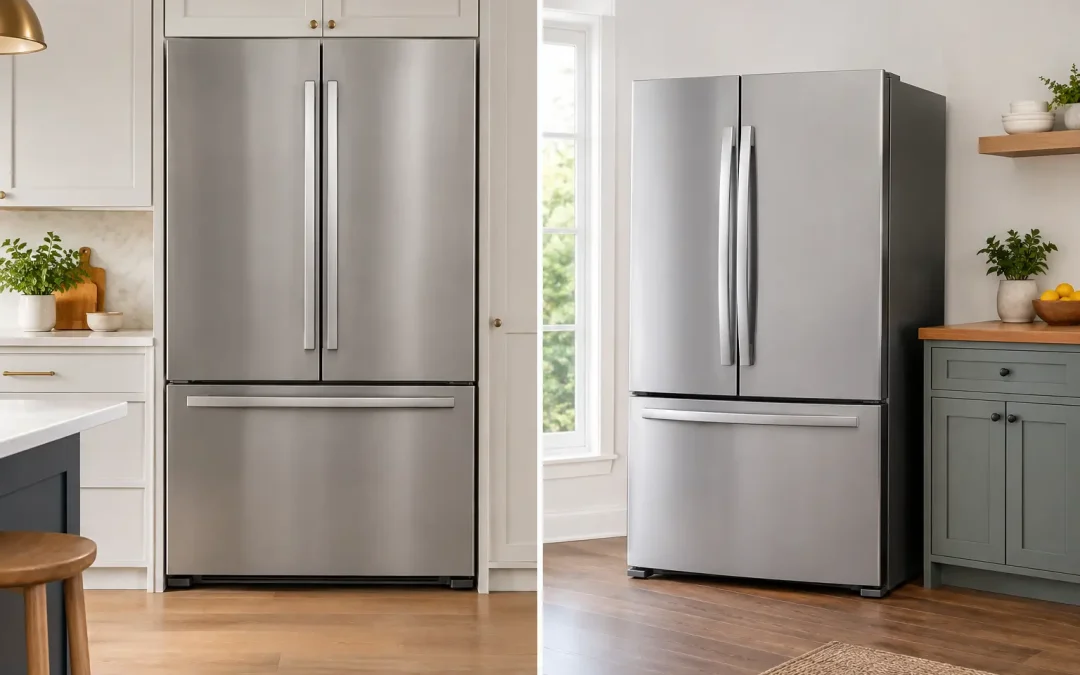
A refrigerator choice can change far more than where groceries are stored. It affects cabinet design, kitchen circulation, resale appeal, service access, and the way a room feels every day. When weighing built-in versus freestanding refrigerators, the right answer is rarely just about purchase price. It is about whether the appliance fits the home, the household, and the level of performance expected over many years.
For a straightforward kitchen refresh, a freestanding refrigerator may be the sensible choice. For a custom kitchen, a major renovation, or a home built around premium appliances, built-in refrigeration often earns its place through design integration, food preservation performance, and long-term serviceability.
Built-In Versus Freestanding Refrigerators: The Core Difference
A freestanding refrigerator is designed to stand independently in a standard opening. It has finished sides, typically projects beyond the cabinetry, and can usually be replaced without changing surrounding cabinets. Most homes have space planned for this format, which makes it familiar and relatively simple to purchase and install.
A built-in refrigerator is engineered as part of the kitchen architecture. It sits nearly flush with cabinetry, uses a shallower cabinet-depth profile, and is usually secured to the surrounding structure. Premium built-in systems, including Sub-Zero column refrigeration, freezer columns, undercounter units, wine storage, and panel-ready models, can be configured to create a tailored wall of refrigeration that matches the cabinetry rather than interrupting it.
The distinction is not merely cosmetic. Built-in units have specific ventilation, electrical, water-line, anchoring, clearance, and access requirements. Their installation is a technical process, not simply a delivery appointment.
Design and Kitchen Integration
For homeowners who have invested in custom millwork, stone, professional cooking appliances, or a carefully planned open kitchen, built-in refrigeration offers a finished appearance that freestanding models cannot fully duplicate. Panel-ready doors can accept cabinetry panels, while stainless built-in units create a deliberate, furniture-like presence. Because the unit aligns with the cabinet face, it preserves clean sightlines and gives more flexibility when designing islands, walkways, and adjacent storage.
Freestanding refrigerators generally extend several inches beyond the counter. That projection is not necessarily a drawback in a practical family kitchen, but it can feel visually heavy in a narrow room or a highly tailored renovation. Counter-depth freestanding models reduce the projection, though they still require side clearance and usually do not deliver the same flush fit or panel integration as a true built-in system.
There is also a planning consideration. A built-in refrigerator should be selected early, before cabinets are ordered. Cabinet openings, finished-floor height, trim details, door swing, and ventilation all need to be coordinated. Choosing a model after the cabinetry is complete can create expensive compromises.
Capacity: Look Beyond Cubic Feet
Freestanding refrigerators often provide more usable interior depth for the footprint, particularly full-depth French-door models. For a household that buys large trays, bulk groceries, or oversized beverages, this can be a meaningful advantage. They also tend to offer a wide selection of configurations at different price points.
Built-in systems use shallower cabinets so they can sit flush with surrounding cabinetry. That does not automatically mean less total storage. A pair of 36-inch refrigerator and freezer columns can provide significant capacity, with dedicated zones that make food easier to organize. Separate refrigerator, freezer, wine, and ice storage can also reduce crowding in the main appliance.
The best comparison is not the number printed on a specification sheet. Consider what your household stores, how often you entertain, whether you keep a substantial wine collection, and whether a second freezer or ice machine would improve daily use. A well-planned built-in system may function better than one large freestanding refrigerator because each category of food has its own appropriate space.
Cost Includes More Than the Appliance
Freestanding refrigerators carry a lower entry cost and usually require less specialized installation. If a unit fails beyond economical repair, replacement is comparatively simple because standard widths and openings are common. This makes freestanding refrigeration a practical fit for many homes, especially where cabinetry will remain unchanged.
Built-in refrigeration is a larger investment. The appliance itself costs more, and the project may involve cabinet modifications, finished panels, trim, electrical work, plumbing, and specialized installation. A failed built-in unit can also require more planning because replacement models must fit a specific opening and coordinate with existing panels.
That higher cost should be evaluated in context. In a luxury kitchen, a built-in refrigerator protects the visual integrity of the room and can support the value of the renovation. Premium systems are also designed for longevity, provided they receive proper maintenance and qualified repair when needed. The least expensive appliance choice can become costly if it forces cabinet changes later or undermines the intended design of the kitchen.
Installation Is Where Details Matter
A refrigerator that cools properly on day one can still be incorrectly installed. Built-in units need precise leveling, secure anchoring, correct door alignment, adequate ventilation, and proper water connections where an ice maker or dispenser is included. Panels must be sized and mounted correctly so doors operate smoothly and evenly. Improper installation can lead to noise, poor performance, door interference, water issues, or premature component wear.
Freestanding models also benefit from professional attention, particularly when there is a water line, tight cabinetry, or delicate flooring. However, built-in systems leave less room for error. They are heavy, close-fitting appliances that should be handled by technicians familiar with the manufacturer’s requirements.
For New Jersey homeowners with Sub-Zero and other premium built-in equipment, Fridge Fix provides factory-certified expertise focused on the installation, repair, maintenance, and restoration of sophisticated refrigeration systems. That specialization matters when an appliance is integrated into expensive cabinetry and expected to perform for years.
Maintenance and Service Expectations
Every refrigerator needs clean condenser airflow, sound door seals, proper temperatures, and attention to unusual noises or moisture. Built-in owners should take these fundamentals seriously because restricted ventilation or neglected maintenance can affect efficiency and place additional strain on the system.
Premium built-in refrigeration also benefits from brand-specific service knowledge. Diagnostic procedures, control systems, sealed-system components, water filtration, ice production, and door adjustments vary by manufacturer and model. A technician who routinely works on high-end built-in units is better positioned to identify the actual cause of a problem, source appropriate parts, and protect the appliance during service.
Freestanding units are typically easier to access and replace, but they still deserve timely attention when warning signs appear. Food that spoils early, frost accumulation, fluctuating temperatures, a weak ice maker, or excessive running are not issues to postpone. Early diagnostics can often prevent a smaller concern from becoming a more disruptive repair.
Which Refrigerator Is Right for Your Home?
Choose freestanding refrigeration when flexibility, upfront budget, and straightforward replacement are the priorities. It is particularly well suited to existing kitchens with standard openings, rental properties, secondary kitchens, and projects where cabinetry is not being redesigned.
Choose built-in refrigeration when the kitchen is being designed around the appliance, visual continuity matters, and the household values specialized food preservation and long-term performance. It is also the stronger choice for homes where separate refrigeration, freezer, wine, and ice zones will make entertaining or everyday organization easier.
The decision should be made before cabinetry and finishes are finalized, with the appliance specifications in hand. A refrigerator is not just another box to fit into a kitchen opening. It is a working part of the home, and the best choice is the one that will still feel considered, capable, and properly supported long after the renovation is complete.