
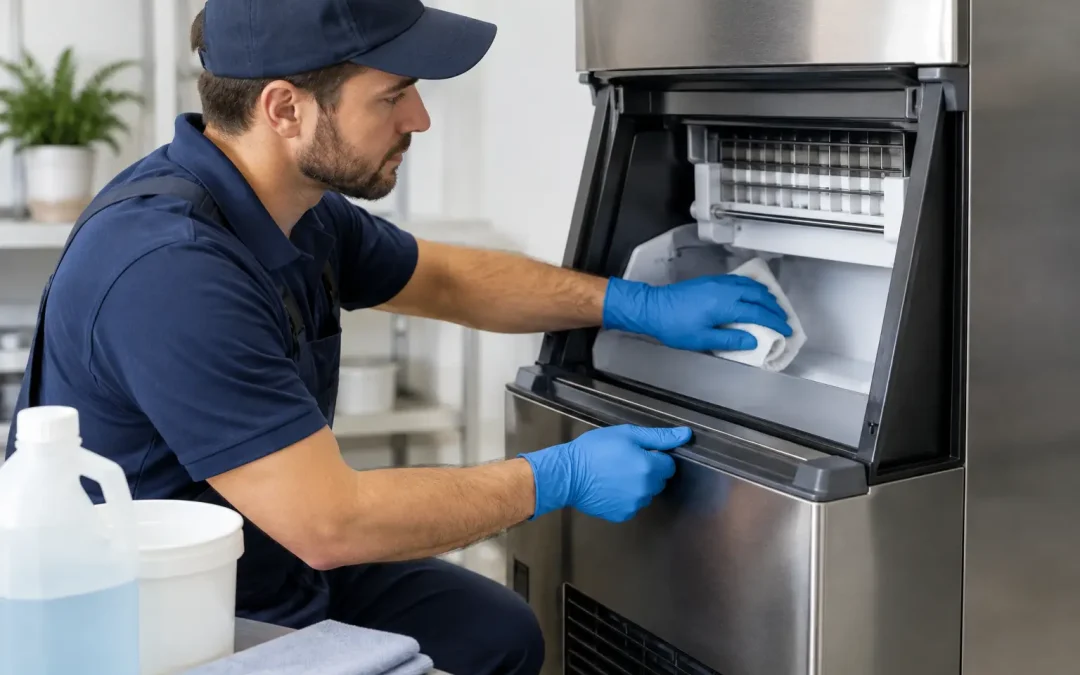
A premium ice machine can continue making ice long after mineral scale has begun affecting its performance. The cubes may look smaller, cloudy, hollow, or misshapen. Production can slow, water may run where it should not, and a machine that once operated quietly may start sounding strained. Knowing how to descale ice machines is a practical part of protecting an appliance designed to serve a high-use kitchen, bar, or entertaining space.
Scale is not simply a cosmetic issue. It is the chalky mineral deposit left behind as water evaporates and freezes. In areas with hard water, calcium and magnesium accumulate quickly on the water system, evaporator plate, reservoir, drain components, and sensors. Left untreated, that buildup can interfere with ice release, restrict water flow, and contribute to service issues that are more involved than routine maintenance.
Why Ice Machine Scale Deserves Attention
An ice machine works through a precise sequence of water delivery, freezing, harvest, and drainage. Mineral deposits interrupt that sequence. A thin film on a freezing surface may keep ice from releasing cleanly. Deposits in a water distribution tube can create uneven water flow, which often produces inconsistent cube formation. Scale around a sensor or float can also cause inaccurate readings.
For built-in and premium ice machines, the risk is not limited to reduced output. Components are tightly arranged, finishes are designed to integrate with the surrounding cabinetry, and access can be more limited than on a basic freestanding unit. Aggressive cleaning methods or an incorrect chemical can damage finishes, gaskets, tubing, or internal parts. That is why the right cleaning product and procedure matter as much as the decision to clean the unit.
How often descaling is needed depends on water hardness, ice production, filter condition, and the manufacturer’s recommendations. A home that regularly entertains or uses an ice machine daily may need attention more frequently than a seasonal residence. If the machine has a clean-light indicator, treat it as a service reminder rather than something to postpone until output stops.
Signs It Is Time to Descale an Ice Machine
The most reliable indicator is the maintenance schedule in the appliance’s use and care guide. Still, visible and operational symptoms can help a homeowner recognize mineral buildup early. Watch for cloudy or thin ice, reduced production, unusually wet ice in the bin, a white crust in the water area, or water that does not distribute evenly across the freezing surface.
A change in taste or odor deserves attention as well, although scale is not always the only cause. A worn water filter, residue in the bin, a drain concern, or a sanitation issue can produce similar symptoms. Descaling removes mineral deposits; it does not automatically solve every water-quality or ice-quality complaint.
If the appliance has stopped making ice, is leaking, displays an error, or repeatedly begins and stops a cycle, do not assume descaling alone will correct the problem. Those symptoms may involve a water valve, pump, drain, control, sensor, refrigeration system, or installation condition that calls for qualified diagnosis.
Before You Begin: Use the Correct Cleaner
The safest approach is to follow the procedure and approved cleaner specified for the exact make and model. Ice machine descalers are formulated to dissolve mineral deposits at the proper concentration. They are not interchangeable with household descalers, dishwasher cleaners, or general-purpose acids.
Avoid using vinegar unless the manufacturer specifically authorizes it. Vinegar is common advice online, but it may be too mild to remove established scale, may leave an odor, and may not be appropriate for certain materials or cleaning cycles. Never use bleach as a substitute for descaler, and do not combine chemicals. If sanitation is required after descaling, use only the sanitizer and dilution method approved by the manufacturer.
Before beginning, remove ice from the bin and discard it. Keep food, glassware, and bar accessories away from the work area. It is also wise to protect adjacent cabinetry and flooring from splashes. If your unit is panel-ready or built into custom millwork, take extra care with access panels and finishes.
A Careful Process to Descale Ice Machines
The controls and sequence vary by model, but the general process is consistent. Start by placing the unit into its cleaning or wash mode, if equipped. This mode typically stops normal ice production and allows the appliance to circulate water through the appropriate components.
Drain the water reservoir or sump as directed in the owner’s manual. Then add the manufacturer-approved amount of descaling solution to the water system. Do not estimate the concentration. Too little cleaner may leave scale behind; too much can be unnecessarily harsh on components and may be difficult to rinse completely.
Allow the machine to complete the designated cleaning cycle. During this time, do not force ice components, scrape the evaporator surface, or use abrasive pads. A soft cloth, soft brush, or nylon brush may be appropriate for reachable removable parts, but only after consulting the model-specific instructions. Metal tools and scouring products can scratch surfaces and create places where residue collects more easily.
Once the descaling cycle is complete, drain and rinse the system the required number of times. This step is essential. Any cleaning solution left in the water circuit can affect the taste and quality of the next batch of ice. Reinstall removable parts correctly, return the unit to ice-making mode, and discard the first ice produced after cleaning unless the manufacturer instructs otherwise.
The bin and door gasket should also be cleaned with an approved, food-safe method. Wipe the exterior with a nonabrasive cleaner suitable for the appliance finish. Stainless steel, custom panels, and display interfaces each have different care requirements, so a single household spray is not always the right answer.
What Homeowners Should Not Attempt
Routine descaling is reasonable for many owners when the manufacturer’s instructions are clear and the machine is otherwise operating normally. It becomes less suitable as a do-it-yourself task when access is difficult, scale is extensive, or performance problems continue after cleaning.
Do not dismantle water lines, pumps, evaporator assemblies, electrical panels, or refrigeration components in an effort to reach hidden buildup. A premium ice machine relies on correct water routing, drainage, insulation, and electrical connections. Improper reassembly can create leaks inside cabinetry or lead to a larger repair.
It is also worth recognizing the difference between scale and a mechanical fault. If a machine is not filling, cannot drain, freezes solid, makes no ice after a proper cleaning, or reports recurring faults, further chemical cleaning may only delay the real diagnosis. A trained technician can inspect water quality, filter condition, inlet flow, drain performance, harvest operation, and model-specific components without placing the appliance at unnecessary risk.
Preventing Scale Between Service Visits
A properly maintained water filter can reduce sediment and improve water quality, although it will not eliminate all dissolved minerals. Replace the filter on schedule and use the correct type for the appliance. If your home has very hard water, a water-treatment professional can advise whether a broader filtration or softening approach is appropriate. The right solution depends on the home’s plumbing, drinking-water preferences, and the appliance manufacturer’s requirements.
Regularly inspect the bin, keep the door closing properly, and avoid leaving the machine unused for long periods without following its shutdown guidance. Seasonal homes deserve particular attention. Stagnant water, a neglected filter, or an uncleaned unit before shutdown can create avoidable issues when the kitchen is put back into regular use.
For homeowners with Sub-Zero and other high-end built-in refrigeration systems, preventive maintenance can provide a useful second set of eyes. Fridge Fix has specialized in sophisticated refrigeration service since 1966, with the experience to distinguish routine scale removal from the early signs of a water, drainage, or ice-making problem.
A clean ice machine should make more than attractive ice. It should do so consistently, quietly, and without asking its components to work around mineral buildup. Address scale on schedule, use the right approved products, and bring in qualified service when the appliance’s behavior suggests there is more to investigate.