
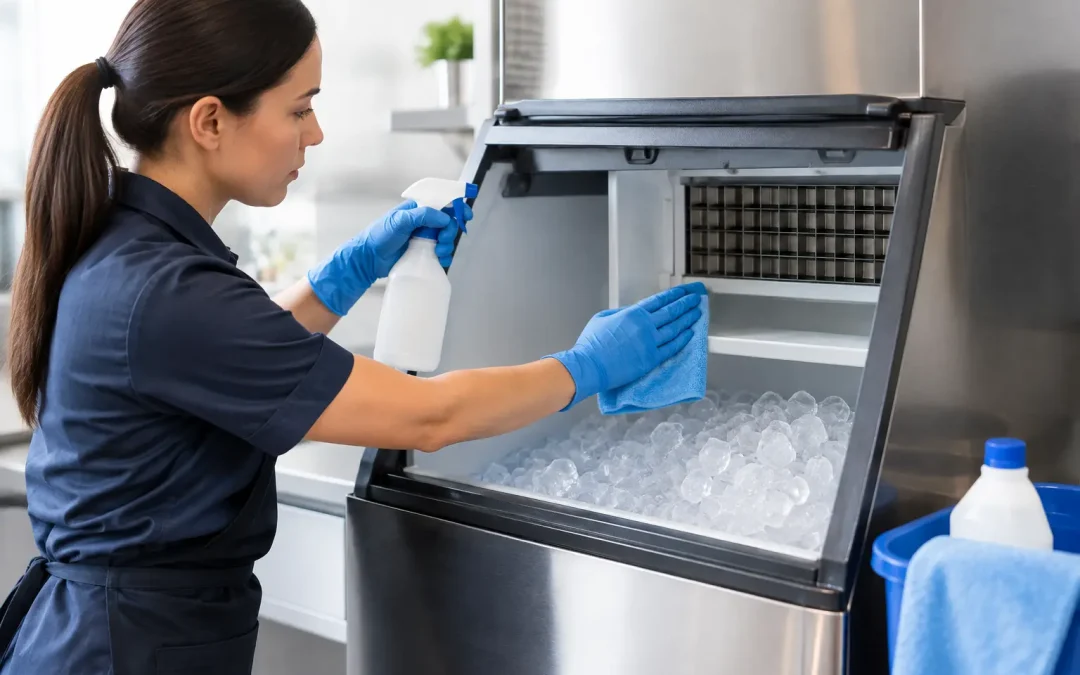
A clear glass of ice should taste like nothing at all. When it carries an earthy odor, develops a cloudy appearance, or leaves specks in the bottom of a drink, the ice machine needs attention. Knowing how to sanitize an ice machine protects the quality of the ice your household uses every day and helps preserve a sophisticated appliance that is often integrated into cabinetry or a home bar.
Sanitizing is not simply wiping down the bin. Ice machines create a cold, damp environment where mineral scale, yeast, mold, and biofilm can develop in areas that are not immediately visible. A careful process addresses the water path, removable components, and ice-contact surfaces without using products that can damage finishes, leave chemical residue, or conflict with the manufacturer’s instructions.
Clean First, Then Sanitize the Ice Machine
Cleaning and sanitizing serve different purposes. Cleaning removes mineral deposits, scale, and visible residue. Sanitizing reduces microorganisms on surfaces after they have been cleaned. If scale or film remains in place, sanitizer cannot work as effectively.
Premium ice machines vary considerably in their cleaning cycles, approved solutions, and disassembly procedures. A Sub-Zero unit, for example, may have a dedicated clean function and manufacturer-specified cleaner and sanitizer. Before starting, consult the use and care guide for the exact model. The correct product and concentration matter, particularly in built-in installations where the appliance, cabinetry, drainage, and water connections are closely integrated.
Avoid assuming that household bleach, vinegar, or a general kitchen disinfectant is appropriate. Some products can corrode metal parts, harm seals, create odors, or leave residues that should never contact ice. Use only a manufacturer-approved ice machine cleaner and sanitizer, and follow the label directions precisely.
What You Need Before You Begin
Set aside enough time to complete the process without rushing. Depending on the machine and the level of scale, cleaning and sanitizing may take several hours, including rinse cycles and the time required to make and discard fresh ice.
You will typically need the approved cleaner, approved sanitizer, clean water, a soft cloth, a nonabrasive brush, gloves, and a clean container for removable components. Do not use steel wool, harsh scouring pads, or strongly scented cleaners. They can scratch surfaces or introduce odors that affect the next batches of ice.
If your ice machine is installed under a counter or as part of a larger built-in refrigeration system, protect the surrounding floor and cabinetry from drips. Also make sure the service access area remains clear. Do not pull a heavy built-in unit from its installation simply to reach internal components unless the manufacturer specifically directs it and the installation allows for it.
How to Sanitize an Ice Machine Step by Step
1. Turn off ice production and discard all ice
Start by turning off the ice maker or selecting its clean mode, according to the control instructions for your model. Remove all ice from the storage bin and discard it. Ice made before sanitation may have been exposed to residue or microorganisms, so it should not be saved for later use.
If the machine has a removable bin, take it out carefully. Never force a component that seems stuck. A bin, curtain, water trough, or sensor cover may be secured with tabs or fasteners that require a specific removal sequence.
2. Remove the parts identified in the manual
Many machines allow access to items such as the water curtain, distribution tube, trough, evaporator cover, bin components, and ice scoop. Remove only the parts your manual identifies as user-serviceable.
Place small components on a clean towel in the order they were removed. This simple step prevents lost pieces and makes reassembly more straightforward. Take note of any cracks, warped plastic, loose fittings, or buildup that does not release with normal cleaning. Those are useful observations if professional service becomes necessary.
3. Run the approved cleaning cycle
Add the manufacturer-approved ice machine cleaner in the stated amount, then begin the cleaning cycle. The cleaner is designed to remove mineral deposits from places a cloth cannot reach, including water lines and components near the freezing surface.
Hard water can create stubborn white or chalky scale, while a pink, black, or slimy film may indicate biological growth. Heavy buildup may require a repeat cleaning cycle, but do not double the chemical concentration unless the manufacturer explicitly permits it. More cleaner is not necessarily better, and excess product can be difficult to rinse away.
4. Wash removable components by hand
While the machine runs its cleaning cycle, wash the removable components in a sink or clean basin using the approved cleaner or mild detergent, as directed by the manufacturer. Use a soft brush to reach grooves and corners. Rinse thoroughly with clean water.
Pay particular attention to the ice bin, scoop, water curtain, and distribution parts. These surfaces may look clean while holding a thin film that affects ice quality. Do not overlook the bin door or lid, where hands and airborne kitchen residue can introduce contamination.
5. Apply sanitizer after cleaning is complete
Once the cleaning cycle and required rinse cycles are finished, prepare the approved sanitizer exactly as directed. Apply it to the ice-contact surfaces and removable parts for the required contact time. Sanitizer needs time on the surface to work, so do not wipe it away immediately unless the product instructions call for rinsing.
Some sanitizers are intended to air-dry. Others require a final rinse. Follow the product label and the appliance manual rather than relying on a general rule. The goal is a clean, safe surface with no lingering chemical residue or fragrance.
6. Reassemble, make ice, and discard the first batches
Reinstall each dry component securely, restore the machine to normal operation, and confirm that the water curtain, bin, and covers sit correctly. Run the machine through the manufacturer’s recommended post-sanitizing process.
Discard the first one or two batches of ice, or the quantity specified in the manual. This clears any remaining rinse water or trace sanitizer from the system. Once the fresh ice is clear, odor-free, and normally shaped, the machine can return to service.
How Often Should an Ice Machine Be Sanitized?
The right schedule depends on water quality, usage, room conditions, and the model’s manufacturer guidance. For many residential ice machines, a complete cleaning and sanitizing every six months is a sensible baseline. Homes with hard water, frequent entertaining, pets, nearby cooking activity, or a machine that produces ice daily may need more frequent attention.
Do not wait for a visible problem if you can avoid it. Regular maintenance helps protect ice taste, production performance, and the longevity of pumps, water circuits, and freezing components. Replacing a water filter on schedule, where applicable, is also part of keeping the system in good condition. A filter is not a substitute for cleaning, but neglected filtration can contribute to poor water quality and mineral buildup.
Signs the Machine Needs More Than Routine Sanitizing
A sanitation cycle can resolve ordinary buildup, but it cannot correct every issue. Contact a qualified ice machine technician if the unit continues to produce foul-smelling ice, makes unusually small or hollow cubes, leaks, stops producing ice, displays an error code, or develops recurring slime shortly after cleaning.
You should also arrange service if the machine has a drainage concern, a damaged water line, persistent scale that returns quickly, or components that cannot be safely removed. Built-in and premium refrigeration equipment is designed as a system. An apparent ice-quality issue can sometimes involve water pressure, filtration, drainage, temperature control, or a component that requires specialized diagnosis.
For New Jersey homeowners with high-end built-in refrigeration, Fridge Fix provides factory-certified, brand-focused service for appliances that deserve more than a general repair approach. Professional maintenance can be particularly worthwhile when an ice machine is part of a larger kitchen installation or is relied upon for regular entertaining.
Treat clean ice as part of the standard of care for your kitchen, not a reaction to a bad taste. A scheduled sanitation routine keeps the machine ready for guests, protects the appliance investment, and gives you a better reason to enjoy the next drink you pour.