
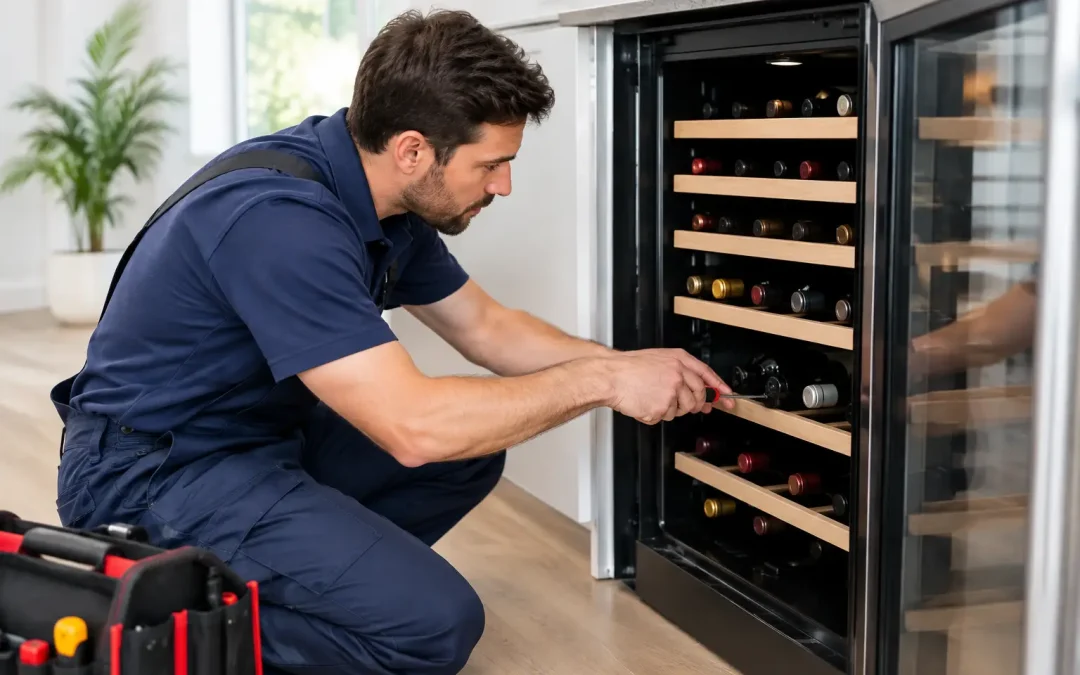
A wine cooler that runs too warm for a weekend can affect more than a few bottles. In a built-in kitchen, bar, or cellar, it can also put cabinetry, flooring, and a carefully maintained collection at risk. New Jersey wine cooler technicians should understand that these appliances are precision storage systems, not simply small refrigerators. Proper service begins with an accurate diagnosis and ends with performance that protects both the appliance and the wine inside it.
For homeowners with Sub-Zero and other premium built-in wine storage, the right service professional brings brand-specific training, careful work habits, and a clear understanding of how temperature, humidity, airflow, and installation conditions work together. That expertise matters whether the concern is an alarm, inconsistent temperatures, condensation on the glass, an unusual fan noise, or a unit that has stopped cooling altogether.
When to Call New Jersey Wine Cooler Technicians
A wine cooler does not need to be completely inoperative to need attention. Small changes can be early warnings of a component beginning to fail or an airflow problem that will become more expensive if left unaddressed. A specialist can determine whether the issue is mechanical, electronic, environmental, or related to the installation itself.
Call for service when the cabinet cannot hold its selected temperature, the display shows an error code, or the compressor seems to run constantly. Frost where it does not belong, water around or beneath the unit, a door that no longer seals correctly, and excessive vibration also deserve prompt evaluation. In dual-zone models, one compartment may appear normal while the other drifts outside its setting. That is still a service concern, particularly when different wines are stored in each zone.
Temperature concerns are often the reason homeowners place a call, but they do not always point to a failed compressor. A restricted condenser, failing evaporator fan, door-gasket leak, sensor issue, control-board fault, or inadequate ventilation can create similar symptoms. Replacing parts before identifying the actual cause is costly and rarely protects the appliance in the long term.
Why Premium Wine Storage Requires Specialized Service
Built-in wine storage is engineered around controlled conditions. Temperature stability is essential, but it is only one part of the system. Air circulation helps eliminate hot and cold pockets. Proper door alignment preserves the seal. Humidity management supports cork condition, while low-vibration operation helps maintain an appropriate environment for aging bottles.
These systems also have installation requirements that a general appliance repair provider may overlook. A fully integrated or panel-ready unit must sit correctly within its opening. Ventilation routes must remain clear. The door panel must be properly weighted and aligned. Electrical supply, cabinetry clearances, and leveling can all affect operation. An otherwise sound unit may struggle if its installation no longer meets the manufacturer’s requirements after a renovation, flooring change, or cabinetry adjustment.
Sub-Zero wine storage systems, in particular, are sophisticated built-in appliances with controls and components that require qualified diagnosis. Factory-certified service helps protect the value of the product and supports repairs based on the manufacturer’s design standards rather than guesswork. Fridge Fix has provided specialized refrigeration service since 1966, with experience centered on the complex built-in systems found in premium homes.
The Difference Between Temperature and Temperature Stability
A display reading is useful, but it is not the whole story. A wine cooler may briefly reach the selected setting while cycling too widely around it. Frequent swings can be more concerning than a minor, consistent difference between the display and a separate thermometer.
The service process should account for how the unit has been loaded, how often the door is opened, room temperature, and whether the appliance is installed near sunlight, cooking heat, or a heating vent. A technician should also verify sensor readings, airflow, condenser condition, and compressor operation before recommending a repair. The goal is not simply to make an alarm disappear. It is to restore dependable operating conditions.
What a Professional Wine Cooler Service Visit Should Include
A qualified visit starts with questions. When did the issue begin? Has the unit recently been moved, remodeled around, or serviced? Is the condition constant, or does it occur at certain times of day? Information about recent power interruptions, water leaks, and changes in the home can narrow the diagnosis quickly.
The technician should then inspect the appliance condition and installation. That includes door closure, hinges, gaskets, leveling, ventilation, condenser cleanliness, fans, drain components, and visible signs of moisture or damage. Electronic diagnostics may be needed to review error codes, sensor performance, and control response. Depending on the model and symptom, the refrigeration system may also require testing.
For a built-in unit, careful access is part of quality service. Pulling an appliance from cabinetry without protecting adjacent finishes, disconnecting components without documenting their placement, or forcing an integrated panel can create avoidable damage. Premium-appliance work calls for a deliberate approach that respects the kitchen as much as the equipment.
Once the cause is identified, a clear recommendation should explain what failed, why the repair is appropriate, and whether related maintenance is advisable. In some cases, a repair is straightforward. In others, parts availability, appliance age, condition of the sealed system, and the value of restoration work should all be considered before proceeding.
Repair, Maintenance, or Replacement: The Right Question
Not every wine cooler problem requires replacement, and not every older unit is a good candidate for extensive repair. The appropriate decision depends on the appliance’s overall condition, the nature of the failure, the availability of correct parts, and how the unit fits into the cabinetry.
A door gasket, fan motor, sensor, hinge adjustment, or control-related repair may extend useful life significantly. Preventive maintenance can also prevent many performance complaints by addressing blocked airflow and condensers that have accumulated dust or pet hair. For homes with wine storage in active kitchens, near entertaining areas, or close to outdoor access, this attention can be especially valuable.
Replacement becomes a more serious consideration when a major sealed-system issue occurs in an aging unit, repeated repairs have not produced stable performance, or a discontinued model no longer has practical parts support. Even then, the project should begin with precise measurements and installation planning. A replacement wine cooler must match the opening, ventilation design, electrical requirements, panel configuration, and desired storage capacity. Selecting a model based only on exterior width can lead to costly corrections later.
Protecting Your Collection Before Service Arrives
If the wine cooler is warming, avoid repeatedly opening the door to check on it. Each opening introduces warmer air and makes recovery harder. Keep the door closed, note any error messages, and record the displayed temperature if possible.
For a longer outage, move valuable bottles to a stable, cool interior location away from direct light and heat. Wine generally tolerates a short-term change better than repeated dramatic swings. There is no need to panic over every brief fluctuation, but a sustained rise in temperature or a complete loss of cooling should be addressed promptly.
Do not remove grille panels, attempt to recharge the system, or use household cleaners on interior electronic areas. A blocked grille can be carefully vacuumed only if the manufacturer’s instructions permit it and access is straightforward. Beyond basic exterior cleaning, service work on premium wine storage is best left to a qualified specialist.
Choosing a Wine Cooler Service Specialist
Credentials matter because premium refrigeration is not a broad, interchangeable category. Ask whether the provider regularly works on built-in wine storage, has training for your appliance brand, and can address both refrigeration performance and installation-related concerns. Experience with standard kitchen refrigerators does not automatically translate to integrated wine preservation systems.
It is also reasonable to ask how the technician approaches diagnosis. A service provider should be prepared to inspect the system before proposing parts, explain the findings in plain language, and discuss practical repair options. For high-value appliances, careful diagnosis is usually less expensive than repeated visits based on assumptions.
Availability matters, but so does preparation. The fastest appointment is not always the best outcome if the provider lacks the technical background or parts knowledge to complete the work properly. For a built-in system serving a wine collection and finished cabinetry, the priority should be qualified, dependable service that protects the investment already in your home.
A wine cooler should operate quietly in the background, keeping bottles ready for the occasions that matter. When it does not, timely specialized care can restore confidence before a minor performance change becomes a larger interruption.