
A premium built-in refrigerator can appear to be running normally while its food compartment slowly becomes too warm. The compressor may hum, interior lights may work, and no obvious alarm may sound. Knowing the top sealed-system failure signs helps homeowners act before spoiled food, repeated service calls, or unnecessary component replacements turn a contained issue into a larger disruption.
A sealed-system concern is not the same as an ordinary refrigerator problem. It involves the refrigeration circuit that moves heat out of the cabinet: the compressor, condenser, evaporator, refrigerant lines, filter-drier, and refrigerant charge. These components are sealed, highly technical, and often difficult to access in built-in Sub-Zero, Viking, GE Monogram, KitchenAid, and other integrated units. Accurate diagnosis requires more than observing a temperature display.
What Is a Refrigerator Sealed System?
The sealed system creates the cooling effect inside the refrigerator and freezer. Refrigerant circulates through the system, absorbing heat at the evaporator and releasing it through the condenser. The compressor drives that cycle, while controls, fans, defrost components, and door seals support it.
When the sealed system loses refrigerant, develops a restriction, suffers compressor degradation, or has an internal leak, the appliance may no longer move heat effectively. The symptom can resemble a failed fan, dirty condenser, defrost problem, or control issue. That is why a professional should verify the cause before recommending a major repair.
For a high-value built-in appliance, the distinction matters. Replacing an accessible fan motor is very different from locating a refrigerant leak or performing a compressor repair. A careful diagnosis protects both the appliance and the investment behind the finished kitchen cabinetry.
Top Sealed-System Failure Signs to Watch For
No single symptom proves a sealed-system failure. A pattern of symptoms, along with temperature measurements and component testing, provides a much more reliable picture.
1. The refrigerator runs for long periods but cannot hold temperature
A refrigerator that runs nearly continuously yet remains warmer than its set point is one of the clearest warning signs. You may notice milk, produce, or deli items are not as cold as expected even though the control panel indicates normal operation. In a freezer, ice cream may soften and frozen foods may develop surface frost.
Long run times can also result from dusty condenser coils, blocked airflow, frequent door openings, or a failed condenser fan. However, when airflow and maintenance issues have been ruled out, poor cooling during extended compressor operation may indicate a loss of cooling capacity within the sealed system.
Built-in units deserve particular attention here. Their installation is designed around specific ventilation clearances. A unit that was recently remodeled around, improperly installed, or obstructed may run hot for reasons unrelated to refrigerant. The service technician should evaluate those conditions before identifying a sealed-system defect.
2. Cooling is uneven between compartments or shelves
A sealed-system issue often produces uneven cooling rather than a complete loss of cooling at first. The freezer may remain acceptably cold while the fresh-food section warms, or the upper shelves may feel warmer than lower shelves. Some owners notice that food near one side of the cabinet stays cold while items elsewhere do not.
This can occur when refrigerant flow through the evaporator is restricted or when the refrigerant charge is low. Instead of cooling the full evaporator surface evenly, the system may cool only a limited section. A technician can inspect the frost pattern and take operating readings to distinguish this from an airflow or defrost issue.
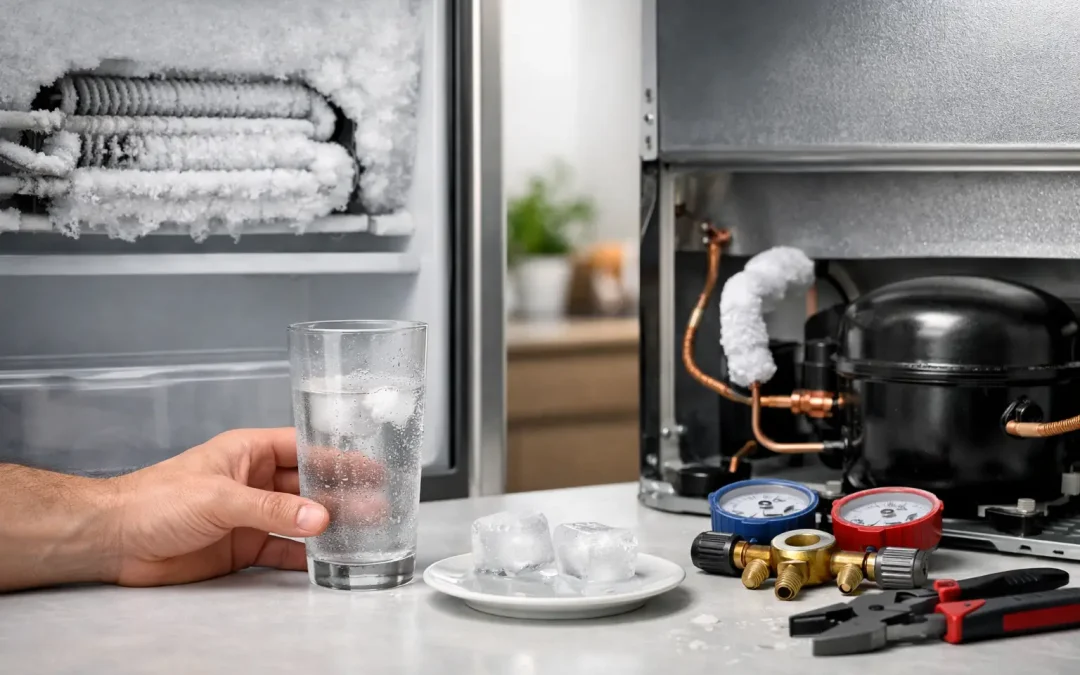
Do not rely on a hand test alone. Use an appliance thermometer placed in a glass of water in the refrigerator compartment, and allow it time to stabilize. A premium refrigerator may show a set temperature on its display even when the actual cabinet temperature is drifting outside the safe range.
3. A partial frost pattern appears on the evaporator
The evaporator is usually behind an interior panel, so this sign is generally observed during service rather than by the homeowner. Under normal operation, the evaporator should develop an even frost pattern across its surface during a cooling cycle. With a low refrigerant charge or a restriction, frost may appear only near the first section of the coil while the remainder stays relatively dry.
This is a meaningful diagnostic clue, but it is not a do-it-yourself test. Removing panels can damage liners, wiring, insulation, or concealed components, particularly on integrated refrigeration. It can also create condensation concerns if panels are not reinstalled correctly.
A full block of ice is different. Heavy ice accumulation may point to a defrost failure, a door-seal problem, or repeated warm-air intrusion. Those issues require service, but they do not automatically mean the sealed system has failed.
4. The compressor is unusually hot or makes new sounds
Compressors naturally become warm during operation, and some operating sound is expected. Concern begins when the compressor runs excessively hot, repeatedly clicks without starting, makes an unfamiliar strained sound, or cycles on and off while cooling performance declines.
A weak compressor can struggle to maintain the pressure difference needed for proper refrigeration. But clicking or overheating may also stem from a start device, electrical supply issue, condenser airflow problem, or electronic control fault. Replacing a compressor without confirming the source of the problem is costly and may not resolve it.
If you hear a new persistent sound and the cabinet temperature is rising, move perishable food to another refrigerator if possible. Avoid repeatedly turning the unit off and on in an attempt to reset it. That does not repair a mechanical issue and can complicate the operating history a technician needs to evaluate.
5. There is visible oil residue near tubing or connections
Refrigerant itself is often difficult to detect without specialized equipment, but refrigerant leaks can leave traces of compressor oil near a line connection, joint, or component. Oil residue is not definitive proof of a current leak, especially on an older unit with prior service history. Still, it warrants professional inspection when paired with poor cooling.
A proper leak assessment may require electronic leak detection, pressure testing, visual inspection, and evaluation of the system’s operating condition. Simply adding refrigerant without finding and addressing the source of a leak is not a lasting repair. The cooling may improve temporarily, only to decline again as the charge escapes.
6. The unit cools again after being off, then quickly loses performance
Some homeowners notice that a refrigerator seems to recover after being unplugged or after a power interruption, only to become warm again hours or days later. This can happen when frost temporarily melts and airflow improves, which may suggest a defrost or drainage problem. It can also occur coincidentally during a sealed-system issue, making the appliance seem more unpredictable than it is.
The key question is whether the unit can maintain stable temperatures under normal use. If it cannot, record the symptoms: displayed temperature, actual thermometer readings, run time, alarms, and any unusual sounds. That information gives a qualified technician a better starting point than a vague report that the refrigerator is “not quite cold.”
Why Sealed-System Diagnosis Requires Specialized Service
Premium refrigeration is engineered as part of the home, not as a freestanding utility appliance. Access can involve custom panels, tight cabinetry, water connections, advanced controls, dual compressors, multiple evaporators, or separate wine-storage zones. A diagnosis should account for the complete design of the appliance.
Factory-trained service technicians use model-specific technical information, temperature and pressure testing procedures, and manufacturer-approved repair methods. They also consider whether a repair is appropriate based on the unit’s age, condition, parts availability, history, and the extent of any leak or compressor damage. In some cases, a sealed-system repair can offer years of additional service. In others, restoration or replacement planning may be the more sensible choice.
The trade-off is straightforward: sealed-system work is specialized and can be significant, but guessing is more expensive. A thorough diagnosis helps avoid replacing controls, fans, or other parts when the actual issue lies deeper in the refrigeration circuit.
What to Do When You Suspect a Sealed-System Problem
Protect food first. If temperatures are climbing, relocate perishables and monitor the freezer closely. Keep doors closed as much as possible, confirm that condenser airflow is not blocked, and make sure the unit has not been accidentally placed into an unusual operating mode.
Then arrange professional service rather than attempting refrigerant work or opening concealed panels. Provide the model number, approximate age of the appliance, symptoms, and any error messages. For homeowners in New Jersey with specialized built-in refrigeration, Fridge Fix can evaluate the full system with the care expected for premium equipment.
Your refrigerator should preserve food, protect a wine collection, and operate quietly in the background of a well-designed home. When that confidence changes, early, qualified attention is usually the best way to preserve both performance and options.