
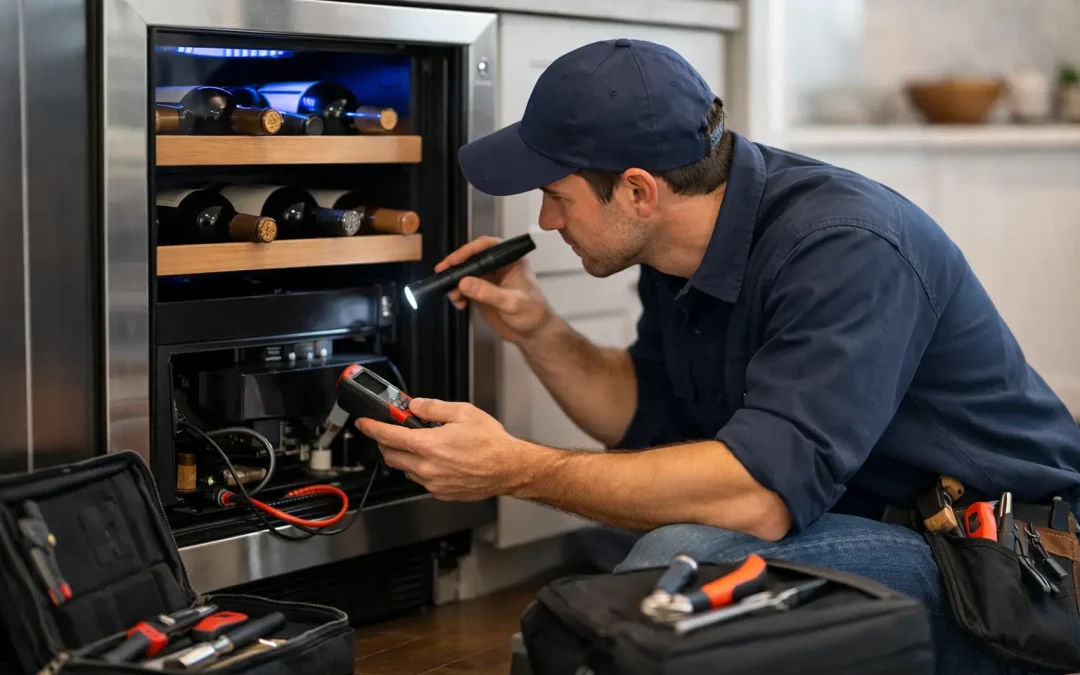
A premium wine cooler is not simply a small refrigerator with bottle racks. It is a controlled storage environment designed to protect flavor, aroma, cork condition, and the value of a carefully chosen collection. When wine cooler repair is needed, the right response depends on more than whether the cabinet feels cold. Temperature stability, humidity management, airflow, electronic controls, and the installation itself all deserve attention.
For built-in wine storage from Sub-Zero, Marvel, Viking, KitchenAid, GE Monogram, and other premium brands, a quick general-appliance fix can create a more expensive problem. These systems are designed around specific clearances, ventilation paths, sensors, and components. A qualified technician can identify the actual cause, protect surrounding cabinetry, and help preserve the appliance’s long-term performance.
The Signs Your Wine Cooler Needs Attention
A display reading that does not match the cabinet’s actual temperature is one of the clearest signs of trouble. If bottles feel noticeably warmer than expected, or an independent thermometer shows a persistent difference after the door has remained closed for several hours, the unit may have a control, sensor, airflow, or sealed-system concern.
Frequent cycling is another signal. Wine coolers do cycle normally, especially after a door has been opened repeatedly or a large number of room-temperature bottles have been loaded. But a compressor that runs almost continuously, starts and stops in short intervals, or makes a new clicking sound should be diagnosed. The cause may be as simple as restricted airflow, but it can also involve a fan motor, relay, condenser issue, or control board.
Condensation deserves a closer look as well. A small amount of moisture can occur during humid weather or after frequent door openings. Water that repeatedly collects inside the cabinet, fogging between glass door panels, frost buildup, or moisture around the door gasket is not something to ignore. These conditions can point to a poor seal, blocked drain, failed heater circuit, or an installation issue that affects normal operation.
Pay attention to changes in sound and smell. Rattling can come from an unsecured bottle or shelf, while a persistent vibration may indicate a fan, compressor mount, or cabinet-leveling issue. A burning odor, electrical smell, or repeated breaker trip calls for the unit to be turned off and assessed professionally.
Safe Checks Before Scheduling Wine Cooler Repair
There are a few useful checks an owner can make without removing panels or disturbing the built-in installation. Confirm that the control is set to the intended temperature and that the unit is not in a special mode such as Sabbath, showroom, or vacation mode, depending on the model. Give the cabinet time to stabilize after any setting change. A wine cooler loaded with warm bottles will not return to temperature immediately.
Inspect the door gasket for folds, tears, debris, or areas that do not sit evenly against the frame. A gentle cleaning with a soft cloth can remove residue that prevents a proper seal. Avoid harsh cleaners that can dry or damage the gasket material.
Make sure bottles, shelves, labels, or oversized formats are not preventing the door from closing completely. It is also wise to verify that the appliance has power and that a GFCI outlet or breaker has not tripped. These checks are straightforward, but they eliminate common causes of apparent cooling failure.
Do not pull a built-in unit forward to inspect the rear components unless a trained technician has advised you to do so. Premium installations can have water lines, custom panels, anti-tip devices, cabinetry attachments, and limited ventilation clearances. Moving the cabinet incorrectly can damage flooring, panels, electrical connections, or the appliance itself.
Why Temperature Accuracy Matters More Than a Cold Cabinet
Most wine storage concerns are not caused by a complete loss of cooling. More often, the issue is inconsistency. A cabinet that drifts several degrees, develops warmer zones, or recovers slowly after routine use can affect wines over time, particularly bottles intended for long-term aging.
The ideal temperature depends on the collection and the owner’s preferences. Serving temperatures vary by style, while long-term storage generally benefits from a stable environment rather than constant adjustment. The goal is not to chase a perfectly exact display number every hour. It is to maintain dependable conditions without wide swings, excessive heat, or repeated humidity loss.
Dual-zone models add another layer of complexity. If one zone performs normally while the other becomes warm, the fault may be isolated to a zone sensor, fan, damper, or control function. That does not automatically mean a major repair is required, but it does mean the diagnosis should be model-specific. Replacing a part based on a symptom alone is rarely a sound approach for premium refrigeration.
What a Specialist Diagnosis Should Include
A professional service visit should begin with the appliance’s model information, installation configuration, symptom history, and operating conditions. Whether the unit is freestanding, undercounter, integrated, or fully built in changes how a technician evaluates ventilation and access.
The diagnostic process may include checking actual temperatures, airflow, evaporator performance, fan operation, door sealing, condenser condition, electronic controls, sensors, and compressor behavior. On sophisticated units, the technician may also review fault indications and determine whether a problem is mechanical, electrical, electronic, or related to installation conditions.
That distinction matters because similar symptoms can have very different causes. A warm cabinet could result from blocked airflow, a failed fan, a control issue, a worn gasket, a defrost concern, or a sealed-system problem. An inaccurate display can stem from the sensor, the control board, or a cabinet that is struggling to maintain temperature. Proper diagnosis prevents unnecessary parts replacement and helps set realistic expectations for the repair.
For older premium systems, the best path can depend on parts availability, cabinet condition, repair history, and the owner’s plans for the kitchen. Repair is often the sensible choice when the appliance is structurally sound and the issue is isolated. In other cases, restoration work or replacement planning may offer better long-term value. A specialist should explain that trade-off clearly rather than treating every service call as identical.
Protecting the Cabinet and the Wine During Service
If cooling performance has become unreliable, move valuable bottles to another stable wine storage area if possible. Keep bottles protected from direct sunlight and avoid repeatedly moving them between warm and cold locations. Short-term temperature variation is generally less concerning than prolonged heat or major swings, but rare and sentimental bottles deserve extra caution.
Before service, note when the issue began, whether it is constant or intermittent, and any error messages or unusual sounds. Photos of display readings, frost, condensation, or water accumulation can help document an intermittent problem. Have the model and serial number available when scheduling, especially for built-in and integrated units where correct parts planning can save time.
A technician should also be able to work carefully around finished cabinetry, custom panels, hardwood floors, and adjacent appliances. This is one reason homeowners choose a refrigeration specialist rather than a broad, one-size-fits-all repair provider. The appliance is part of a larger investment in the home.
Preventive Care That Supports Reliable Wine Storage
Regular care does not eliminate every repair, but it can reduce avoidable strain. Keep door gaskets clean, avoid overloading shelves in a way that restricts airflow, and close the door gently but fully. If the model has a condenser area that requires cleaning, follow the manufacturer guidance or arrange professional maintenance. Dust accumulation can reduce heat transfer and make the system work harder than necessary.
Built-in appliances also need the ventilation space specified for their design. Decorative panels, nearby renovations, or changes to toe-kick areas can interfere with airflow without being obvious. If a wine cooler begins running more often after cabinetry work, a specialist should evaluate both the appliance and the installation.
For New Jersey homeowners with high-value built-in refrigeration, Fridge Fix provides factory-certified, brand-focused service built around careful diagnostics and long-term appliance performance. When the cabinet protecting your collection starts showing signs of change, prompt expert attention can be the most practical way to preserve both the wine and the system designed to store it.