
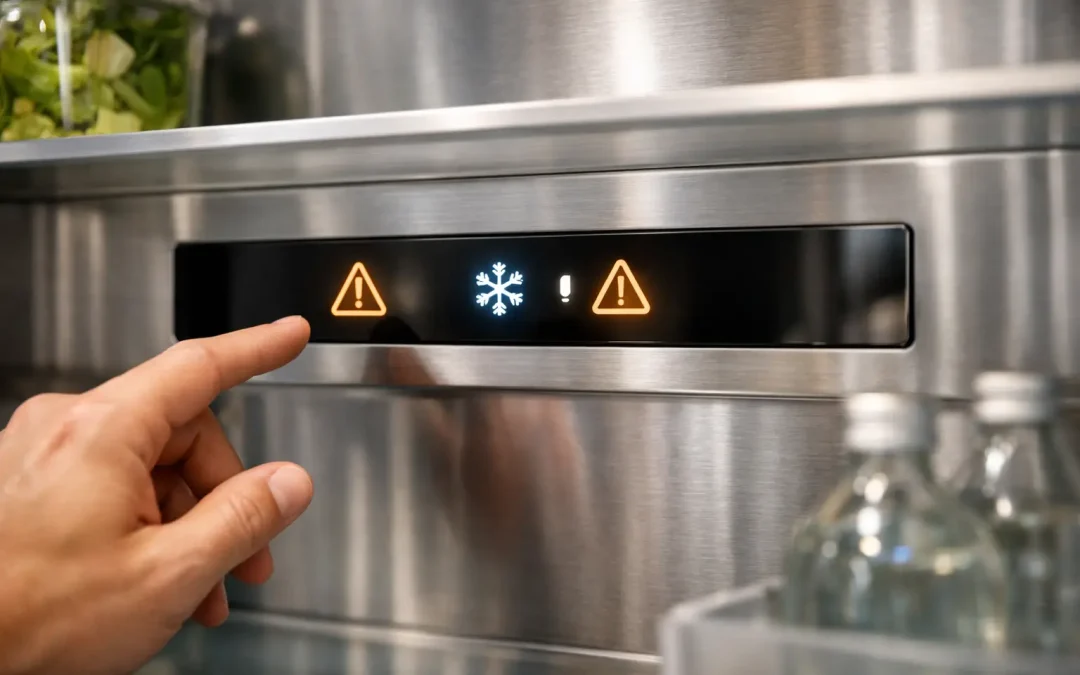
A Sub-Zero display is designed to do more than show the temperature. When Sub-Zero error codes, alerts, or service messages appear, the appliance is reporting a condition that may affect food preservation, ice production, energy use, or long-term component life. On a premium built-in system, that warning deserves attention – but it does not always mean the refrigerator has failed.
The useful first step is to distinguish between a maintenance reminder, a temporary operating condition, and a true electronic fault. The exact meaning depends on the product family, control panel generation, and model number. A code that applies to a classic built-in refrigerator may not mean the same thing on an integrated column, wine storage unit, freezer, or ice machine.
How to Read Sub-Zero Error Codes Correctly
Before resetting anything, record the message exactly as it appears. Take a clear photo of the display, including any letters, numbers, symbols, and the compartment temperature. Then locate the model and serial number. On many units, this information is found inside the cabinet near the upper interior frame, though the placement varies by product.
That detail matters because service information is model-specific. Numeric codes beginning with “EC,” word-based alerts such as “Service” or “Vacuum Condenser,” temperature alarms, and filter reminders all point to different types of action. A qualified technician uses the code as a starting point, then confirms the cause through temperatures, sensor readings, airflow checks, control diagnostics, and component testing.
Do not rely on a generic code chart alone. Online lists often combine information from several generations of Sub-Zero equipment, and an incorrect interpretation can lead to unnecessary part replacements or a missed refrigeration problem.
Alerts are not all the same
A “Replace Water Filter” message is generally a maintenance reminder. It may appear based on time or water usage, even when water flow still seems normal. Replacing the correct filter and resetting the reminder according to the model instructions is usually appropriate.
A “Vacuum Condenser” message is different. It calls attention to restricted heat removal at the condenser area. Dust, pet hair, lint, or kitchen grease can reduce airflow and make the sealed refrigeration system work harder. This is one of the most valuable warnings to address promptly, particularly in a built-in installation where ventilation is carefully engineered.
A “Service” message or an EC-style code typically requires more investigation. It can relate to a temperature sensor, defrost function, fan operation, refrigeration performance, control communication, or another monitored system. The code may clear after a power interruption or a brief condition change, but a recurring message should not be treated as resolved simply because the display is quiet for the moment.
What Common Sub-Zero Warning Categories Mean
The display message provides a direction, not always a final diagnosis. Several categories are especially common in field service.
Temperature and door alarms
A high-temperature alert may occur after a door has been left open, after the unit has been loaded with a large amount of warm food, or during a power outage. It can also indicate that the door is not sealing, a drawer is not fully closed, airflow is blocked inside the compartment, or the refrigeration system is not recovering as it should.
Start with the simple observations. Check that food packages are not holding a door or drawer open, and look for anything interfering with the gasket. Confirm that interior vents are not packed tightly with containers. If the alarm returns after the door has been properly closed and the appliance has had adequate recovery time, service is warranted.
Do not judge performance solely by the displayed setpoint. A refrigerator set to 37°F is not necessarily maintaining 37°F throughout the cabinet. Actual temperatures, compressor run time, frost patterns, and air circulation all help determine whether the issue is operational or mechanical.
Condenser and airflow alerts
Built-in refrigeration depends on correct airflow through the condenser system. When that area is dirty or obstructed, heat cannot leave the appliance efficiently. The result may be longer run times, warmer temperatures, increased noise, and unnecessary strain on major components.
If your model provides safe owner access to its condenser area, follow the product instructions carefully and use a soft brush or vacuum attachment designed for the task. Do not bend fins, force panels, or spray cleaners into electrical areas. Some installations and product configurations make thorough cleaning difficult without proper access and experience.
A condenser alert that returns soon after cleaning may point to more than dust accumulation. Fan operation, ventilation clearances, control feedback, or refrigeration performance may need to be evaluated by a specialist.
Sensor, defrost, and electronic fault codes
Temperature sensors tell the control system when to operate fans, compressors, heaters, and dampers. Defrost-related systems prevent frost from insulating the evaporator and restricting airflow. When a code indicates a sensor, defrost, or electronic concern, the visible symptom may be subtle at first: uneven temperatures, excess frost, a compartment that runs too cold, or an ice maker that becomes unreliable.
These are not good candidates for guesswork. Replacing a sensor without checking wiring, resistance values, control response, and the surrounding system can mask the real problem. Similarly, manually melting frost may temporarily restore airflow while leaving the failed heater, sensor, control, or drainage condition untouched.
Ice maker and water-related messages
Sub-Zero ice and water systems can be affected by filter status, water supply, freezer temperature, valve operation, fill sensing, and ice maker mechanics. Slow production or small cubes may be caused by a restricted filter or water supply, but it can also result from a freezer that is not reaching the proper temperature.
Avoid forcing an ice maker through a cycle or using sharp tools to remove ice. A technician should inspect persistent ice production problems in context, particularly if they appear with a temperature alert or a refrigeration error code.
What You Can Safely Do Before Calling for Service
There are a few sensible checks that protect both the appliance and your food. Verify that power is on, the unit has not been switched off at a nearby disconnect, and the doors or drawers are closing completely. Review whether there has been a recent outage, renovation, unusually heavy loading, or extended door opening. For a water-related message, confirm that the household water supply valve is open and that the filter is current.
It is also reasonable to listen for unusual changes: a fan that is noticeably louder, no fan sound where one is normally present, repeated clicking, or a unit that seems to run continuously. Record these observations with the code and the approximate time it appeared. That information can shorten diagnosis considerably.
A power reset should be used cautiously. It may clear a temporary control alert, but it can also erase useful evidence while doing nothing to correct an underlying fault. Never repeatedly cycle power to make an error disappear, and do not shut off a unit that is protecting a valuable food supply or wine collection unless directed to do so by a qualified professional.
When an Error Code Needs Prompt Attention
Schedule service promptly when a code returns after basic checks, temperatures are rising, frost is accumulating, the unit is running almost constantly, or there is evidence of leaking water. Act with particular urgency if you notice a burning odor, repeated breaker trips, significant water around the appliance, or food that has warmed beyond a safe range.
For wine storage, even a modest but persistent temperature fluctuation can matter. For refrigerators and freezers, the concern is food safety as well as appliance performance. A premium built-in unit is an integrated system, and delayed repair can turn a manageable sensor, airflow, or defrost issue into a larger refrigeration repair.
Factory-trained service is especially valuable when an alert involves sealed-system performance, electronic controls, cabinet-integrated ventilation, or a model with multiple independent cooling zones. These systems require more than a general refrigerator repair approach. Proper diagnosis protects the installation, preserves the appliance’s intended performance, and helps avoid replacing parts based on a code alone.
For New Jersey homeowners, Fridge Fix provides qualified service for Sub-Zero built-in refrigeration and related premium systems. Have the model number, serial number, display message, and any temperature changes ready when scheduling. Those few details help ensure the visit begins with the right technical context.
A display warning is your appliance asking for informed attention. Address it early, preserve the information it provides, and let the model-specific diagnosis determine the repair rather than the other way around.