
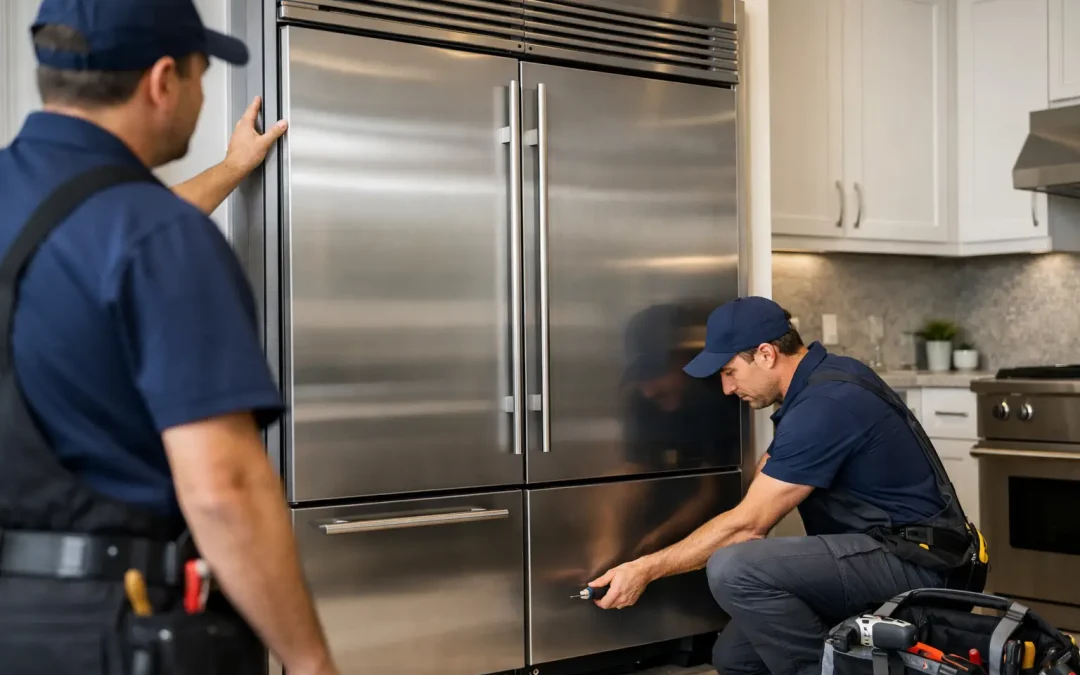
A built-in refrigerator can be the defining element of a kitchen wall, but its appearance is only part of the job. A proper Sub-Zero refrigerator installation service protects the appliance’s cooling performance, cabinetry, flooring, utility connections, and finished-panel alignment from the start. For an investment designed to serve a household for many years, installation should be handled with the same care as the appliance selection and kitchen design.
Why Sub-Zero Installation Requires a Specialist
Sub-Zero systems are engineered as integrated food-preservation equipment, not as standard freestanding refrigerators that can simply be rolled into an opening and plugged in. Their weight, ventilation requirements, door clearances, anti-tip provisions, panel systems, and precision fit all demand close attention.
A unit that appears level at first glance may still have problems if it is not correctly secured, aligned, or ventilated. Doors can sit unevenly against adjacent cabinetry, custom panels can rub or fail to close properly, and restricted airflow can affect operating efficiency. These issues are often far more difficult to correct after countertops, trim, and surrounding finish work are complete.
Built-In Dimensions Are Not a Rough Estimate
The cabinet opening for a built-in refrigerator must account for more than the width and height listed on a plan. The installer needs to verify the appliance model, finished opening dimensions, floor conditions, utility locations, and clearances for doors or drawers. A few small discrepancies can matter greatly when the refrigerator is intended to sit flush with custom cabinetry.
This is especially true with integrated units, which are designed to disappear behind matching cabinet panels. Panel weight, handle placement, reveal spacing, and hinge movement all affect the finished result. A qualified technician approaches these details as mechanical requirements, not decorative finishing touches.
The Appliance Must Be Supported and Secured Correctly
Sub-Zero refrigerators are substantial appliances. The floor must be capable of supporting the unit, and the refrigerator needs to be properly positioned, leveled, and secured in accordance with the manufacturer’s requirements. Anti-tip protection is a critical safety consideration, particularly when heavy doors are open or fully loaded.
Leveling also influences daily use. A refrigerator that is not adjusted correctly may have doors that drift, gaskets that do not seal as intended, or panels that no longer align with nearby cabinetry. The goal is a stable installation that performs correctly and looks intentional from every angle.
What Should Happen Before Installation Day
The best installations are planned before the appliance arrives. This allows potential obstacles to be resolved while there is still easy access to the opening, electrical connection, water supply, and surrounding construction.
Before scheduling a Sub-Zero refrigerator installation service, confirm the exact model and review the designated installation location. A professional assessment should consider these practical conditions:
- The finished opening matches the model’s installation specifications.
- Electrical service is correctly located and available for the appliance.
- The water line and shutoff are accessible when the unit includes an ice maker or water dispenser.
- Flooring is complete, level, and able to support the refrigerator’s weight.
- Hallways, doorways, stairs, and elevators allow a safe delivery path into the home.
For a renovation, timing matters. Installing the refrigerator too early can expose it to dust, paint, impact damage, and unnecessary movement by other trades. Installing it too late can make it difficult to access utilities or perform final adjustments. The right timing depends on the project, but the appliance installer, cabinet professional, and general contractor should be working from the same plan.
What a Professional Installation Should Include
A factory-certified specialist does more than place the refrigerator in the opening. The work begins with inspecting the appliance and confirming that it is the correct model for the prepared space. Any visible shipping damage, missing components, or site conflicts should be identified before the installation progresses.
Placement, Connections, and Leveling
The refrigerator is moved into position carefully to protect finished flooring, cabinetry, walls, and the appliance itself. Technicians then make the necessary electrical and water connections, where applicable, while ensuring access remains appropriate for future service.
Next comes precise leveling and securing. This is where specialized experience makes a visible difference. The appliance must sit correctly in the opening while maintaining the required clearances and stability. Door operation, gasket contact, drawer travel, and cabinet reveals should all be checked before the installation is considered complete.
Panels, Trim, and Final Alignment
With integrated and panel-ready models, final alignment is particularly exacting. Custom panels need to be fitted according to the appliance’s requirements so they move correctly with the doors and do not interfere with adjacent cabinets, islands, or walls.
The aim is not simply a refrigerator that turns on. It is an appliance that opens and closes naturally, sits squarely within the kitchen design, and retains the service access needed for future maintenance. A tightly fitted installation that leaves no practical route for service can create avoidable difficulties later.
Protecting Performance and Warranty Value
A premium refrigerator is designed around controlled temperatures, reliable sealing, and carefully managed airflow. Installation errors can compromise those fundamentals. Improper ventilation, poorly adjusted doors, or neglected water connections may lead to performance concerns that are mistakenly blamed on the appliance itself.
Warranty terms vary by model and purchase arrangement, so homeowners should always retain their purchase documentation and follow the manufacturer’s installation requirements. Professional installation provides added confidence that the appliance was placed, connected, and adjusted with those requirements in mind. It also establishes a useful service record from the beginning of ownership.
For homeowners in New Jersey, Fridge Fix brings factory-certified, brand-specific experience to complex Sub-Zero installations and ongoing service needs. That focus is valuable when a kitchen includes not only a refrigerator, but also freezer columns, wine storage, ice machines, or other built-in refrigeration equipment that must work together within a finished space.
When Replacement Is More Complex Than a New Build
Replacing an existing Sub-Zero unit can be more involved than installing one in a newly built kitchen. An older appliance may have been installed before a floor replacement, countertop update, or cabinetry modification. Its opening may not match current specifications, and utility lines may need attention before a new unit can be positioned safely.
A replacement also requires a careful removal strategy. Protecting stone floors, narrow hallways, finished millwork, and nearby appliances is part of the work. In some homes, door removal, panel removal, or a planned access route is necessary to avoid damage during removal and delivery.
This is one reason to schedule installation planning early rather than waiting until the replacement unit is at the curb. A site review can identify whether the opening needs adjustment, whether flooring changes will affect height, and whether the electrical or plumbing arrangement is suitable for the new model.
Installation Is the Start of Long-Term Care
Once the refrigerator is operating, keep the installation documentation, model and serial information, and any panel details in a convenient location. These records make future maintenance, repairs, and parts guidance more efficient. It is also wise to maintain access to the unit’s shutoff and avoid blocking ventilation areas with storage or decorative modifications.
A correctly installed Sub-Zero refrigerator should feel quiet, secure, and fully at home in the kitchen. That result begins with qualified hands, careful planning, and a service team that understands that premium refrigeration is not just another appliance – it is a long-term part of how the home functions.