
A Sub Zero refrigerator not cooling is more than an inconvenience when it is built into a finished kitchen and trusted with fresh food, specialty ingredients, or wine. These systems are engineered for precise temperature control and long service life, but their design is more complex than that of a standard freestanding refrigerator. A prompt, accurate diagnosis protects the appliance, the surrounding cabinetry, and the food stored inside.
Before assuming the refrigerator has failed, confirm what is actually happening. Is the refrigerator section warm while the freezer remains cold? Is the unit running constantly, completely silent, or displaying a service message? Those details help separate a simple airflow or settings issue from a component-level repair that requires a Sub-Zero qualified technician.
Start With Food Safety and Temperature Readings
If the refrigerator compartment has been above 40°F for more than two hours, move perishable food to another working refrigerator or cooler with ice. Do not rely on how cold the interior feels by hand. A refrigerator can feel cool while operating above a safe food-storage temperature, particularly near the upper shelves or door bins.
Use an appliance thermometer placed in a glass of water on a middle shelf. This gives a more dependable reading than opening the door repeatedly or measuring the air temperature immediately after the door has been opened. For most Sub-Zero refrigerator compartments, a setting around 38°F is typical, while freezer performance should generally be near 0°F. Exact settings can vary by model and by the contents of the unit.
If you have a wine storage unit, remember that its target temperature is intentionally higher than a food refrigerator. A wine unit that is holding its selected temperature is not necessarily malfunctioning simply because it feels warmer than a refrigerator.
Check the Conditions That Can Restrict Cooling
A premium built-in refrigerator depends on air movement through its condenser area and across its evaporator system. A few basic checks may identify an external condition affecting performance without putting the appliance at risk.
First, make sure doors and drawers close fully. A package, shelf, loose gasket, or misaligned drawer can leave a small opening that introduces humid room air. The compressor may run longer, frost can accumulate, and temperatures can slowly rise. Wipe the gasket with a soft cloth and inspect it for tears, hard spots, or areas that no longer make full contact with the frame.
Next, look at how the unit is loaded. Large platters, tightly packed groceries, or food placed directly against interior vents can interfere with circulation. Cold air needs a clear path around stored items. This is particularly relevant after a large grocery delivery or holiday entertaining, when a refrigerator may be filled beyond its usual capacity.
Also verify that the controls have not been changed accidentally. On some models, a high-temperature alarm, vacation setting, or control issue may be mistaken for a refrigeration failure. If the display shows an error code, write it down before resetting power. The code can be valuable diagnostic information for the service technician.
Clean the Condenser Carefully
A dirty condenser is one of the most common preventable contributors to poor cooling and extended run time. In many Sub-Zero models, the condenser is accessible behind the grille above the refrigerator. Dust, pet hair, and airborne kitchen debris can form an insulating layer that prevents the system from releasing heat efficiently.
Turn the unit off before cleaning if the model instructions call for it. Remove the grille carefully, then use a soft condenser brush and a vacuum with gentle suction to remove debris. Avoid bending fins, forcing tools into the compartment, or spraying cleaners into the area. The goal is to remove loose buildup, not to disassemble the refrigeration system.
Condenser cleaning can restore performance when airflow is the primary issue, but it is not a cure for every cooling problem. If the refrigerator is still warm after cleaning and allowing adequate time for recovery, further diagnosis is warranted. Repeatedly changing settings or cycling power is unlikely to correct a failed fan, sensor, control, compressor, or sealed-system problem.
When One Compartment Cools and the Other Does Not
A common service call involves a cold freezer with a warm refrigerator compartment. Because the freezer is still operating, it is tempting to assume the refrigerator only needs a new thermostat. In a built-in Sub-Zero system, the cause may instead involve a fan motor, air damper, evaporator frost condition, defrost component, sensor, or electronic control.
The opposite pattern also matters. A refrigerator compartment that is cooling while the freezer softens may point to a different airflow, defrost, or refrigeration issue. Side-by-side, bottom-freezer, column, and integrated models use different layouts, so a symptom that appears straightforward can have several possible causes.
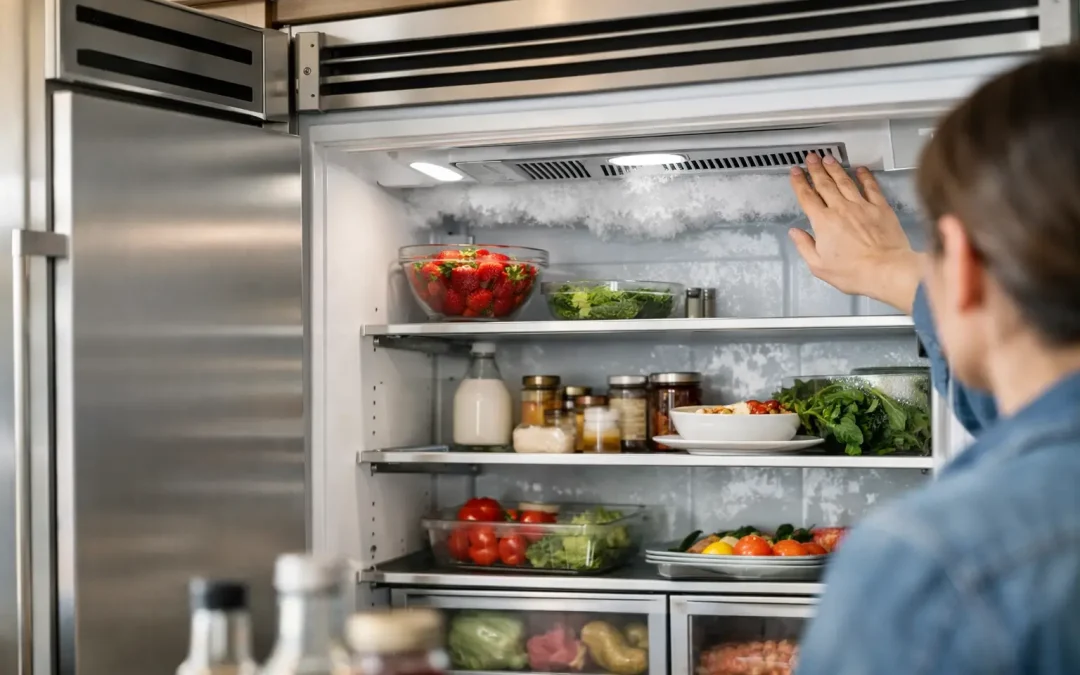
Excessive frost is another useful clue. A light, even frost pattern may be normal during operation, but heavy ice buildup on interior panels or around vents can block airflow. Do not chip ice with a knife, screwdriver, or other sharp tool. Damaging an evaporator or liner can turn a repairable issue into a much larger one.
Signs You Should Schedule Professional Service
Some conditions call for service rather than additional troubleshooting. Schedule a qualified Sub-Zero technician if the appliance is not maintaining safe temperatures after basic checks, if it runs continuously without recovering, or if you hear unusual clicking, grinding, or repeated starting attempts.
Professional diagnosis is also appropriate when there is water leaking into cabinetry, persistent heavy frost, a recurring service code, a burning odor, or an electrical issue. Built-in refrigerators are installed in close relationship to finished panels, custom millwork, water lines, and electrical connections. Careful access and model-specific knowledge matter as much as the replacement part itself.
A factory-certified specialist can test the system in the proper sequence rather than replacing parts based on a single symptom. That may include checking airflow, fan operation, thermistors, door switches, control-board communication, defrost performance, compressor operation, and sealed-system pressures where applicable. The right diagnosis helps avoid unnecessary parts costs and reduces the chance of a repeat failure.
For New Jersey homeowners, Fridge Fix provides specialized service for Sub-Zero built-in refrigeration and related premium systems. For service in New York City, a trusted specialist referral can help ensure the appliance receives brand-appropriate care.
Avoid These Costly Shortcuts
Do not remove interior panels, attempt to recharge refrigerant, bypass switches, or install generic parts because they appear similar online. Sub-Zero equipment often uses model-specific components and control logic. An incorrect sensor, fan, or board can create new performance problems even if it fits physically.
It is also wise not to assume an older refrigerator is beyond repair. Sub-Zero systems are premium appliances designed to be maintained, and many cooling issues can be addressed with the correct repair. The decision depends on the model, age, condition of the sealed system, availability of parts, service history, and the nature of the failure.
Protect Performance After the Repair
Once cooling is restored, give the refrigerator time to stabilize before judging its final temperature. Loading it with room-temperature groceries immediately can delay recovery. Keep vents clear, close doors deliberately, and include condenser cleaning in regular appliance maintenance, especially in homes with pets or active kitchens.
A Sub-Zero refrigerator earns its place in a high-value kitchen through quiet, controlled preservation. When cooling changes, respond early, record the symptoms, protect the food inside, and choose service that understands the system behind the cabinetry.